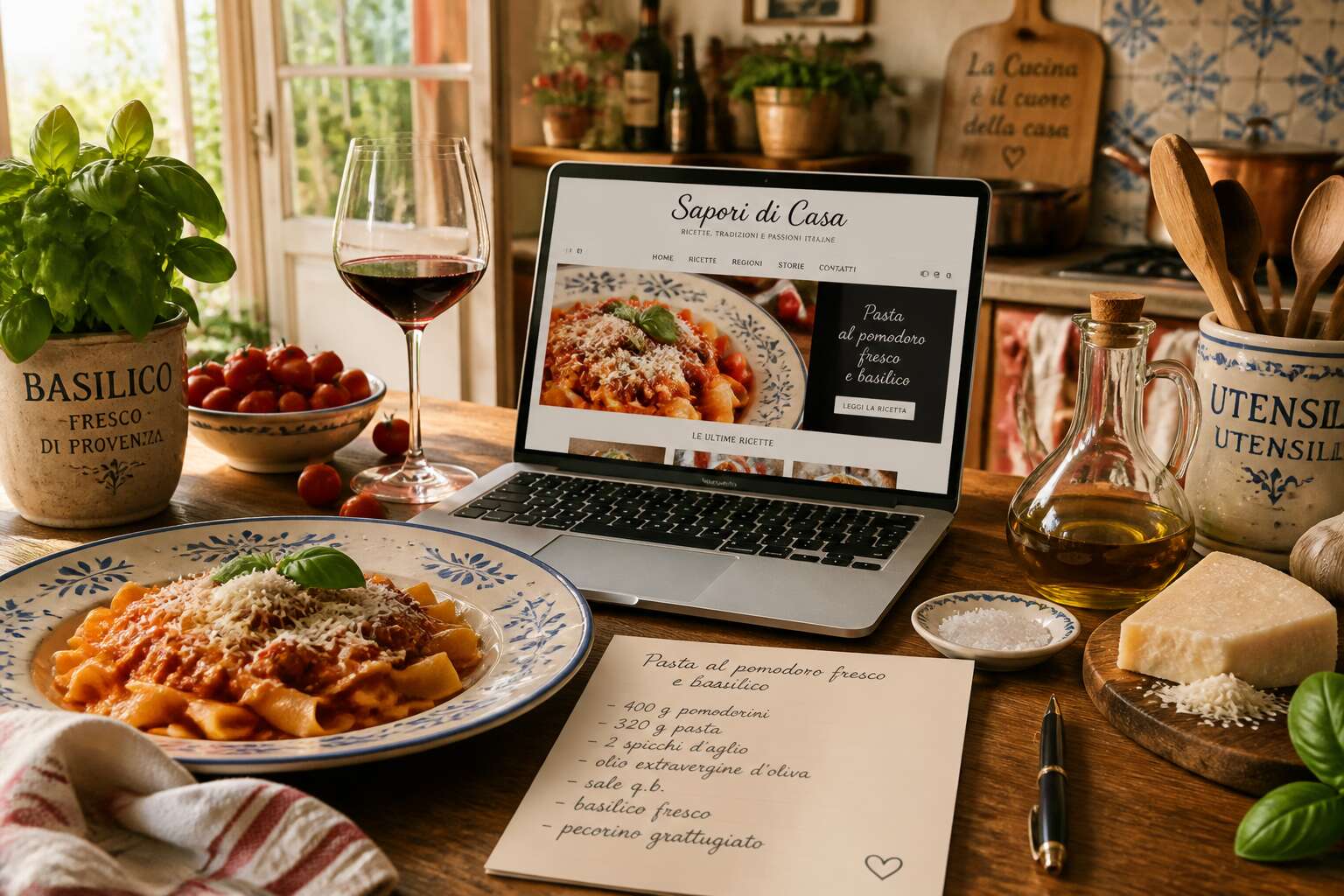
The Story Behind Gabi’s Italian Food Blog
Gabi’s Italian food blog started with a broken pasta maker and a jar of San Marzano tomatoes. She was living in Johannesburg, far from the Sicilian kitchen where her grandmother taught her to roll gnocchi. The blog began as a simple recipe log. It was a way to remember the smell of Sunday ragù.
Then something unexpected happened. Readers started writing in from all over South Africa. They asked for advice on fresh mozzarella, on salvageable carbonara, on why their sauces lacked depth. Gabi answered every single message. Slowly, the log became a trusted resource for home cooks.
What grounds the site is her practical approach:
- Every family sauce has a story worth keeping
- Cooking should feel forgiving, not theatrical
- A good olive oil rescues almost everything
That grounded honesty is why gabi’s italian food blog continues to grow. It is still a kitchen diary, just one written for a larger table.
Exploring Authentic Italian Recipes on the Blog
Somewhere between the chaotic clatter of a busy Johannesburg kitchen and the quiet hum of a Sunday afternoon, you will find a recipe that feels like a homecoming. Gabi’s italian food blog does not just hand you a list of ingredients. It invites you to understand the slow, patient alchemy of transforming simple flour and water into something transcendent. The writing has a pulse, a sense that every dish has a hidden life, a story waiting to be told between the lines of a well-worn cookbook.
The archive is a deep rabbit hole, and I recommend you fall into it willingly. You will find instructions for a ragù that simmers for hours, filling your flat with an aroma that borders on the supernatural. Yet, it also holds weeknight pasta recipes that come together in the time it takes to pour a glass of red wine. This balance is the true art of the site. The focus is not on perfection, but on technique and the tactile pleasure of cooking.
The secret here is not a single ingredient, but a philosophy of restraint.
– The insistence on using only the best tinned tomatoes you can find.
– The guidance on making your own fresh pasta, without the need for fancy equipment.
– The specific warnings about overcooking delicate greens, a lesson learned through trial and error.
Each guide is precise, a direct message from a friend who has been in the trenches. You learn quickly that the magic is not in complexity. It is in the confident handling of a few good things. The blog makes the process feel less like a chore and more like a quiet ritual, a conversation between the cook and the culture that birthed these dishes. It is a specific, valuable place for anyone who finds comfort in the scent of garlic hitting hot olive oil, offering a genuine taste of Italy without leaving the comfort of your own stoep.
Tips for Cooking Italian Cuisine at Home
There is a quiet ritual to cooking Italian food at home, and Gabi’s italian food blog has spent years documenting the process. Each post breaks down the steps so clearly that even a busy weeknight feels manageable. The difference is in small details: garlic should never burn, pasta water should taste like the sea, and dough must rest before shaping.
Getting it right starts with ingredients that respect the season. I have learned to choose tinned tomatoes from a producer I trust, and to buy cheese in a single piece rather than pre-grated.
A few techniques matter more than fancy equipment:
- Warm olive oil gently before adding aromatics.
- Finish every sauce with a splash of starchy pasta water.
- Taste constantly, because seasoning builds in layers.
The real work is slowing down. When you give each step proper attention, the food improves on its own. The best cooks listen to the kitchen before they touch a knife.
Gabi’s Favorite Italian Destinations and Food Travel Insights
There is a quiet magic in how a single plate of cacio e pepe can rewrite your memory of Rome. Gabi’s italian food blog captures that magic with a traveler’s eye and a local’s palate. She does not chase famous landmarks. Instead, she follows the scent of garlic and the chatter of old men at dawn.
Her insights on food travel feel refreshingly grounded. For Gabi, the best meal often arrives in a place with no menu, only a grandmother’s patience. She encourages slow mornings and long lunches, then lets the afternoon drift. Walking becomes a form of tasting.
– Visit produce markets before noon
– Ask baristas where they eat on their day off
– Skip reservations and sit at the counter
Each destination reveals a different rhythm. Sicily offers briny caponata, while Bologna whispers through fresh tortellini. Gabi’s italian food blog turns these tastes into stories you can almost swallow. It is not a guidebook. It is an invitation to graze.
How to Follow and Engage with Gabi’s Italian Food Blog
Following gabi’s italian food blog starts with a subscription. The real value emerges in the shared conversation across the comments section. South African readers regularly swap practical notes, like using local flour brands or adjusting yeast quantities for warmer Cape kitchens.
Getting the most from gabi’s italian food blog requires active participation. The regulars tend to do a few things that keep the conversation honest:
- They ask one focused question about timing or technique, never a generic “looks great”.
- They post photos of finished dishes, including the imperfect ones.
- They revisit older recipes and share what changed on the second attempt.
Gabi pays attention to those returning voices. The blog grows through that back and forth, not through passive likes. It rewards curiosity, consistency, and a genuine appetite for learning.

0 Comments