The Science of Flavor Development
The Maillard Reaction and Its Long Game
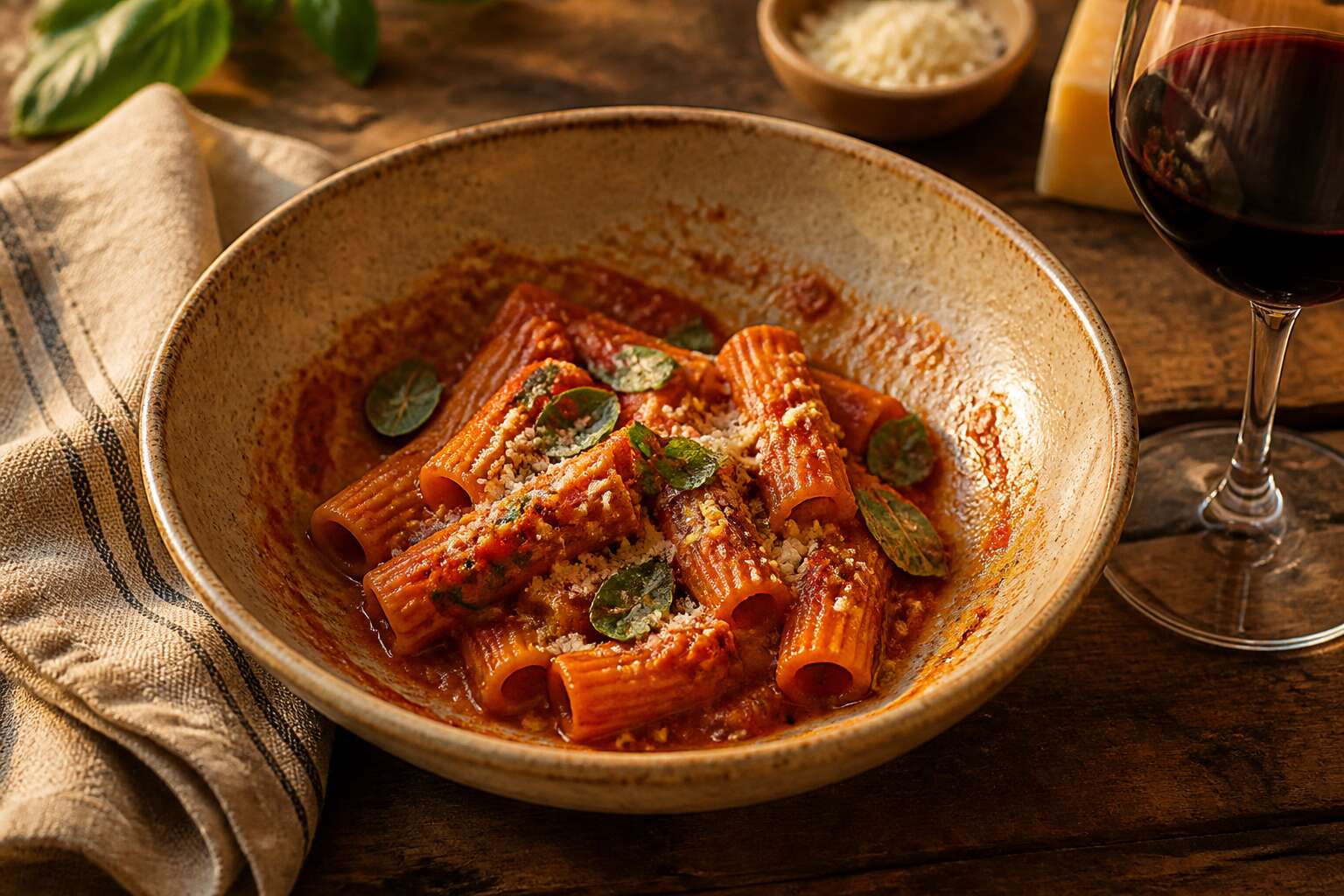
The Maillard reaction drives flavour development. When tomatoes, onions and garlic meet a hot pan, amino acids and reducing sugars combine to form hundreds of volatile compounds. The reaction peaks during cooking, but it keeps going as the dish cools. Those compounds rearrange through the night.
This is where the chemistry shifts into a slower phase. Collagen breaks into gelatin, starches retrograde, and liquid redistributes through every layer. The sauce thickens, pasta absorbs moisture, and flavours settle into a deeper profile. I find this slow chemistry is why is italian food better the next day.
Several reactions do the work:
- Aldehydes and pyrazines mellow into savoury notes
- Acids soften against fats and starches
- Sulphur compounds fade, removing harsh edges
Each component evolves at its own pace. The overnight rest lets them catch up with one another.
Herbs and Spices: Time as an Infuser
Basil and oregano behave differently after a night in the fridge. Their essential oils, mostly terpenes and phenols, need time to migrate into the surrounding sauce. A fresh sprinkle bursts bright, but an overnight rest allows those molecules to bind with fats and starches. This slow infusion is exactly why is italian food better the next day!
Consider how rosemary’s camphor-like sharpness softens, while thyme’s earthy notes deepen. The water in the dish acts as a solvent, carrying these compounds deeper into every ingredient. That is why a Sunday ragù tastes more cohesive on Monday.
Here is what time does to common Italian herbs:
- Basil loses its floral top note but gains a sweet background.
- Oregano becomes more pungent, less green.
- Sage turns nutty rather than resinous.
Each herb follows its own timeline, yet they all converge by morning. I call this the quiet science of infusion.
Starch Retrogradation and Sauce Harmony
Starch retrogradation changes the structure of cooked pasta and polenta. As the dish cools, amylose molecules form a firmer network. The texture becomes denser and more cohesive. Why is italian food better the next day? This is part of the answer.
The sauce also transforms overnight. Emulsions that looked unstable at dinner become uniform. Tomato solids and olive oil stop separating. Each spoonful carries the same ratio of acidity and richness.
- Pasta absorbs a controlled amount of moisture, plumping without turning mushy.
- Cheese sauces tighten and cling to every ridge.
- Vegetable ragùs release their liquid, then reabsorb it into a thicker matrix.
Overnight, starch and fat reach an equilibrium that neither has alone.
How Acid and Fat Balance Evolve Overnight
The aggressive acidity of a fresh tomato sugo mellows into something rounder after twelve hours. Acid molecules bind to fat particles, creating esters that carry subtle floral notes. Olive oil no longer floats in pools; it becomes part of the liquid, coating every piece of vegetable. This transformation answers why is italian food better the next day for many home cooks. The balance shifts, but not by dilution. It shifts by chemical bonding. A droplet of red wine vinegar in a braise will lose its harsh edge overnight. That same vinegar adds depth without shouting!
- Fat carries fat-soluble acids deeper into the dish.
- Water-soluble acids evaporate or bind with proteins.
Dairy sauces follow a similar path. The tang of pecorino integrates into the cream, so each forkful delivers the same gentle zip. Nothing dominates. Everything supports the next bite.
The Role of Texture in Next-Day Italian Food
Pasta: From Al Dente to Reabsorbed Goodness
An ordinary penne, on the first evening, holds its own against the teeth. By morning, that resistance has lessened. The outer layer has soaked up the surrounding liquid, turning into a delicate film that clings without effort.
Many wonder why is italian food better the next day. Texture offers the answer. The pasta’s interior, once chalky and separate, now holds together as a single, soft body. It does not dissolve. It simply absorbs the liquid around it until each piece weighs the same as its companion.
- The surface becomes satiny rather than slick.
- The center loses its raw, floury memory.
- The whole bite holds warmth longer, because moisture has replaced air.
Reheating only deepens this state, pressing the sauce into every fold. The texture no longer demands attention; it simply exists, and that is enough.
Crusts and Cheeses: The Perfect Meld
The crust of a baked lasagna holds a secret that only nightfall can reveal. What was a brittle, blistered layer of cheese and breadcrumbs returns as a yielding membrane, slick with the sauce it once resisted. The top layer of parmesan, sharp and unyielding at dinner, sinks into the strata beneath by morning. It does not vanish. It dissolves slowly, threading through each crevice.
- The top crust softens into a cohesive layer.
- Cheese fat seeps downward, enriching the middle.
- Sharp edges round off, leaving a uniform bite.
Cheese behaves differently after hours of rest. The proteins relax, the fat pools, and every shard of browned mozzarella turns translucent. The crust no longer shatters. It bends, then gives. This quiet transformation explains why is italian food better the next day. The textures abandon their borders and agree.
Why Cold Pizza Wins in the Morning
Research suggests cold pizza, eaten at 8 a.m. over the sink, has a cult following. I am a card-carrying member. The texture shift is the reason. The crust, once crisped, turns into a resilient chew. The cheese, now chilled, snaps cleanly. The sauce sets into a savory jam.
Cold pizza wins in the morning because it offers a complete sensory reset. You get a slice that holds its shape. No dripping, no flop. Just a firm, cold, compact bite.
- The cheese fat solidifies into a satisfying pop.
- The bread firms up without going stale.
- The cold surface contrasts with the dense crumb.
This is why is italian food better the next day. Texture takes over and makes the fridge your best line cook.
Layered Dishes and the Magic of Settling
In layered Italian cooking, the overnight rest transforms a chaotic stack into a cohesive whole. The next day, a slice of lasagna stands tall, each stratum distinct yet united. Tomato sauce thickens into a paste that clings to sheets of pasta. Béchamel firms into a custard like matrix. The cheese forms a skin that yields with a clean snap.
The magic of settling is physical. Gases escape, liquids redistribute. The soffritto releases its sweetness for a second time. This is why is italian food better the next day. Texture defines the experience. The layers no longer slide apart. They hold their shape, offering a clean cut and a compact bite.
Soups and Stews: A Thicker, Richer Body
A pot of ribollita or minestrone holds a quiet secret. The day after cooking, the broth turns velvety and dense. Vegetables soften into a uniform mass, and the liquid thickens into a body that clings to the spoon. This physical shift is the core of why is italian food better the next day. The starches from beans and potatoes release gradually, forming a suspension that tastes richer and more substantial than the original serving. Every ladleful carries weight, a deep savory depth that a single simmer cannot achieve. Time coaxes out this texture, turning a simple soup into a meal that satisfies on a primal level.
Iconic Italian Dishes That Improve Overnight
Ragù and Meat Sauces
I can think of no better proof for why is italian food better the next day than a ragu that has slept overnight in the fridge! The initial cooking forces liquid outward from the meat fibres. Refrigeration reverses this, creating a steep osmotic gradient that pulls the seasoned broth back into the muscle cells.
Consider the structural shift. Enzymatic activity that began at a roaring simmer continues quietly overnight. The sauce stops being a collection of discrete chunks and forges a singular, cohesive matrix.
- The gelatin from connective tissue sets into a velvety suspension that holds the fat stable.
- The meat fibres relax completely, shedding their initial resistance to the fork.
This is the result of patience. Serving it immediately yields a flavourful, but physically distinct, dish. Letting it rest gives you a sauce that clings with a gravity no quick reduction can replicate. That is the practical answer to why is italian food better the next day.
Lasagna and Baked Pastas
There is a specific satisfaction in cutting into a refrigerated lasagna the next afternoon. I have never found that feeling in a first-day slice. The block holds its shape under a knife. The sheets have swollen with moisture from their neighbours. The béchamel, once a separate ribbon, now forms a creamy binder that moves as one with the pasta.
What improves overnight in baked pastas can be listed plainly:
- Sheet pasta loses its brittle edge and becomes supple, absorbing the tomato and cream around it.
- The cheese strata collapse into a single unbroken layer.
- Pieces hold their shape in the pan, allowing for clean, even portions.
Why is italian food better the next day? The lasagna offers the definitive answer. A second pass through the oven completes the assembly. The layers no longer hold their original borders. One bite contains the entire dish in proportion!
Minestrone and Hearty Soups
Minestrone the next day is a different creature. The beans swell, the zucchini softens into the broth, and the tomato loses its sharpness. I find that a second bowl, reheated slowly, offers a fuller spoonful than the first ever did!
Why is italian food better the next day? For soups, the answer lies in the melding of starches and vegetables. The soup thickens without adding cream. The herbs, once assertive, become background. A list of overnight changes in minestrone includes:
- The broth gains body from simmered beans and split peas.
- Vegetables release their residual moisture, creating a cohesive texture.
- The salt distribution becomes even, so each bite tastes balanced.
This rest period transforms a simple soup into a meal with depth. A cold winter lunch becomes an exercise in patience, and the reward is a bowl that feels settled, hearty, and complete.
Polenta and Slow-Cooked Vegetables
Polenta is a stubborn thing. Fresh off the stove, it demands constant stirring. Leave it overnight and it firms into a sliceable block, ready for grilling or pan-frying. This shift in texture helps explain why is italian food better the next day.
Slow-cooked vegetables follow a similar path. Peppers and onions, after a night in the fridge, lose their raw edge. The oil they cooked in becomes a sauce of its own, coating every piece.
- Polenta sets into a structure that holds its shape on the plate.
- Vegetables absorb the cooking liquid and release sweetness without added sugar.
- Seasoning distributes evenly through every layer.
In the morning, I slice cold polenta, crisp it in a pan, and pile the vegetables on top. No effort, no stirring, just a settled meal.
Tiramisu and Dessert-Style Transformations
Tiramisu holds a secret that answers why is italian food better the next day. Freshly assembled, the layers feel separate, almost defiant. After a night in the fridge, the espresso soaks deeper into the savoiardi, and the mascarpone cream firms into a silken mass. The dessert settles into itself.
Other sweets follow the same logic. Panna cotta needs time to set, while zuppa inglese gains cohesion. Consider these overnight transformations:
- Moisture spreads evenly, softening edges.
- Dairy proteins relax and thicken.
- Sugars mellow, losing sharpness.
Digging a spoon into cold tiramisu the next afternoon yields a deeper cocoa note. No chef can rush that!
Storage and Reheating Methodology
Proper Cooling and Airtight Containers
Chefs call it the overnight effect, the reason your Sunday ragù tastes better on Monday. The secret sits in how you cool it and what you store it in. Slow cooling lets moisture sink back into the sauce, turning al dente pasta soft and dulling concentrated flavours. Rapid cooling locks the structure in place. A shallow tray in the fridge outperforms a deep pot. Extra surface area drops the temperature fast, preserving each layer’s integrity.
Airtight containers handle the second part. They stop steam from recondensing and watering the dish down, and they trap volatile oils from chilli and basil. They also shield your lasagna from the other smells in your fridge. Leftover curry and aged cheese can overpower a mild tomato sauce overnight. That constant exposure is one overlooked reason why is italian food better the next day when stored correctly.
The Best Way to Reheat Pasta
Reheating pasta requires a gentler approach than most people give it. A microwave alone will turn yesterday’s penne into a rubbery mass. I have found that a wide pan with a tablespoon of water works better. Set the heat to medium low and fold the pasta every few seconds. The water becomes steam and the steam rehydrates the pasta without making it soggy.
For thicker shapes like rigatoni, the sequence matters:
- The sauce goes into the pan before the pasta.
- The pasta joins it for a single toss.
- A lid traps the steam for thirty seconds.
The pan method brings back the original surface structure. The sauce re-emulsifies, the cheese melts evenly, and the seasoning tastes sharper. Why is italian food better the next day after this simple step? Because gentle heat gives the starch a second chance to bond with the sauce, and that bond is the texture you lost in the first round of cooking.
Skillet vs. Oven: Pizza and Bread
Skillet versus oven. For pizza and bread, the choice changes the crumb. A skillet, preheated dry, revives the bottom crust without turning the interior leathery. The oven, by contrast, surrounds the piece with ambient heat, which works for thick focaccia but can dry a thin slice. Why is italian food better the next day? Because these methods respect the original structure.
- Skillet: medium heat, no oil, cover for a minute.
- Oven: 180°C, five minutes, then rest.
Both approaches restore moisture through controlled steam, not aggressive heat. A slice of pizza leaves the pan with a crackling base and a soft top. Bread, cut thick, reheats evenly with a crisp shell. That contrast exists only after a night in the fridge.
Sauces and Soups: Gentle Reheating
Gentle reheating matters most for sauces and soups because these dishes rely on suspended emulsions and delicate vegetable textures. A rapid boil breaks the bond between oil and tomato, leaving a greasy slick on the surface. The answer to why is italian food better the next day lies in how you bring it back.
Use a low flame and stir constantly until the first bubbles appear at the edge. Remove from heat and let residual warmth finish the job. This method preserves the body that developed overnight:
- Heat only the portion you plan to eat.
- Add a spoonful of pasta water to loosen a thick sauce.
- Stop before a full boil; the carryover heat is enough.
For soups, the same principle applies. Repeated boiling destroys the texture you waited overnight to build.
Common Mistakes to Avoid
Most home cooks destroy the very qualities that answer why is italian food better the next day. They freeze the entire batch, reheat in a microwave, or leave the container open in the fridge. Each of these choices strips away the overnight magic.
Common mistakes include reheating too quickly, using high heat, and stirring without care. Adding cold sauce directly to a hot pan shocks the emulsification. For layered dishes, cutting before reheating lets precious moisture escape through the exposed edges.
- Never reheat more than twice.
- Avoid plastic wrap touching the food.
- Do not reheat in a microwave unless absolutely necessary.
Storage itself demands attention. Transfer leftovers to a shallow container while still warm, then seal it tightly. This prevents a sour note from developing. Reheating should mirror the original cooking process, not rush it. Patience preserves the structure that makes the next day superior.
The Cultural Perspective of Leftover Italian Food
Cucina Povera and Food Waste Philosophy
Italian cooking grew from cucina povera, the practice of stretching modest ingredients into filling meals. Nothing was wasted, and every dish carried the expectation of a second life. That cultural habit turned leftovers into a point of pride rather than a compromise. In many South African homes with Italian roots, the same philosophy holds: a pot of ragù or a tray of baked pasta is often cooked ahead, because everyone knows the next day tastes better.
This is why is italian food better the next day. It is not a quirk of chemistry alone. It is a tradition built on respecting food and avoiding waste. The overnight rest lets ingredients settle and deepen, transforming the meal into something new. That is the cucina povera legacy, a practical wisdom passed down through generations of cooks who never discarded food lightly.
The Sunday Sauce Tradition
The Sunday sauce tradition gives this philosophy its heartbeat. Every weekend, a pot of tomatoes, meat, and herbs begins its slow transformation on the stove. Family members stir, taste, and argue over seasoning. Yet the pot is never fully enjoyed that evening. It rests overnight, and only then does the sauce reveal its true depth.
This routine explains why is italian food better the next day. In Italian culture, leftovers carry no stigma. They are called “la seconda vita,” the second life, and they are awaited with anticipation. The Sunday sauce, served on Monday, becomes a different dish entirely. The meats soften further, the tomato brightens, and the fat rounds into silkiness.
South African kitchens with Italian heritage keep this rhythm alive. Pasta, baked trays, and ragù are prepared ahead, not out of convenience alone, but out of respect for the process. The overnight wait is a quiet promise that the best forkfuls are still to come.
Why Italian Grandmothers Insist on Second-Day Flavor
The kitchen becomes silent when the grandmother covers the pot. She tastes, nods, and steps away. She does not serve. She knows the real meal belongs to tomorrow. Why is Italian food better the next day? The grandmother knows. The cultural perspective of leftover Italian food is built on this patience.
Italian grandmothers insist on second-day flavor because they have seen too many dishes ruined by haste. They trust the overnight rest as part of the recipe itself. The first evening is not the final moment. The second day completes the process. I have watched this scene repeat in South African kitchens where the family keeps Italian recipes alive. The grandmother will not reheat before the appointed hour. She simply covers the pot, and everyone waits. What a quiet demand that is!

0 Comments