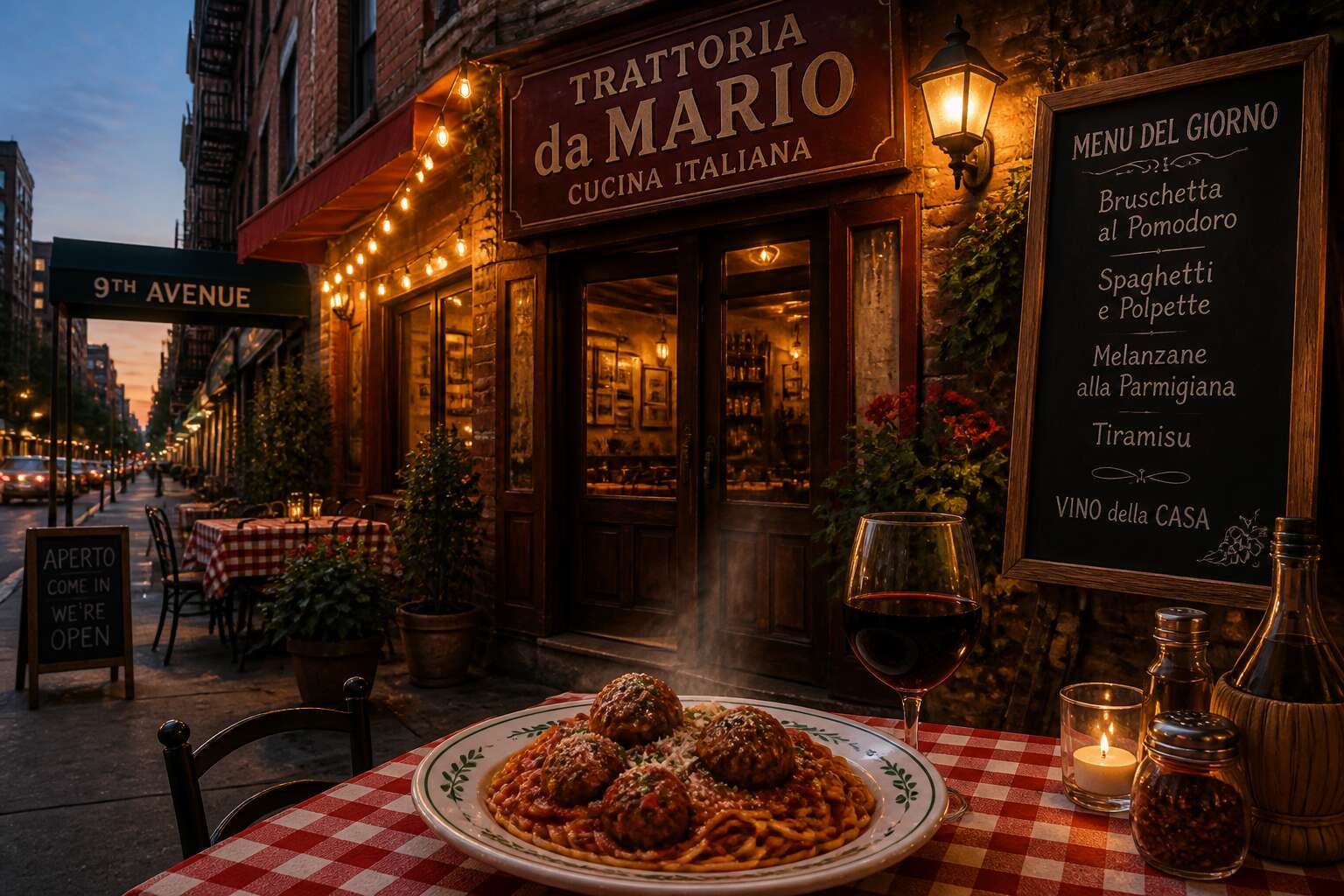
The Heart of Italian Dining in Hell’s Kitchen
A Historic Culinary Corridor
Hell’s Kitchen has long been a theatre district of appetites, where the curtain rises on a plate of hand-cut pasta each evening. The sizzle of garlic in olive oil is the street’s overture, a scent that wafts from doorways and entices the weary traveler. Here, a simple supper becomes a story, told in rich tomato sauces and the satisfying chew of fresh mozzarella.
Within this vibrant corridor, the quest for authentic italian food 9th ave is a personal pilgrimage. Family-run establishments, their walls adorned with faded photographs of the old country, serve recipes that have survived generations. The aromas are a lexicon of tradition, from the sharp bite of pecorino to the sweet perfume of basil. These dining rooms are not just places to eat; they are sanctuaries of heritage.
Many visitors find their favorite spot by observing the daily rhythm of the block. A walk down the avenue often reveals:
– The late afternoon ritual of chefs prepping fresh seafood.
– The clatter of espresso cups as the dinner rush begins.
– The scent of wood-fired ovens warming the pavement.
This neighborhood is a living testament to the American Dream, built on a foundation of red gravy and hard work. The enduring appeal of italian food 9th ave lies in its consistency and its soul. It is a place where the owner knows your name, your usual order, and the story behind the wine you drink. The experience is a constant, a reliable anchor in a city of constant motion.
Why the Neighborhood Became an Italian Hub
The railroad yards and Hudson River piers drew Italian immigrants to Hell’s Kitchen in the 1890s. They settled in tenements and started cooking for the dockworkers. That hardscrabble beginning shaped the character of italian food 9th ave.
Location mattered. Freight ships docked nearby, delivering fresh anchovies, plum tomatoes, and olive oil straight from Italy. Families pooled wages to open small storefronts. The aroma of simmering ragù soon marked the entire block.
- Grocers imported olive oil and cured meats by the barrel.
- Boarding houses served family-style meals to workers.
- Festivals honored patron saints with street-long feasts.
Those early kitchens were practical, not polished. Yet their methods endure! When I seek italian food 9th ave, I taste a century of dockyard grit translated into plate after plate of honest food.
How the Dining Scene Has Evolved Over the Decades
Since 1990, more than half the original storefronts on 9th Ave have changed hands, yet the block still smells like simmering garlic. The center of Italian dining in Hell’s Kitchen now mixes old families and new owners. I watch regulars order the same plates their grandparents ate, while chefs grew up in a different America.
The dining scene evolved because the neighborhood did. As tech workers moved in and rents rose, the old red-sauce joints had to adapt or disappear. Some closed, but others reinvented themselves with deliberate changes:
- Menus shrank, focusing on a few dishes done exceptionally well.
- Wine lists moved beyond Chianti to include obscure Italian varietals.
- Dining rooms shed their checkered tablecloths for warm, minimalist design.
None of that erased the soul of italian food 9th ave. It remains a place where garlic hits the pan before the first glass is poured. For anyone seeking italian food 9th ave, the evolution is visible in the details!
Restaurant Gems Along the Avenue
Family-Owned Trattorias Serving Generations
The menu at Terra’s Trattoria has changed twice in 47 years. That is the quiet miracle of italian food 9th ave. When I sat down last Tuesday, Nonna Rosa was rolling out sfoglia by the window, same flour dusted rhythm she brought from Abruzzo. Three generations now work the pass, the wood fired oven, and the register. The son handles the lamb ragù, the granddaughter crafts the panna cotta.
These places thrive on continuity. The owners buy from the same greengrocers, shake familiar hands, and remember customers who first visited as children. Sunday brings the full pranzo, a ritual of antipasti, handmade tortellini, roasted pork, and almond biscotti. Order the cellar’s reserve barolo, but only after a nod from Nonna!
Some gems hide in plain sight:
- Giovanni’s downstairs salumeria debuted in 1954
- Rosa’s kitchen presses fresh pasta every morning
Every tray that emerges from those doors carries decades of history.
Upscale Ristorantes for Special Occasions
When an occasion demands more than a meal, the upscale ristorantes along 9th Ave step forward. I have spent evenings in these rooms watching candlelight catch on crystal, noticing how waiters remember every diner’s preferences, and reading wine lists that span decades.
The tasting menu at Il Cortile changes with the season, but the precision remains constant. Each course arrives with intention. For anniversaries or significant business dinners, the chef’s counter provides an intimate view of the kitchen’s controlled rhythm.
Consider the refined options:
– Il Cortile’s seven course degustation with barolo pairings
– Marechiaro’s rooftop terrace overlooking the avenue
– La Scala’s private dining room with a working fireplace
These spaces elevate italian food 9th ave into an occasion. The price reflects the craft, and the memory outlasts the evening.
Casual Spots for Quick Bites and Lunch Breaks
At midday, 9th Ave’s casual spots fill with regulars who know exactly what they want. The aroma of simmered ragù pulls you into narrow doorways. I often grab a seat at the counter of Sal’s Kitchen, where the arancini stay crisp and the espresso machine hisses nonstop.
- Tony’s Slice House for a folding slice of margherita
- Il Banco for porchetta sandwiches on house-baked ciabatta
- Trattoria Piccolo for a three-course lunch under ten minutes
These are not compromises. They are the daily rhythm of italian food 9th ave. You can be in and out in a quarter hour or linger over a glass of Lambrusco. Either way, the food is honest and immediate. That simplicity is the point.
Hidden Wine Bars and Intimate Enotecas
Some of the best italian food 9th ave has to offer hides behind unmarked doors. A friend once pulled me into Enoteca Sotto, a candlelit room where the wine list appears on a chalkboard and the chef delivers warm focaccia with every pour.
These enotecas reward curiosity. You will not find neon signs or laminated menus. You find barolo by the glass, cured meats sliced to order, and the most personal version of italian food 9th ave.
- Cantina del Vino for rare Piedmontese bottles
- La Piccola Enoteca for natural wines and small-batch olive oil
- Vino e Formaggio for aged gorgonzola and barbera pairings
The regulars occupy their usual spots without asking. Staff remember your name, your preferred vintage, and which seat you like. Finding that level of care along a busy avenue is rare. Locals keep these addresses close, returning week after week.
Bakeries and Gelaterias Worth the Detour
The scent of warm dough pulls you toward storefronts where glass cases glow with golden layers of sfogliatella. Bakeries along the avenue operate on a rhythm that began long before sunrise, turning out focaccia and semolina loaves for the neighborhood’s early risers. A single bite of a pistachio cannolo, its shell shattering with a quiet crack, can transport you to a Sicilian pasticceria. For those seeking a frozen finish, the gelaterias craft their offerings with a dedication that borders on obsession.
Several sweet stops have earned devoted followings:
– Dolce Panetteria for their ricotta-filled zeppole on Fridays
– Gelato di Casa for the affogato made with espresso pulled to order
– Forno Antico for the maritozzi, split and filled with whipped cream
Each of these shops contributes to the landscape of italian food 9th ave. The best approach involves walking in without a plan and asking the counter staff what they just pulled from the oven. Locals often order the same item every visit, but the real pleasure lies in discovering the daily specials scrawled on paper. A summer evening might end with a cup of blood orange gelato, while a cold winter afternoon calls for a thick slice of panettone. The ritual of stopping for something sweet has become as essential as the meal itself, a small indulgence that lingers long after you leave the counter.
Dishes That Define the Italian Experience
Handmade Pasta You Can’t Miss
On 9th Ave, the pasta boards fill with shapes you won’t find anywhere else. A single bite of hand-rolled pappardelle, its rough edges catching a slow-simmered ragù, explains why this street draws daily crowds. I have watched chefs fold silken tagliatelle before the lunch rush, fingers moving with practiced ease. These pastas taste of egg and flour, nothing more, yet they leave a lasting impression.
Order these three plates, and you will understand the craft!
- garganelli with wild boar sauce
- trofie tossed in basil pesto
- ravioli stuffed with ricotta and lemon zest
Each dish arrives fresh, often made within hours of your visit. That immediacy defines italian food 9th ave, turning a simple meal into a memory you can taste again.
Wood-Fired Pizzas and Crispy Flatbreads
The scent of blistering crust and smoked mozzarella pulls you toward the corner ovens before you even see the flames. On 9th Ave, the wood fire is not a gimmick. It is a daily ritual. The bakers here use it to transform simple dough into discs of charred perfection, a process that feels both ancient and immediate.
One bite of a pie from italian food 9th ave reveals the difference. The crust is leopard-spotted, puffed at the edges, and chewy in the center. Toppings are applied with restraint. San Marzano tomatoes, fresh buffalo mozzarella, and a drizzle of olive oil. That is often all it takes.
For those who prefer a crunch, the crispy flatbreads offer a parallel experience. They are rolled thinner, baked faster, and come out shattering with a satisfying snap.
– Bianca flatbread with rosemary and sea salt
– Salsiccia flatbread with fennel sausage and pickled onion
– Funghi flatbread with wild mushrooms and taleggio
These options change with the season, but the quality remains constant. I have seen regulars order the same flatbread for years, a quiet testament to consistency. The texture is the star here. The contrast between the crackling surface and the soft, airy interior is a study in control. You will not find heavy, doughy bases here. Instead, you get a careful balance of heat and timing, executed with precision.
The wood-fired section of the menu on italian food 9th ave is a reminder that Italian cooking excels through simplicity. The ingredients are few, but the technique is demanding. When the oven door opens and the heat rushes out, you understand why this street has become a destination for those seeking the real thing.
Classic Mains: From Veal Parmigiana to Osso Buco
The first forkful of veal Parmigiana tells you everything about the kitchens lining 9th Ave. The cutlet is pounded thin, breaded, and fried until it shatters slightly under pressure. The tomato sauce tastes of basil and patience.
Osso buco follows a slower path. The veal shank braises for hours in white wine and broth, the marrow turning silken. We scoop it out with small spoons, a quiet ritual repeated across generations.
For those exploring italian food 9th ave, these classics anchor every menu:
- Veal Parmigiana, the dish regulars trust most
- Osso Buco served with saffron risotto
- Chicken Scarpariello, bright with lemon and sausage
These mains survive because they resist shortcuts. They reward the patient.
Fresh Seafood Preparations with an Italian Twist
Seafood on italian food 9th ave follows a philosophy of restraint. Whole branzino arrives with a slick of green parsley oil. The flakes lift cleanly and taste of the sea, nothing else. Char brings smoke, lemon brings acid, and the brine does the rest. Chefs here never mask the catch with heavy sauces.
One kitchen coats the fish in a salt crust before roasting. Another fries smelts until the bones crack between your teeth. Both approaches respect the ingredient in ways that matter.
For diners who want variety, the common move is to share several small plates:
– Grilled calamari, tender over charcoal
– Sicilian tuna with fennel and orange segments
– Clams simmered in white wine and garlic
This side of italian food 9th ave rewards those who trust simplicity. That trust keeps the recipes honest.
Decadent Desserts and After-Dinner Digestifs
Dessert on italian food 9th ave is a decisive affair, not an afterthought. The final course often reveals the kitchen’s true character. A classic tiramisu arrives with a bitter cocoa bite and a silken mascarpone layer, its espresso-soaked savoiardi still holding a faint resistance. The restraint practiced on the savory plates extends here, where sweetness is balanced, never cloying.
Some houses still roll their own bomboloni to order, dusting them with fine sugar while the interior stays molten. Others push a wedge of ricotta cheesecake that tastes of fresh sheep’s milk and candied orange. The most persistent memory, however, is the tart, simply sliced with a smear of cream. These are the kinds of endings that anchor a long meal and keep you contemplating the next visit.
The dining room shifts slightly after the last plate clears. Espresso machines hiss with a renewed purpose, and the conversation turns to digestifs. On italian food 9th ave, the after-dinner ritual is almost sacred.
– A pour of amaro, herbal and bitter, to settle a heavy feast
– A chilled limoncello that cuts through any lingering richness
– A glass of vin santo with cantucci for the traditionalist
The bottles behind the bar rarely gather dust. Consider the limoncello, served in a frosty glass, its acidity sharp and immediate. This tradition, once a grandmother’s kitchen staple, now caps the evening with a deliberate closing note. Those who linger here, talking over the final sip, understand that the meal isn’t truly finished until the glass is empty.
Making the Most of Your Visit
Best Times to Dine and Avoid the Crowds
A seat at the counter changes everything. The lunch rush on italian food 9th ave begins quietly around 11:45, then swells by 12:30. I have found that arriving at 11:15 earns you the full attention of the staff and a clear view of the kitchen. Dinner tables pack out after 7:15 most evenings, so plan accordingly.
Visitors from Johannesburg and Cape Town often ask me for the ideal window. The hour between 5:30 and 6:15 works best for a relaxed meal, because the early crowd has not yet arrived.
- Tuesday to Thursday evenings are calmer than Friday or Saturday nights.
- Sunday brunch draws a different crowd entirely.
Shifting your schedule by even thirty minutes changes the texture of the entire experience, and those narrow dining rooms reward patience.
How to Snag a Reservation at Popular Spots
Reservations on italian food 9th ave operate on their own logic. Callbacks are returned between 2 and 4 p.m., when the kitchen is quiet, so phone then rather than at noon. A few trattorias hold tables for walk-ins even when the books read full. I have learned to ask for the chef’s counter at the moment of booking; that request often angles you past the waitlist. Consider the patterns that matter:
– Some spots open reservation lines on the first of each month at 9 a.m. sharp.
– Others release seats twenty-four hours ahead.
Set a calendar reminder for those windows. Nothing is more disappointing than staring at a full dining room you could have sat in ten hours earlier.
What to Order on a First Visit
A first visit to italian food 9th Ave is less a meal and more a negotiation with your own appetite. The menus are long, the specials are whispered, and the portion sizes assume you have not eaten since Tuesday. Do not bring a plan. Bring a loose strategy and a willingness to be overruled by the table next to you, who have clearly been coming here since the Reagan administration.
The smart play is to focus on what the kitchen does when it is not trying to impress a reviewer. That means the daily specials scribbled on the board near the espresso machine, not the laminated menu. Ask your server what is moving today. They will tell you. They always tell you, usually with a hand gesture that suggests they are revealing state secrets. Order that, and respect the carb loading. A rough list for the uninitiated:
– The antipasto misto, which is not a salad, despite what your nutritionist would prefer to believe.
– A handmade pasta shape you cannot pronounce. That is the point.
– A second pasta dish. Yes, two. You are on holiday from your own rules.
– The crispy artichoke special if it exists. It is the best thing on the block.
Resist the urge to order the chicken parm on the first pass. It is solid, but it is the culinary equivalent of a handshake. You are here for a full embrace. Focus on the dishes that take time and patience, like a slow-braised lamb ragu that has been simmering since the morning rush. And remember that the bread basket is a trap. It looks harmless, but it will fill space you need for the good stuff. Pace yourself, ask for the chef’s recommendation on italian food 9th ave, and trust that the espresso at the end will revive you for the walk home.
Pairing Regional Wines with Your Meal
The wine list at italian food 9th ave reads like a geography lesson you actually want to study. A Langhe Nebbiolo cuts through the fat of a braised short rib, while a Vermentino from Liguria lifts the brininess of clams. I have learned to let the sauce dictate the grape. For tomato-heavy ragùs, choose a Sangiovese with bright acidity. For cream-based pastas, a soft Chardonnay from Friuli works better than you expect.
One rule I keep is that when a dish originates in a specific region, the wine from that region removes the guesswork.
- Piedmont for truffle dishes and rich meats.
- Campania for pizza and fried seafood.
- Veneto for risotto and lighter pastas.
The staff on italian food 9th ave have poured for decades. Their whispered suggestions about unfamiliar bottles often become the evening’s highlight.
Navigating Dietary Restrictions and Allergies
Nearly one in ten diners carries a food allergy, and on italian food 9th ave every kitchen handles that reality without drama. The waitstaff have seen every variation: lactose intolerance, celiac disease, a severe nut allergy that sends families into a spiral. They respond with a clear list of what is safe and what is not.
Ask about the pasta water first. Some places boil every shape in the same pot, while others keep a dedicated pot for gluten-free requests. The same logic applies to fryers and griddles. A few questions save a ruined evening.
- Shared fryers in the hidden wine bars.
- Pistachio dust on the gelato.
- Butter lurking in the sauces.
That level of detail makes italian food 9th ave comfortable for anyone. The kitchens know their cross-contamination points, and the servers know the answer before you finish asking.

0 Comments