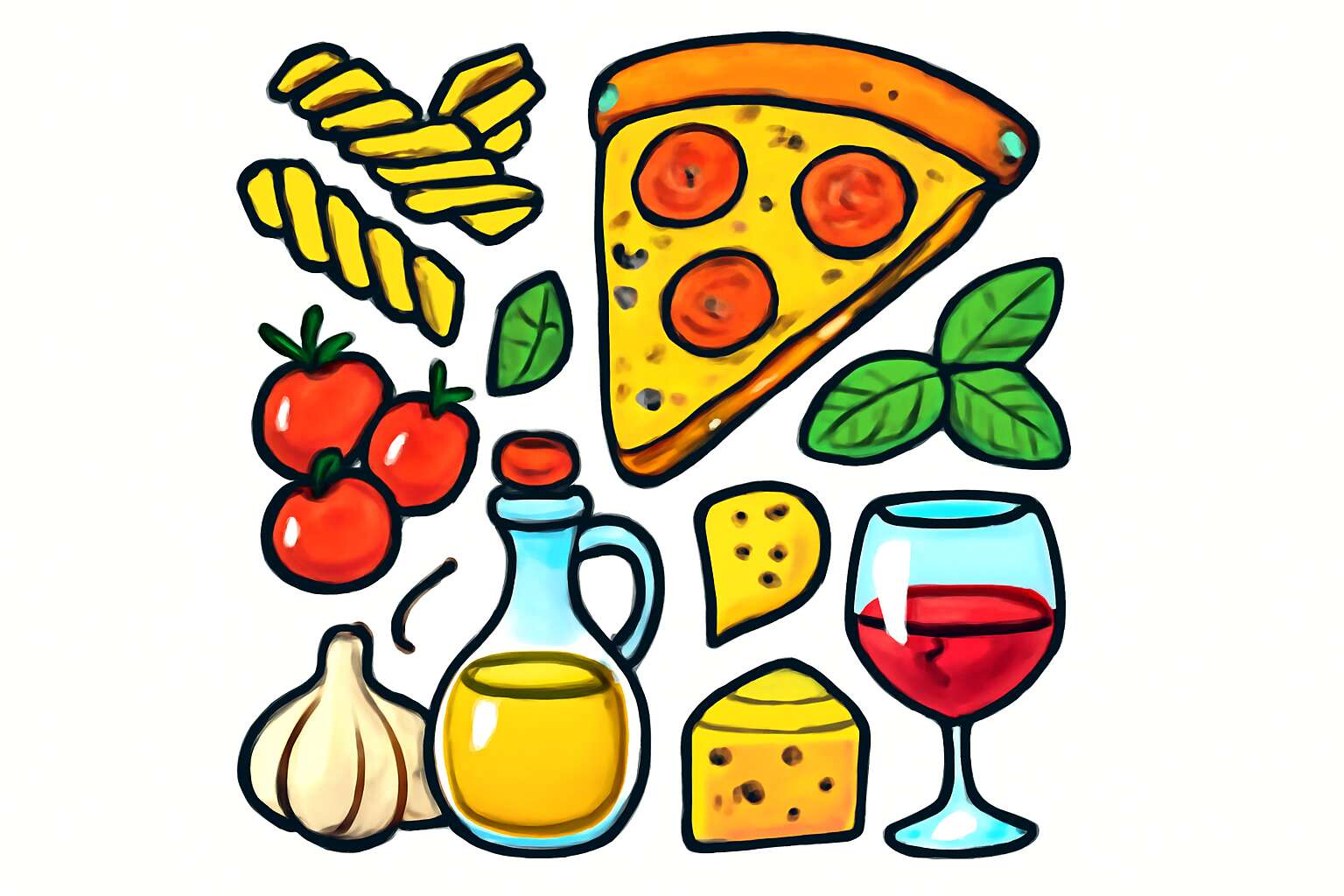
Visual impact and usage for Italian cuisine clipart
Purposes and use cases for Italian cuisine clipart
A striking stat anchors the reader: 80% more time on pages with strong visuals. italian food clipart can pull a reader into a sun-drenched trattoria from a South African screen. The visual impact of this clipart is more than ornament—it’s a doorway to flavor and mood.
When used with care, this visual asset amplifies branding and readability. Consider formats and contexts like menus, social banners, recipe cards, and packaging—each needs consistent iconography.
- Menus and placemats that guide the eye
- Social media templates that spark curiosity
- Product packaging and gift sleeves with a distinct Italian cadence
In a world of fast scrolls, these images carry a whisper of cafe bells, basil, and warm kitchens. They set the tone, invite trust, and keep content memorable without shouting.
Best practices for incorporating clipart in food blogs
Visuals convert—the world is a coffee-fueled scroll these days, and 80% more time on pages with strong visuals proves it. Italian food clipart isn’t garnish; it’s a passport to a sunlit trattoria projected onto a South African screen.
In SA food blogs, I notice the visual impact of italian food clipart sets tone and pace, communicating warmth without a word and inviting readers to linger as they scroll.
Hallmarks I watch for include:
- Harmonized color that nods to Italian ingredients
- Icon sets that stay recognizable across formats
Accessibility and legibility hover in the background, quietly boosting SEO without shouting.
Design tips: color palettes and composition for pasta and pizza icons
In a scroll-hungry nation, visuals boost engagement by as much as 80%, and italian food clipart can evoke sunlit terraces on a South African screen, inviting readers to linger.
For pasta and pizza icons, I lean into color palettes that nod to Italian ingredients—tomato red, basil green, creamy mozzarella—so the icons feel deliciously familiar without shouting.
- Color palettes that echo Italian ingredients: tomato red, basil green, mozzarella ivory.
- Composition that respects negative space, ensuring legibility across devices.
- Clear silhouettes with subtle shading to convey texture without clutter.
Your choice of scale and contrast keeps the motif harmonious whether on a large hero image or a compact social card.
Platform-specific usage: blog posts, social media, and print materials
In a scroll-hungry nation, visuals boost engagement by up to 80%—and italian food clipart can transport readers to sunlit terraces on a South African screen. For blog posts, it anchors stories with familiar ingredients and a warm, editorial tone; on social media, it acts as crisp, thumb-stopping shorthand; in print, it lends charm to menus and brochures.
Platform-specific usage shapes how the art lands: blog visuals breathe with generous negative space and legible silhouettes; social posts thrive on high-contrast, scalable icons that retain character when resized; print materials demand vector sharpness and faithful color reproduction. In South Africa, lively reds, basil greens, and mozzarella ivory resonate with local markets and dining rooms, creating a familiar, appetizing vibe that keeps readers scrolling and pages turning.
SEO and content strategy for clipart assets
Keyword research and long-tail variants related to Italian cuisine clipart
Visuals grab attention; stats show pages with engaging imagery convert noticeably more and linger longer. SEO for clipart assets starts with rigorous keyword research and the crafting of long-tail variants around italian food clipart. In South Africa’s vibrant food scene, these targeted terms bridge readers from Cape Town to Johannesburg with Italian-inspired visuals that feel local and approachable. The aim is to map asset collections to search intent so each image earns relevance and traffic.
- Italian cuisine clipart variations for regional dishes
- pasta illustration long-tail terms for recipe posts
- pizza icon sets for menu and review pages
Beyond naming, the strategy hinges on consistent metadata and cross-linking to maintain coherence across blog posts, social channels, and print materials. Localized terms keep Italian visuals resonant for South African audiences, while preserving global search visibility.
On-page optimization: titles, meta descriptions, alt text
Imagery in content converts. In the digital marketplace, pages with engaging visuals convert up to 42% higher and hold readers longer. For clipart assets, on-page optimization guides search engines to the right visuals. In South Africa—from Cape Town to Johannesburg—Italian-inspired visuals feel local and approachable!
On-page optimization for italian food clipart hinges on titles, meta descriptions, and alt text that read naturally and match intent. Craft titles that are clear; meta descriptions that invite curiosity; and alt text describing the scene for accessibility and ranking. The collection anchors to global and local searches with precision.
Beyond the basics, cohesive metadata across posts, social, and print creates a single narrative. Localized wording keeps italian visuals resonant while preserving broad visibility.
Structured data and image SEO: schema and image sitemaps
Pages with engaging visuals convert up to 42% higher, and structured data nudges search engines toward the right italian food clipart. In this space, schema marks images with intent, capturing context readers instinctively seek. For South Africa—from Cape Town to Johannesburg—this alignment resonates, marrying local flavor with global visibility.
- ImageObject to describe the visual’s metadata and context
- Article/CreativeWork linkage to connect the clipart to editorial content
- Image sitemap to guide crawlers to every asset
Such a constellation makes the asset ecosystem coherent, ensuring search engines understand not just what is shown, but why it matters to the broader culinary narrative.
Content formats: tutorials, galleries, and case studies
Stir a little color into your search strategy and watch engagement rise like bread in a warm oven. In South Africa, from Cape Town’s markets to Johannesburg’s kitchens, italian food clipart acts as a compass for readers and search engines alike. Visuals do more than decorate a page; they invite flavor, mood, and context into the narrative.
Content formats to showcase these assets include:
- Tutorials that teach readers to recreate sauce textures with icons
- Galleries that weave color stories around pasta and pizza
- Case studies showing how clipart boosts recipe roundups and seasonal menus
Strategic asset storytelling blends rhythm, taxonomy, and locality, guiding editors to curate cohesive collections that honor both global appetites and South African tastes. italian food clipart anchors the visual language while giving search engines clear intent through editorial context and narrative structure.
Asset types and style categories for Italian-inspired clipart
Food item categories: pasta, pizza, gelato, cheese, wine
South Africa’s food storytellers lean on italian food clipart to make menus sing and blogs breathe. A glance at vibrant assets can lift engagement by about 20%, turning simple recipes into immersive journeys. In this realm, pasta, pizza, gelato, cheese, and wine leap from the page with luminous texture and precise charm.
- Vector icons (SVG, AI) for scalable clarity
- Raster formats (PNG, JPEG) for textured warmth
- Watercolor and hand-drawn styles that evoke markets and trattorie
- Line art and flat designs for crisp, modern layouts
Style categories range from vintage and rustic to modern and geometric, with watercolor silhouettes or crisp line art. When these moods meet the right asset types, italian food clipart tells cohesive stories—whether in a gallery of pasta, pizza, gelato, cheese, and wine or in feature spreads that celebrate la cucina.
Style palettes: line art, flat design, watercolor, 3D renderings
Bold visuals lift menus as surely as flavors lift the palate; engagement climbs by up to 20% when vibrant assets flank a recipe. In South Africa, diners skim with their eyes before tongues taste, and a single image becomes a passport to an everyday feast!
Asset types span a spectrum, each chosen for texture, scale, and mood:
- Vector icons (SVG/AI) for clarity
- Raster formats (PNG/JPEG) for warmth
- Watercolor and hand-drawn styles evoking markets
- Line art and flat designs for crisp layouts
Style palettes bloom alongside asset types: line art, flat design, watercolor, and 3D renderings can co-exist to tell a story. Style categories range from vintage and rustic to modern and geometric, with watercolor silhouettes or crisp line art. When these moods meet the right asset types, italian food clipart tells stories—whether in a gallery of pasta, pizza, gelato, cheese, and wine.
File formats and usage rights: PNG, SVG, EPS, licensing
Asset types for Italian-inspired visuals span vector precision and tactile warmth. PNGs and JPEGs deliver approachable warmth, while SVG and AI formats keep icons crisp at any size. EPS files add print-ready flexibility for glossy menus or wall panels. In tandem, style palettes—line art, flat design, watercolor, and even 3D renderings—can mingle to set moods, from bustling markets to serene dining rooms. For italian food clipart, versatility ensures a gallery of pasta shapes, pizzas, and gelato stories that work across SA menus, blogs, and social posts.
Key asset types map texture to tone.
- Vector icons (SVG/AI) for clarity and scalability
- Raster formats (PNG/JPEG) for warmth and accessibility
- EPS for print-ready flexibility and color management
- Licensing options: royalty-free and rights-managed to suit campaigns
Licensing and usage rights are a practical compass: choose terms that cover web, print, and social in SA, with clear attribution rules where needed. Worldwide, non-exclusive licenses often work best for evolving menus and campaigns, while rights-managed can lock in a flagship initiative without hidden costs. The aim is freedom to flourish without getting tangled in red tape.
Customization options: editable layers and color swatches
Asset types map texture to tone in clipart, offering crisp vector icons for clean lines and flexible size, plus raster formats for approachable warmth. EPS lends print-ready flexibility for glossy menus, while licensing options cover both royalty-free and rights-managed campaigns.
- Vector icons (SVG/AI) for clarity and scalability
- Raster formats (PNG/JPEG) for warmth and accessibility
- EPS for print-ready color management
Customization options include editable layers and color swatches so teams can experiment with line art, flat design, or watercolor moods—all while keeping italian food clipart cohesive with SA menus and social posts.
Accessibility and color contrast considerations
In the bustling world of Italian-inspired menus, visuals do the heavy lifting. Bold iconography can turn a scroll into a craving. This collection of italian food clipart blends clarity with warmth, inviting audiences to linger on a page or feed long enough to imagine a bite.
Asset types span crisp vector icons (SVG/AI) for clean lines and scalable use, alongside raster formats (PNG/JPEG) that carry warmth. EPS provides print-ready color management for glossy menus. These choices align with Italian-inspired palettes and flexible social formats for SA menus and social posts.
- SVG/AI vector icons
- PNG/JPEG rasters
- EPS print-ready
Style categories offer line art, flat design, watercolor moods, and 3D renderings that echo rustic trattorias or modern pizzerias. When layering color, ensure high contrast for accessibility: WCAG AA ratio of 4.5:1 for body text and sufficient contrast for icons on any backdrop; descriptive alt text helps screen readers.
Licensing, accessibility, and publishing best practices
Licensing models for clipart: commercial, editorial, end user
Visuals grab attention before a reader finishes the first paragraph; their memory lingers longer when a tasteful Italian plate appears alongside copy. We see how shared plates and clipart spark conversations. Italian food clipart can elevate storytelling for South African audiences, balancing authenticity with local flair that feels both vibrant and approachable.
- Commercial licensing for monetized websites, products, and campaigns
- Editorial licensing for journalism, reviews, and non-profit reporting
- End-user licensing for personal or internal use
Licensing models for clipart should be clear and flexible to suit varying publishing needs.
Publishing and accessibility best practices sit behind the scenes of compelling visuals. For italian food clipart, high-contrast palettes and descriptive alt text such as ‘pasta dish with basil’ support readers using screen readers, while scalable formats like SVG and thoughtful image sitemaps improve discoverability.
Accessibility: alt text and color contrast for readability
Visuals boost engagement by up to 80% for food articles, and italian food clipart can be the spark that keeps South African readers scrolling.
- Commercial licensing for monetized sites
- Editorial licensing for journalism and non-profit reporting
- End-user licensing for personal or internal use
Accessibility matters: describe images with precise alt text—think “pasta dish with basil”—and ensure high color contrast to support readers using screen readers.
Publishing best practices favor scalable formats like SVG and structured image sitemaps, plus descriptive file names and alt attributes. When these elements align, italian cuisine visuals become discoverable across blog posts, social shares, and print collateral, especially for audiences in South Africa seeking authentic yet approachable storytelling.
Copyright and attribution requirements
Visuals boost engagement by up to 80% for food articles, and italian food clipart can spark a South African reader’s scroll, turning a recipe post into a memorable moment.
Commercial licensing for monetized sites, editorial licensing for journalism, and end-user licensing for personal use shape how you present; respect copyright and attribution requirements when using italian food clipart.
- Commercial licensing for monetized platforms.
- Editorial licensing for journalism and nonprofit use.
- End-user licensing for personal use.
Accessibility matters: describe images with precise alt text—think “pasta dish with basil”—and ensure high color contrast to support readers using screen readers.
Publish in scalable formats like SVG, and deploy image sitemaps with descriptive file names and alt attributes. When these steps align, the visuals become discoverable across blogs, social, and print in South Africa.
Distribution channels: design marketplaces, blogs, and social media
Licensing should match your site’s purpose, avoiding sticky legal traps. On monetized platforms, seek clear, transferable permissions and visible attribution when required; editorial use should respect newsroom rights; personal-use assets offer gentler terms. Handle clipart with due diligence to protect creators and readers alike!
Accessibility matters: describe every image with precise alt text—”pasta dish with basil”—and ensure high color contrast to support screen readers. This approach improves readability for all South African readers, including those with visual impairments.
Publish in scalable formats like SVG, maintain descriptive file names with alt attributes, and deploy image sitemaps and structured data to boost SEO. Place italian food clipart across blogs and social media thoughtfully, ensuring branding remains consistent on local South African platforms.

0 Comments