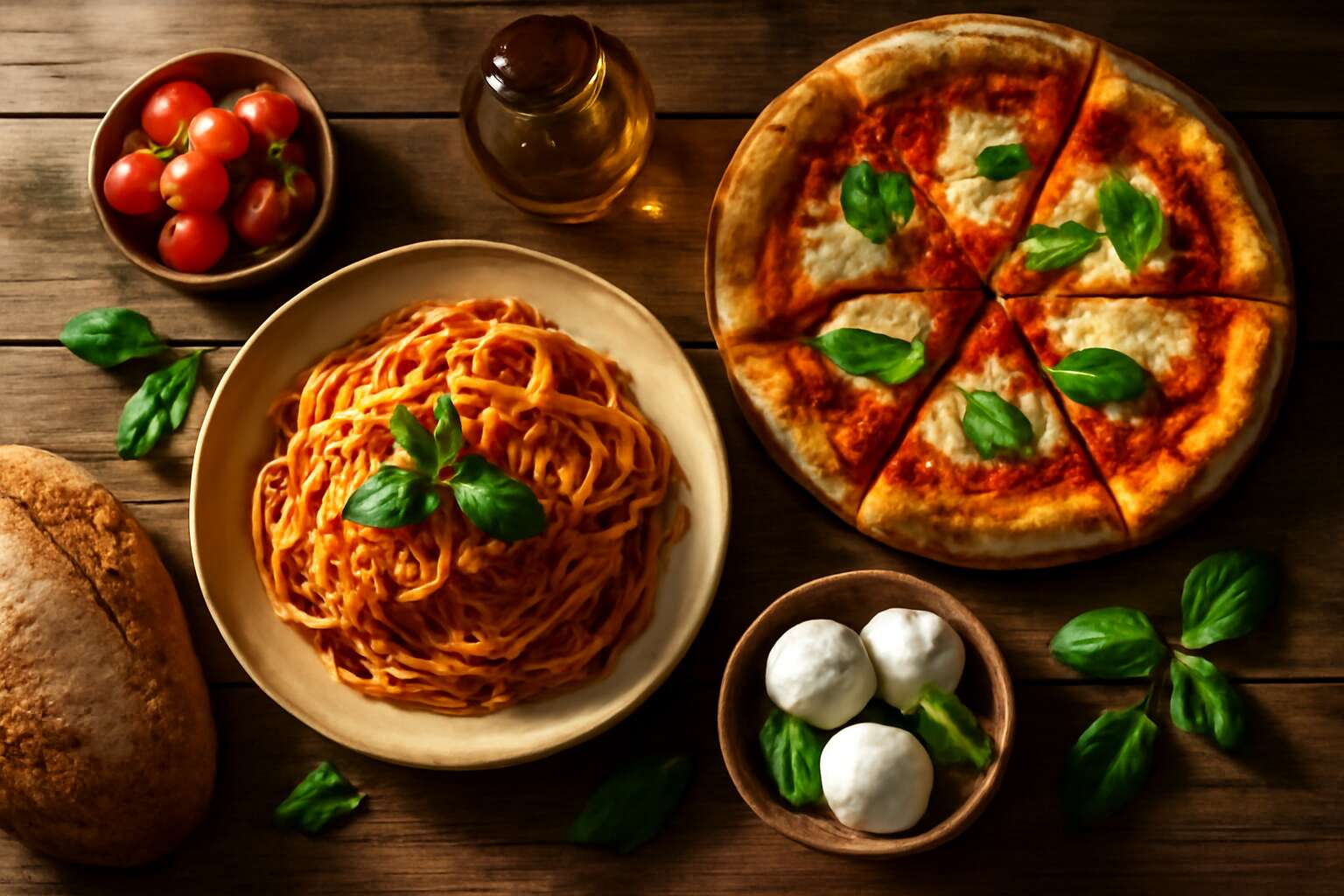
Italian Cuisine Overview and Core Concepts
What defines Italian cuisine and its regional roots
Italy’s kitchens turn meals into memory, and regional menus reveal more than 20 distinct cuisines shaping the nation’s palate. “Food is memory”—and Italian cooking lives that truth in every bite, from sunlit coasts to alpine valleys.
I see Italian cuisine built on three core concepts: simplicity, seasonal abundance, and regional identity that changes with every mile. A few ingredients, treated with care, become carriers of place and memory, a language that travels far beyond borders.
- Simplicity that sings
- Seasonality guiding every ingredient
- Regional identity as a culinary compass
From Lombardy’s creamy risottos to Sicily’s bright caponata, italian food examples illuminate how geography shapes taste. The same ingredient whispers differently—from olive oil’s fruitiness in the south to butter’s lushness in the north.
For South African readers, this mosaic invites exploration—stories served on plates, a reminder that cuisine can be magical yet rooted in honest, seasonal produce.
Key ingredients that unite Italian cooking
On the culinary map, a plate becomes a compass. More than 20 regional menus mark every mile with memory, and three ideas steer the voyage: simplicity, seasonality, and regional identity. In practice, a few ingredients, treated with care, carry place and memory from coast to hillside.
Key ingredients that unite Italian cooking include:
- extra-virgin olive oil
- ripe tomatoes
- garlic
- basil
- parmesan and pecorino
- mozzarella
For South African readers, these italian food examples invite discovery—stories served on plates that taste of sun-warmed markets and honest, seasonal produce. The same ingredient whispers differently, from olive oil’s fruitiness in the south to the butter’s lushness in the north, a quiet testament to place and memory.
Regional diversity at a glance
Italy is a living map where every province stamps its flavor on the plate, italian food examples revealing how place becomes flavor, turning a simple tomato or olive oil into memory you can taste.
Regional diversity at a glance shows three currents: coastal kitchens that coax sun and sea, alpine valleys where dairy and mushrooms thrive, and inland plains where grains and legumes tell enduring stories. Restraint, seasonality, and place guide all.
At a quick glance, three regional motifs emerge:
- Coastal kitchens lean on tomatoes, seafood, and olive oil.
- Mountain valleys favor dairy, mushrooms, and cured meats.
- Inland plains celebrate wheat, legumes, and tomatoes.
For South African readers, these flavors translate sun-kissed markets into everyday meals, letting the peninsula’s memory breathe on your plate.
Seasonality and traditional methods in Italian cooking
Italian cuisine is a living map of seasons and soil. “Seasonality is the main spice,” whispers the seasoned kitchens, and South African tables translate that rhythm into sun-drenched weeknight plates that taste like a terroir passport stamped in Naples and Cape Town.
Core concepts—seasonality, restraint, and traditional methods—sit at the center of the pantry. Soffritto forms the flavor backbone, gentle simmering coaxes depth, and preserving tricks keep sauces bright without shouting. italian food examples show how a humble tomato or drizzle of olive oil becomes memory on the plate.
- Seasonality as a compass for recipe choices
- Time-honored techniques such as soffritto, braising, and curing
- Regional flavors that travel gracefully into modern kitchens
Antipasti and Starters: Traditional Italian Beginnings
Classic antipasti selections from different regions
Antipasti opens the table like a sunrise over the Adriatic—bright, teasing, and full of possibility. They set the mood for a meal that travels from sunlit coasts to candlelit alleys, hinting at regional stories before the first course begins.
From coast to hillside, classic antipasti selections from different regions offer textures and contrasts, a tapestry that becomes italian food examples in action.
- Bruschetta al pomodoro
- Prosciutto e melone
- Burrata con pomodori e basilico
- Carciofi alla Romana
- Insalata di polpo
Served with rustic bread and a glass of local wine, these bites invite conversation and set a wine-filled evening on South African tables. The charm lies in the simplicity of ingredients, elevated with patience and artistry.
Seafood oriented starters for coastal regions
Coastal appetites crave brightness. Antipasti as traditional Italian beginnings set the table with sun and salt. These italian food examples lean toward seafood and citrus, inviting conversation before the main course begins. For South African tables, coastal regions translate Italian seaside markets into familiar textures and aromas.
- Cozze al limone e prezzemolo
- Insalata di mare
- Calamari fritti con aglio e erbe
Seafood oriented starters for coastal regions travel well on any table, pairing with light whites and bright wines. They open a meal like a breeze off the ocean—crisp, bracing, and unpretentious—while hinting at regional stories through citrus, herb, and marine notes.
Vegetarian and meat-free starter options
Antipasti, the graceful prelude to a proper Italian meal, sets expectations higher than a sunlit marina! Vegetarian and meat-free starter options for Traditional Italian Beginnings prove that brightness—think basil, lemon zest, olive oil—can be as fulfilling as the main course. In the spirit of italian food examples, these bites offer conversation starters as much as palate pleasers, ideal for South African tables craving elegance with ease.
Some crowd-pleasing vegetarian options include:
- Bruschetta al pomodoro
- Insalata caprese
- Funghi trifolati
- Grilled vegetables with olive oil and herbs
These starters pair with crisp whites and sparking conversations, offering a refined entry to a feast that respects the season and the social table alike.
How to pair antipasti with drinks and wines
Antipasti, the traditional Italian beginnings, are the opening aria of a meal—a bright, social prologue that invites conversation as much as appetite. In South African evenings, this prelude translates into shared plates and crisp wines. “Antipasti are the first sentence of the meal,” the sommelier says, and the sentence should sparkle.
Pairing antipasti with drinks is less about rigid rules and more about balance: acidity cutting through oil, herbs threading through wine, and texture meeting aroma. These italian food examples reveal a study in restraint and generosity.
- Sparkling Prosecco with light, herb-kissed bites
- Verdicchio or Vermentino for lemony, olive-oil notes
- Rosato or Chianti Rosé to carry vegetables and cheeses
As the table settles, antipasti becomes a bridge to the main courses, inviting curiosity and conversation—a delicate craft that makes the opening course feel intimate and universal.
Pasta, Risotto, and Grains: Core Italian Dishes
Pasta shapes and regional pairings
In a kitchen lit by olive oil and memory, pasta, risotto, and grains tell Italian cooking’s story, and I taste its echo! There are more than 350 pasta shapes, each a passport to a region’s soul.
Pasta shapes and regional pairings anchor italian food examples with character. From spaghetti to tagliatelle, traditions guide what sings with what.
- Spaghetti — seaside tomato and olive
- Tagliatelle — ragù alla Bolognese
- Orecchiette — broccoli rabe, pale gold
- Pappardelle — wild boar ragù
Risotto and grains bring cream and substance. Arborio rice yields risotti with saffron, mushroom, or seafood; farro and polenta offer rustic, lasting textures.
Iconic regional pasta dishes
Across Italy, more than 350 pasta shapes map the peninsula’s heart—a pantry of light and shadow, sun on the grain and sea in the air. Pasta shapes and regional pairings anchor italian food examples with character, turning a kitchen into a map where each bite echoes a town’s memory and a coastline’s breath. From bustling markets to quiet home tables, the narrative of pasta travels with aroma and assurance.
Risotto and grains bring cream and substance. Arborio rice yields risotti with saffron, mushroom, or seafood; farro and polenta offer rustic, lasting textures. These grains travel beyond borders into South African kitchens, where a single pot can cradle memory and meal in equal measure.
- risotto allo zafferano (saffron risotto)
- risotto ai funghi porcini
- polenta taragna with mushrooms
Risotto techniques and signature recipes
“Good risotto is a conversation between flame, rice, and time,” a veteran Italian cook says. This core trio—Pasta, Risotto, and Grains—forms the heartbeat of italian food examples, translating tradition into meals that travel well into South African kitchens. The result is a bowl that invites storytelling with every simmer.
Risotto relies on Arborio or carnaroli rice, toasted to awaken starch, then coaxed to creaminess with gentle ladles of hot stock. Finish with butter and parmesan to bind the grains, or fold in saffron, mushrooms, or seafood for signature recipes that speak of place and season, a hallmark of italian food examples.
- toasting and sweating the soffritto for depth
- stirring with a patient tempo and gradual broth addition
- finishing mantecare for gloss and sheen
Carriers of memory, these grains travel from Italian kitchens to yours, bridging continents in a single fragrant pot.
Polenta and other maize-based staples
In the canon of Italian cuisine, Pasta, Risotto, and Grains form the heartbeat of the table, a patient dialogue between flame and time. They are italian food examples that travel—from sunlit trattorie to South African kitchens—carrying memory in steam and the promise of shared stories.
Polenta sits at the table as a maize-based staple with a quiet grandeur. Polenta, and other maize-based staples, unfold from soft porridge to crisp slabs, a spectrum that sustains meals and memories alike.
- Polenta bianca
- Polenta taragna
- Pane di mais
From this trio, memory travels to South African kitchens, where butter meets pepper and saffron dances with steam, giving life to meals that feel Italian but breathe with local sun.
Alternative grains and modern twists
Core Italian dishes—Pasta, Risotto, and Grains—are the heartbeat of Italian cooking, a patient dialogue between flame and time. “Food is time-travel in a bowl,” a chef once quipped, and I tend to agree. These italian food examples travel—from sunlit trattorie to South African kitchens—carrying memory in steam and the promise of shared stories.
Pasta stays the flexible anchor, looping from ribbons to tubes, all while inviting modern twists. For a palate seeking alternative grains, the pantry becomes a stage: spelt noodles, buckwheat pasta, and chickpea flour shapes ready for bold sauces.
- Spelt spaghetti with lemon, olive oil, and rosemary
- Farro-based risotto with wild mushrooms and thyme
- Chickpea flour pasta with a bright tomato-basil sauce
Risotto still loves creaminess, but now it hums with barley, farro, or millet. In South African kitchens, saffron or smoked paprika wakes the pot and greets local greens with flair.
Main Courses: Meats, Seafood, and Vegetarian Staples
Traditional meat mains and regional stews
In the main courses, Italian cooking shows its spectrum: robust meat mains, sunlit seafood, and vegetarian staples that carry the same heart. These are some of the italian food examples that travel to South Africa, translating market lanes into bright dining rooms. Here are anchors that illustrate the palette.
- Brasato al Barolo — braised beef in red wine with aromatic roots that soften into velvet tenderness.
- Branzino al forno — whole sea bass baked with lemon, herbs, and olive oil for a clean, coastal glow.
- Caponata di melanzane — sweet-sour eggplant stew, a vegetarian main that sings with capers and tomatoes.
Whether a slow braise like brasato al Barolo, a sunlit branzino al forno, or a rustic caponata on a bed of polenta, these dishes showcase how tradition blooms in different provinces. I love how they invite thoughtful wine matches and seasonal sides, echoing regional terroirs while staying accessible here in South Africa!
Coastal seafood specialties and preparations
A candle-lit hush settles over the table as three cravings rise: meats, seafood, and vegetarian staples. In italian food examples, the main courses carry a gravity that travels from Tuscan hills to South Africa with velvet, patient fire. The stuff of memory braises, roasts, and sun-kissed vegetables, each dish a small liturgy of land and sea.
- Grilled sardines with lemon and parsley, a crisp coastal kiss
- Sea bass baked with fennel, olive oil, and thyme
- Clam and tomato ragù, a bright, briny tide in a pot
Meats unfold in slow braises and smoky roasts that mellow to velvet, while vegetarian staples claim heart with mushroom ragù, roasted peppers, and artichokes braised in olive oil. The South African table meets Italian textures in that shared, shadowed glow—the way a plate can feel both old and new, and always welcoming!
Vegetarian main courses centered on seasonal produce
“Seasonality is the secret spice,” a grandmother would whisper, and it lifts Italian-inspired mains beyond the standard takeaway. In the braise pot and the ember, meats soften into velvet roasts, their flavors deepened by rosemary, garlic, and patient time. Think Tuscan austerity meeting South African warmth: lamb shanks perfumed with citrus zest, beef ragù mellowing into silk, a reminder that main courses rooted in seasonal produce travel well from hilltop kitchens to coastal kitchens and back again.
Seafood mains and vegetarian staples keep pace with the harvest, offering balance and brightness. From grilled sardines with lemon and parsley to mushroom ragù that celebrates mushrooms’ earthy chorus, these italian food examples serve as flexible weeknight anchors. The key is simple technique and fresh produce, letting textures and oils do the talking.
- Grilled sardines with lemon and parsley
- Sea bass baked with fennel and thyme
- Mushroom ragù with roasted peppers
Regional braises and hearty dishes
Braising is Italy’s quiet revolution—tender meats, pearl-bright vegetables, and sauces that cling like memories. It’s proof that patient time and simple, honest technique trump flashy tricks. italian food examples—seasonal, soulful, and regionally stubborn—travel well from hilltop kitchens to Cape Town bistros and back again.
- Braised rabbit with olives, tomatoes, and white wine
- Pork shoulder braised with fennel, citrus zest, and rosemary
- Artichokes braised with garlic, lemon, and olive oil
From stove to table, these mains prove that texture and a glistening finish carry more weight than flash. A simple splash of extra-virgin olive oil, a hint of lemon, and the right herb turn humble cuts into memorable suppers that travel well from inland farms to coastal kitchens and back again.
Desserts, Coffee, and Digestifs: Ending on a Sweet Note
Popular Italian desserts and regional variations
Desserts are the dramatic finale of any Italian meal, and they land with style. In the broad spectrum of italian food examples, the sweet endings flaunt regional swagger. Think velvet tiramisu from Veneto, crisp cannoli from Sicily, and silky panna cotta from Piemonte—each a passport stamp for taste.
- Tiramisu (Veneto)
- Cannoli (Sicily)
- Panna cotta (Piemonte)
Coffee follows dessert for many; espresso wears the crown and affogato mingles scoop with shot for a playful finale. If you think a dessert will behave, think again: in Italy, coffee and crema constantly negotiate. In cities and towns alike, the caffeine ritual keeps conversations buzzing after the plates have cleared.
Digestifs seal the evening with a warm whisper: limoncello, grappa, and amaro. The aim is a lingering finish—Ending on a Sweet Note—where these liqueurs invite the next round of stories.
Coffee culture and classic dessert pairings
Two out of five Italian meals end with a dessert and a coffee ritual that outlasts the main course! For readers exploring italian food examples, the dessert world varies in texture and form—from silky custards to crisp pastry shells and softly whipped creams that linger. The regional swagger still shows through, even as the plate clears and conversations drift toward the next course.
- silky custards
- crispy pastry shells
- creamy textures that melt on the tongue
Coffee follows dessert for many. In South Africa, coffee rituals echo the Italian tradition. Espresso wears the crown, and an affogato playfully fuses scoop with shot for a last-minute twist. In Italian coffee culture, crema negotiates with caffeine, keeping conversations buzzing long after the plates are cleared.
Digestifs seal the evening with warmth: limoncello, grappa, amaro. The aim is a lingering finish—Ending on a Sweet Note—where these liqueurs invite the next round of stories.
Liqueurs, digestifs, and after-dinner drinks
Across South African tables, dessert and a lingering coffee ritual close the evening with the warmth of shared memory. In a recent SA dining survey, more than half of diners end with dessert and espresso, a testament to italian food examples and the magic of Ending on a Sweet Note.
Desserts present texture as a passport across regions: silky custards, crispy pastry shells, and softly whipped creams that linger.
- silky custards
- crispy pastry shells
- creamy textures that melt on the tongue
Coffee follows dessert for many. In Italian coffee culture, crema negotiates with caffeine, keeping conversations buzzing long after the plates are cleared.
- Espresso – the crowned finale
- Affogato – a playful scoop-and-shot twist
- Macchiato or crema-rich cappuccino for lingering chats
Digestifs seal the evening with warmth: limoncello, grappa, amaro. Ending on a Sweet Note.
- Limoncello
- Grappa
- Amaro
Regional dessert specialities and modern reinterpretations
More than half of SA diners end with dessert and espresso, a sweet sign-off that mirrors italian food examples and the enduring magic of Ending on a Sweet Note.
Desserts reveal texture as passport across regions: velvety custards, crisp shells, and whipped creams that linger on the palate. Regional dessert specialties and modern reinterpretations—cannoli and sfogliatella—prove tradition can spark inventive sweetness.
- Cannoli (Sicily) with pistachio filling
- Sfogliatella (Naples) with citrus cream
- Zabaglione (Veneto) lightened with Marsala
Coffee follows dessert for many. In Italian coffee culture, crema negotiates with caffeine, keeping conversations buzzing long after the plates are cleared. Espresso crowns the finale, affogato adds a playful twist, and a macchiato invites lingering chats.
Digestifs seal the evening with warmth: limoncello, grappa, amaro. Ending on a Sweet Note.

0 Comments