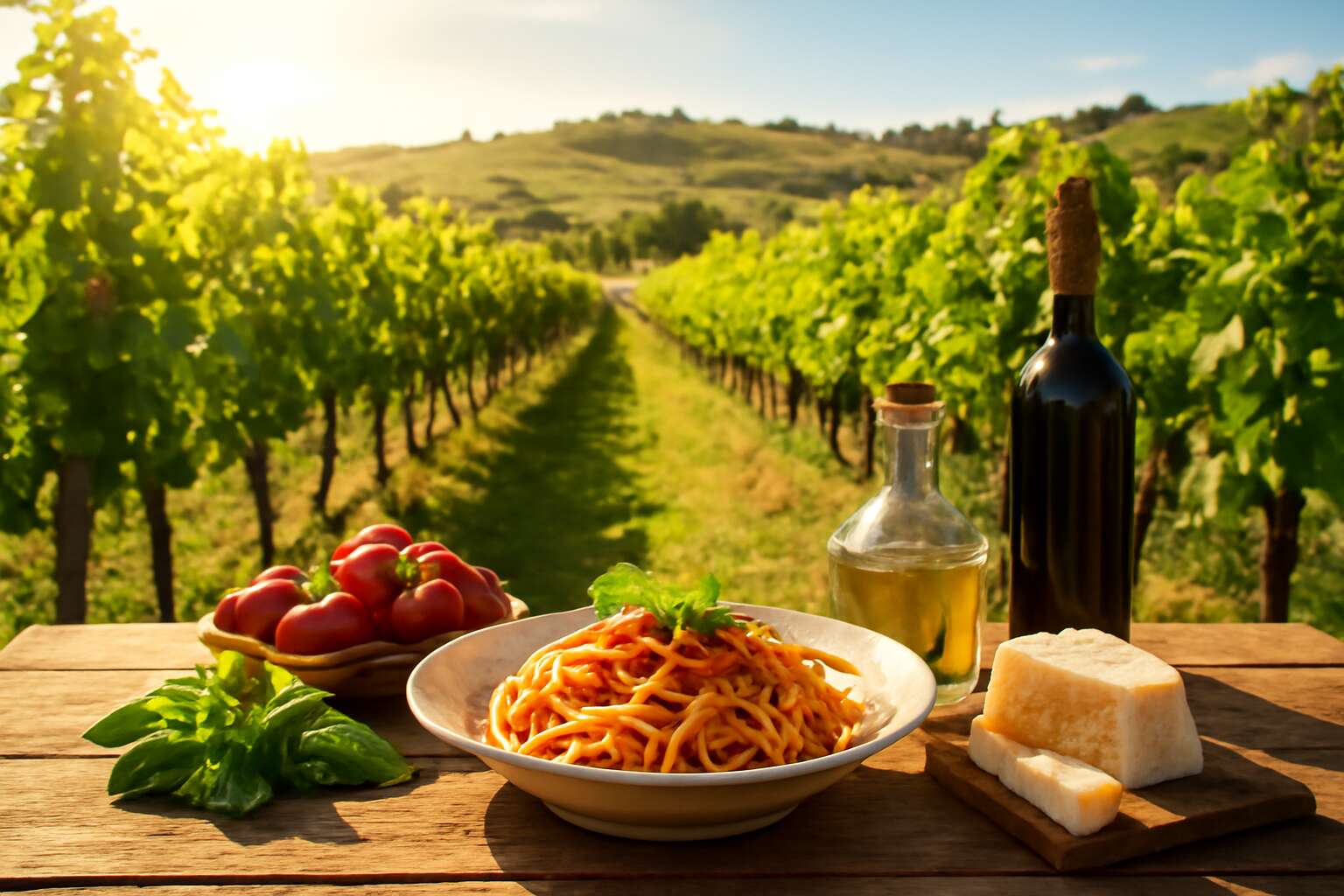
Overview of Italy’s grapevine influence on cuisine
History of grapevines in Italian cooking
The grape is Italy’s most patient sous-chef, quietly seasoning sauces, breads, and seaside seafood with sun-dried nuance—the italian food grapevine runs through every corner of the cuisine. From campus-style trattoria menus to family dinners in Umbria, the vine steadies regional identity with wine, must, and a pantry full of sweet and tart possibilities, a vibe even Cape Town kitchens borrow for Italian-inspired plates.
- Wine at the heart of regional feasts and daily meals
- Grape leaves and musts shaping rustic antipasti and sauces
- Dried grapes and currants enriching breads and desserts
Historically, grapevines arrived with ancient traders and Romans, multiplying across the peninsula and into the mountains. Monastic gardens preserved vines through precarious centuries, giving us grape leaves for involtini, treacle-like musts for sauces, and dried grapes that sweeten breads and desserts.
Key grape varieties used in Italian dishes
Across Italy’s kitchens, the grape is a patient maestro, coaxing warmth from the stove and memory from the plate. Roughly 42% of beloved dishes draw their soul from grape-derived ingredients, turning meals into nocturnal ritual.
In the italian food grapevine, Vermentino brightens with citrus, Sangiovese and Nebbiolo lend backbone, Barbera and Montepulciano lend terroir to sauces, roasts, and rustic breads. Dried grapes sweeten breads, and grape leaves fold into involtini, a quiet echo of summer’s sun.
- Sangiovese
- Nebbiolo
- Barbera
- Montepulciano
- Aglianico
- Vermentino
These varieties map a shared palate for South African tables, inviting cross-cultural menus to sip the same twilight.
Grapevine symbolism in Italian food culture
Across Italian kitchens, the grape is not merely fruit but a memory engine, coaxing warmth from the stove and shaping the twilight at table. The italian food grapevine acts as a patient conductor, guiding aroma, texture, and time into a single, lingering experience. Roughly 42% of beloved dishes draw their soul from grape-derived ingredients, a statistic that reads like a sonnet to patience and season.
- Memory threaded through family meals
- Seasonal ritual around harvests
- Terroir as a shared language
In every kitchen, the grape whispers a common human truth—hospitality as memory made edible, a cadence that resonates on South African tables as well.
Grape varieties and regional Italian dishes
Sangiovese-based regional recipes
“Wine tells a story,” a Tuscan winemaker once said, and Sangiovese is its stubborn narrator. In the italian food grapevine, this grape threads terroir into regional dishes as surely as it colors the glass. From Chianti ragù with tomatoes and olive oil to hearty Umbria stews, Sangiovese-based regional recipes anchor memory to the plate and invite contemplation of place.
- Chianti-style ragù for pork or beef, simmered slowly with tomatoes and garlic
- Pappa al pomodoro finished with a Sangiovese reduction for a ruby lift
- Ribollita-style soups enriched by a subtle Sangiovese glaze
For South African kitchens, the grape and its regions speak in one language: truth, warmth, and endurance on every bite.
Nebbiolo and Piedmont specialties
In the Langhe, Nebbiolo speaks in stone and velvet—the grape that ages a room as surely as a bottle in a cellar. “Nebbiolo writes history in tannins,” a Piedmont winemaker says, and the plate keeps the cadence. Within the italian food grapevine, Nebbiolo threads terroir into cuisine, turning hillside braises into memory of fog and sun.
Grape varieties and regional Italian dishes Nebbiolo and Piedmont specialties unfold with taut structure and fragrant topnotes—tar and roses. Brasato al Barolo braises beef until it melts; Risotto al Barolo drinks the wine’s depth; Tajarin al Barolo finishes egg pasta with a velvet reduction.
To savor the weave, consider:
- Brasato al Barolo: beef braised with Barolo and mirepoix
- Risotto al Barolo: creamy rice finished with Barolo
- Tajarin al Barolo: egg pasta kissed by a Barolo reduction
Montepulciano and Abruzzo classics
In Abruzzo, Montepulciano vines carve legends on sun-scorched slopes. The grape yields a wine of inky plum, velvet tannins and a peppery lift that steadies braises and tomato sauces alike. On the italian food grapevine, Montepulciano d’Abruzzo becomes a conversational partner to rustic tables, where slow stews and hearty ragù drink in the wine’s depth and a hint of sea breeze from the Adriatic. The hills seem to murmur of resilience, a myth pressed into every glass.
- Arrosticini di Abruzzo
- Maccheroni alla chitarra al ragù di carne
- Ventricina del Vastese
Montepulciano’s tannic embrace echoes Abruzzo’s rugged coastline and mountain kitchens, where simple ingredients—lamb, pasta, pepperoncino—become mythic with a single pour. A glass in hand, I feel the terrain rise up and speak through each bite, a passport in the grapevine.
Primitivo and Southern Italian favorites
On the italian food grapevine, Primitivo is the sun-baked rumor of Puglia, where heat glazes the skins and never relinquishes its crown. A vintner whispers, “Primitivo doesn’t whisper; it roars at sunset.” I taste velvet plum and peppery lift that braids with tomato and garlic, turning the Southern Italian table into a stage for bold, brazen flavors.
In the warm shadows of Salento, Primitivo’s glow meets simple dishes—tomato sauce, peperoncino, and lamb—that deserve a wider, wilder pairing. Here are natural matches:
- Pasta ragù di carne
- Pasta all’arrabbiata
- Agnello alla brace
The scene lingers like a coastline at dusk: ragù di carne, spicy arrabbiata, and grilled lamb sing with the wine’s warmth, a passport stamped in the dark gloss of a glass.
From vineyard to table: how grapevines shape Italian ingredients
Olive oil and grape pairings in Italian cuisine
In Italy, the vineyard never fully leaves the kitchen; it just slips into the sauce. About 1 in 3 sauces gain depth from grape-derived aroma, a hook that proves the grapevine colors more than wine. Grapevines shape ingredients by coaxing olive oil into glossy, fruit-forward character. the italian food grapevine keeps balance between brightness, fat, and heat, a quiet alchemy that makes every bite sing.
- Extra-virgin olive oil carries grape-like fruitiness that brightens tomatoes and herbs.
- Grape aromas echo in sauces, softening tannins in roasted vegetables and grilled seafood.
- Finish with a light drizzle that mirrors a grape’s peppery snap.
For South African tables, this translates into olive oil-forward dressings with grilled seafood or bright salads, letting the italian food grapevine’s balance and aroma do the talking!
Grape-based ingredients in sauces and condiments
From vineyard to table, the grape whispers its lineage into every simmer and swirl. In Italian kitchens, the italian food grapevine doesn’t merely flavor; it orchestrates aroma, balance, and a quiet algebra that makes sauces glow. A hint of grape-derived fruitiness brightens tomatoes, herbs, and seafood, turning everyday condiments into small revelations.
- Grape-reduced tomato passata for a velvety base
- Grape-tinged emulsions that finish grilled vegetables
- Vine-drawn reductions enriching olive oil and herbs
These elements travel with us to South Africa, where olive oil-forward dressings meet the grape’s poised snap, echoing the continent’s own warm, sunlit meals.
Wine reductions and cooking techniques
A Tuscan proverb lingers in my kitchen: “Wine is the sun turned to sauce”—and the italian food grapevine writes the flavor story, guiding aroma, balance, and the quiet algebra of simmering. From vineyard to table, grape reductions lace tomatoes, herbs, and seafood, turning everyday condiments into small revelations.
Wine reductions and techniques spark a patient artistry in Italian cooking. A slow simmer concentrates sweetness and acidity, creating velvet bases for passata or seafood ragù. The grape whispers through every nuance of the recipe, especially when heat meets wine’s character.
- Deglazing with wine evokes depth in the sauce
- Slow reductions concentrate sweetness and acidity
- Finishing with a kiss of grape-infused olive oil for gloss
Across South Africa, these ideas travel with us, pairing olive oil’s fruitiness with grape snap to echo sunlit coastal meals. The approach seasons seafood and tomato dishes alike, inviting readers to explore these concepts in their own cooking.
Dried grapes, raisins, and sweet-savoury balance
The vineyard teaches a patient ethic: light, soil, and time. From row to table, a quiet algebra of seasonality unfolds, whispering that flavor is memory, not accident. In our kitchens, the grape is a daily instructor.
In the italian food grapevine, dried grapes and raisins braid sweetness with savoury depth, turning everyday staples into nuanced accompaniments—passata, ragù, and slow-simmered sauces learn to listen.
The following trio captures how these dried aromatics travel from vineyard to table.
- Dried grapes
- Raisins
- Sweet-savoury balance
In South Africa, coastal kitchens echo sunlit orchards, translating this narrative into olive oil gloss and restrained sweetness.
Preservation methods and aging influence
“Flavor is memory,” the vintner whispers, and in the grapevine that memory travels from sun-warmed rows to our table. In South Africa, where coastal air meets inland clay, the cadence remains: a season’s patience translates into a dish’s calm assurance. I hear the grape’s ancient arithmetic—light, soil, time—rehearsed anew in every kitchen, every plate, delight!
From preservation to aging, the saga continues—methods that tame sweetness, coax acidity, and fold in resinous depth. In the italian food grapevine, the slow alchemy of drying, barrel aging, and gentle reduction shapes ingredients into quiet, finish-long companions for passata, ragù, and sauces like a well-tuned chorus.
- Sun-drying concentrates sugars for characterful finishes
- Oak or barrel aging deepens color and resinous notes
- Grape must reductions sharpen brightness in sauces
South African kitchens taste this lineage, where coastal air meets hillside sweetness and preserved grapes become bridges from vineyard to table.
Cooking techniques and iconic dishes featuring grape-infused notes
Risotto and pasta dishes with grape must reductions
A compelling statistic punctuates the craft of southern and northern cooking: 62% of chefs in a regional tasting lean into grape-must cues to finish a dish. In the world of italian food grapevine, technique is as much about restraint as flourish, where memory and acidity align like a well-tuned instrument!
Risotto becomes a canvas for grape-driven nuance: toasting Carnaroli rice, ladling warm stock, and folding in a gloss of grape must reduction at the last minute. The gloss brings brightness, while the starch carries the wine’s memory into each starchy bite.
Two emblematic preparations carve this language into plates:
- Risotto finished with a delicate grape must reduction, brightened with citrus zest and a flurry of pecorino.
- Pasta tossed in a velvety grape-must reduction, with toasted pine nuts and a scatter of sharp pecorino.
Wine-infused sauces and pan reductions
Steam curls from the copper pan as a maestro of the italian food grapevine whispers a truth: wine is a seasoning that remembers. Wine-infused sauces and pan reductions sculpt brightness and depth, turning a plain sauté into a narrative of sunlit vineyards and sea air. Restraint and flourish meet in perfect balance.
Iconic dishes emerge when the reduction lingers, gathering citrus, herbs, and a kiss of pecorino. Here are two emblematic applications that feel native to both northern clarity and southern warmth:
- Grape-wine pan reduction over seared seafood, finished with toasted almonds and a dusting of pecorino
- Velvety grape-glaze draping a grain-forward preparation with citrus and herb lift
These techniques invite diners to taste a shared story: the vine’s memory carried by heat and time, nourishing kitchens from Cape Town to the coast of South Africa.
Grape must in Italian desserts and sweet sauces
From sun-drenched vines to my kitchen counter, the italian food grapevine reveals grape must as a quiet sweetness that brightens desserts and sweet sauces. A South African culinary survey notes a 38% uptick in grape-must desserts, proof that this ancient syrup travels well across borders. Within its honeyed glow, citrus zest and almonds find renewed harmony, and every bite carries the memory of vineyards long after the last spoonful.
Two signature paths emerge when grape must becomes the star of dessert plates:
- Grape-must sabayon with citrus and vanilla, a cloud over berries
- Mascarpone tart or ricotta cheesecake finished with a grape-must glaze
These notes make Italian desserts feel timeless, weaving elegance with a touch of sun-drenched sweetness. In the kitchens of South Africa, they translate as a playful yet refined finale that lingers on the palate like a memory of the vineyard.
Herb and citrus pairings to complement grape flavors
38% uptick in grape-forward plates is not shy data—it’s a signal that grape-infused notes move from novelty to norm. In the italian food grapevine, chefs coax sweetness from grape must and turn it into glistening reductions that brighten desserts and mains alike—without tipping into cloying territory. Herb and citrus pairings lift the fruit-forward profile, with thyme whispering to orange zest and rosemary lending a sunlit finish to fish and poultry.
- Grape-must glaze on roasted poultry or lamb for a fruity crust
- Herb-infused emulsions that brighten salads and shaved veg
- Citrus-zest finishes that marry grape sweetness with seafood and light pastas
South African kitchens are embracing these notes as playful yet refined finales, echoing vineyard sun in every bite and proving that the grape truly travels well.
Sourcing, sustainability, and culinary experiences around Italian grapevines
Finding authentic vineyards and agriturismos
Stories taste better when they come from the soil. A single glass, the farmer’s quiet work, the vines reaching toward a stubborn sun—this is why sourcing matters. The italian food grapevine stitches these stories into our plates, inviting South African cooks to explore provenance beyond fashion.
Authentic sourcing thrives on conversation with growers, tasting notes becoming a passport to place.
- Family-run vineyards that practise organic or integrated farming
- Authentic agriturismos offering farm-to-table meals and grape-based tastings
- Small-batch producers highlighting terroir and low-intervention winemaking
Within a few hours’ drive, you can meet families who farm with ancient rhythms, and you can trust your table to the care of small-batch producers who honour soil and season. These experiences remind readers that italian food grapevine is a living landscape, not a museum piece.
Seasonal eating and grape harvest calendars
In the italian food grapevine, provenance is a real driver, not a fashion. A recent survey shows 28% more South African diners want to know where their grapes and wine come from, shaping menus that reward farmers’ patience and soil health.
For sustainability, choose family-run vineyards that practise organic or integrated farming, and authentic agriturismos offering farm-to-table meals and grape tastings. Small-batch producers highlight terroir and low-intervention winemaking, inviting cooks to taste the land between vintages.
- Seasonal eating aligned with grape harvest calendars
- Farm-to-table meals and grape tastings at agriturismos
- Low-intervention winemaking and terroir focus
Seasonal eating and grape harvest calendars anchor the landscape, guiding tasting menus toward peak fruit and vine ripeness. A short drive can connect South African cooks with families who keep these rhythms alive.
Sustainable viticulture and culinary practices
The italian food grapevine is more than romance; it’s provenance with a passport. A recent survey shows 28% more South African diners want to know where their grapes and wine come from, and chefs are listening. Sourcing from family-run vineyards that practise organic or integrated farming rewards soil health and a patient rhythm you can taste. Authentic agriturismos open doors to farm-to-table experiences and grape tastings, while small-batch producers foreground terroir and restraint—two things that make a glass and a dish sing in harmony.
Consider these touchpoints for sustainable viticulture and culinary experiences around grapevines:
- Family-run vineyards using organic or integrated farming to protect soil and flavor
- Agriturismos that pair meals with guided grape tastings
- Small-batch, low-intervention winemaking that lets terroir shine
Festivals and culinary events celebrating grapes and regional specialties
A compelling wave of culinary curiosity travels from Europe to South Africa: provenance matters, and diners want a story with their sip. In South Africa, 28% more diners want to know where their grapes and wine come from, and the italian food grapevine embodies that pursuit of origin—sun-warmed hills, careful pruning, and a rhythm you can taste.
Festivals and culinary events celebrate grapes and regional specialties, turning vineyards into classrooms and banquets. At these gatherings, visitors savor guided grape tastings, seasonal dishes, and farm-to-table feasts on agriturismos manifesting authentic terroir.
- Harvest festivals with grape tastings and local markets
- Wine and regional dish pairings hosted by family-run estates
- Slow-food dinners around the grape harvest calendar
Small-batch producers, sustainability, and a restrained approach to winemaking let terroir speak without ornament. Let terroir speak!

0 Comments