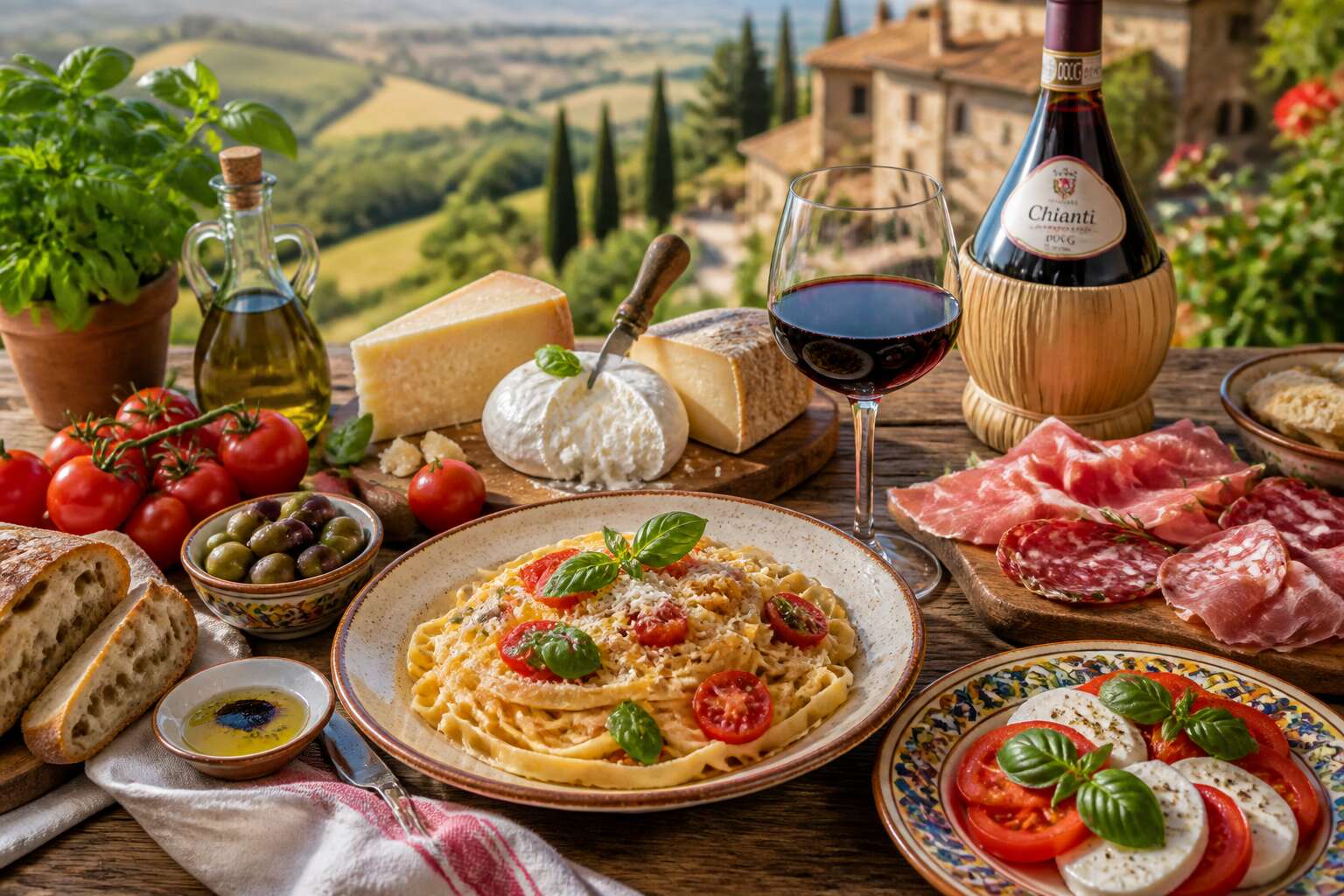
Regional Culinary Highlights Across Italy
Tuscany: Farm-to-Table Traditions and Rustic Simplicity
Tuscany’s cuisine doesn’t hide behind elaborate sauces. It thrives on what the soil gives. Olive oil, beans, bread, and game form the backbone of every meal. Farm-to-table isn’t a trend here; it’s been the way of life for centuries.
On italian food tours, travellers often pause at the sight of a simple ribollita or pappardelle al cinghiale. The flavours arrive with a clarity that feels almost unsettling. You taste the earth, the sun, the patience of the farmer.
A typical Tuscan table might include:
– Crostini with chicken liver pâté
– Panzanella, a bread and tomato salad
– Bistecca alla Fiorentina, grilled over olive wood
– Cantucci with vin santo for dipping
The simplicity is deceptive. Every dish demands precision, timing, and respect for ingredients. Tuscany reminds you that food needs no disguise, only honesty.
Sicily: A Layered Fusion of Mediterranean Cultures
Sicily is a palimpsest of conquests, each invader leaving a scar on the plate. On italian food tours, you taste the Arab legacy in saffron and raisins, the Norman love of meat, the Spanish obsession with chocolate. The island’s cuisine is a layered fusion, both bitter and sweet.
Consider caponata, where eggplants turn glossy with capers and vinegar. Or pasta con le sarde, wild fennel and anchovies melding into a brine that remembers the sea. I have yet to find a dish that haunts me more.
- Arancini, fried rice balls stuffed with ragù
- Cannoli, crisp tubes of sweet ricotta
- Marsala wine, dark and fortified
Every bite on italian food tours demands you acknowledge the centuries of appetite and loss.
Puglia: Olive Groves, Seafood, and Pane di Altamura
Nearly half of Italy’s olive oil comes from Puglia. That fact becomes real when you wander through groves where some trees have stood since Roman times. On italian food tours, you will taste this abundance in every dish. The true icon is Pane di Altamura, a dense golden loaf with a hard crust and a chewy crumb. It uses only durum wheat and a natural starter.
Seafood arrives fresh from two seas. The Adriatic offers mussels and clams, while the Ionian gives octopus and sea urchins. For a complete picture, sample these local specialties:
- Burrata from Andria, creamy and delicate
- Orecchiette with turnip greens, a classic pasta
- Primitivo, a robust red wine
What to Expect on a Guided Culinary Excursion
Meeting Local Artisans and Family-Run Producers
The best part of italian food tours isn’t the tasting alone. It’s the descent into cellars where mold blooms in silent patterns. I once watched a fourth-generation cheesemaker in Piedmont turn wheels of aged tomea. He didn’t speak. He turned each wheel with slow, deliberate hands.
Expect to meet families who guard recipes with stubborn silence. Their workshops smell of woodsmoke and time. You will handle tools older than your passport. You will hear stories of failed harvests and persistence.
- Watch artisans sculpt chocolate by hand
- Press olives with stone mills
- Sample cheeses from caves brimming with humidity
These encounters carry a certain darkness. The kind that makes you grateful for the ordinary.
Walking Tastings vs. Multi-Course Sit-Down Meals
On a guided culinary excursion, the choice between walking tastings and a multi-course sit-down meal reshapes your entire afternoon. I have seen travelers thrive on the chaos of a walking tour, grabbing arancini from a paper cone while their guide explains the piazza’s history. Others need the stillness of a table where a waiter decants Barolo and explains each course’s origin.
- Walking tastings offer four to six stops with small portions
- Sit-down meals run two to three hours with paired wines
Both approaches reveal italian food tours in their own light. Walking builds momentum, sit-down builds intimacy. Choose based on your energy. The most memorable experiences often blend both, starting with a walk and ending seated.
Market Visits and Hands-On Cooking Demonstrations
Sixty percent of travellers who book italian food tours say the market visit is the moment that lingers. I agree after trailing a guide through a covered market in Bologna, where she haggled for ripe tomatoes and spoke to every vendor by name. The demonstration kitchen came next, and the ingredients became a study in patience.
You will handle the food yourself. You will roll pasta, season a ragù, and plate a dessert. The chef watches but rarely interrupts. Flour on your apron means you were involved.
- Market tours run 45 to 60 minutes before cooking starts
- Hands-on demonstrations last two hours, ending with a shared meal
Small groups keep the experience personal. Expect questions, laughter, and a new respect for Italian technique.
Choosing the Right Tour for Your Travel Style
Luxury Food and Wine Experiences for Connoisseurs
Choosing the right tour is about matching your appetite to your itinerary. Some travellers want a daily workout between trattorias; others want a chauffeur to ferry them from one vineyard to the next. For the connoisseur, Italian food tours divide into two categories: the casual sampler and the devoted seeker of provenance. The latter expects more than a plate of pasta. They want private tours of aging cellars and the winemaker’s personal commentary on a vintage that never left the estate.
- Exclusive access to family-owned wineries that never advertise
- Dedicated sommeliers who pair each course with a vertical tasting
- Reservations at restaurants with a waiting list measured in months
These are the hallmarks of a serious luxury experience. If you measure a holiday by the depth of a Barolo’s finish, then this is your niche. Skip the generic tours that pack you by the dozen into a bus and then serve the same Chianti to everyone.
Budget-Friendly Street Food and Market Walks
For every traveller who splurges on a private cellar, another finds delight in a paper cone of fried artichokes. The most memorable italian food tours rarely demand a fat wallet. They demand curiosity and comfortable shoes. Start at a morning market in Bologna, where vendors shout prices for tortellini and wild mushrooms. Join a local guide who knows the stall with the crispiest porchetta. You’ll walk, taste, and absorb family stories.
- A focaccia stand in Genoa, warm and salty
- A cannoli cart in Palermo, filled to order
- A gelato shop in Rome, using only real fruit
Your budget stretches further when you snack instead of sit. A street food walk costs a fraction of a multi-course dinner and delivers more variety. Skip tourist traps charging triple for frozen pasta. Choose italian food tours that follow commuters, not cruise ships. That’s where the actual taste lives.
Vegetarian and Vegan-Focused Culinary Adventures
The same street in Bologna can taste like two different cities, depending on your guide. That is why the right italian food tours follow your travel style. Solo travellers may prefer compact walks through Roman bakeries. Families need flexible pacing. Dietary requirements shift the route entirely. Vegetarian and vegan focused culinary adventures follow centuries of cucina povera. In Puglia, orecchiette with cime di rapa. In Liguria, focaccia with basil pesto. In Sicily, caponata and panelle.
Three features define a thoughtful vegetarian tour:
- Guides who adapt every stop to dietary needs
- Visits to markets, gardens, or orchards
- Menus that work without cheese or eggs
Some tour operators in Rome now design full plant based routes. Choose tours that place vegetables at the centre of the plate.
Family-Oriented Tours with Kid-Friendly Activities
A four year old will not wait for the second course. Families travelling with children need italian food tours with a different rhythm. A three hour amble through Roman delis will fail with a toddler in tow. The right operator knows this. They build routes with generous breathing room and a sense of play.
In Bologna, some family tours begin with a pasta making lesson where children shape tortellini at their own pace. In Naples, pizza workshops supply stretchy dough and a friendly competition for the best toss. Gelato stops are strategic, not random. Guides know which trattorias welcome high chairs.
A well designed family itinerary typically includes:
- Short walking segments between tasting stops
- Hands on dough shaping or cheese pulling
- Early departure times to beat both heat and crowds
I have watched such tours turn a wary six year old into the family’s most enthusiastic eater.
Small Group vs. Private Tours: Pros and Cons
Small group or private. That single decision changes how your entire day unfolds. On italian food tours, the choice is less about budget and more about how you want to experience the streets. A small group carries the energy of a market. A private guide gives you silence and speed.
I once watched a small group of eight move through a Sicilian fish market. We stopped, tasted, moved. The guide fed off our collective curiosity. Private tours are different. You set the pace. You ask the questions that matter to you, and you can linger over a bakery window without apologising.
Consider what you value:
- Small groups offer shared energy and lower cost per person
- Private tours allow customisation and flexible timing
- Small groups expose you to fellow travellers
- Private guides can adapt to your dietary needs instantly
The right italian food tours operator will ask you the right questions before you book. That is how you know you have found the right one.
Seasonal Considerations for Planning Your Trip
Spring: Fresh Produce, Easter Specialties, and Mild Weather
Spring in Italy arrives with a shift in the light. In April, the artichokes come first, then fava beans, wild asparagus, and the season’s small, fragrant strawberries. For anyone booking italian food tours, this is the moment when menus shorten and sharpen, because chefs cook only what the morning delivered. Easter adds another layer. Bakeries turn out Colomba, the dove-shaped cake, and families sit down to roast lamb or a hearty brodetto. The weather settles into mild days and cool evenings, which makes walking between tastings genuinely pleasant.
Consider these spring markers when planning an itinerary:
- Wild asparagus and fresh peas turn up in pasta and risotto
- Artichokes, often Roman style or fried, dominate vegetable courses
- Easter pastries like Pastiera and Colomba appear in every pasticceria
Mild weather also keeps outdoor food markets lively through the afternoon. You can pause at a stall, sample a slice of pecorino, and still have time for a long lunch without the summer heat pressing down. That rhythm matters. italian food tours in spring let you move slowly, eat seasonally, and watch the country wake up!
Summer: Outdoor Festivals, Gelato, and Coastal Dining
Every summer, Italy’s coastlines pull both locals and visitors toward the water, and nowhere is that shift more visible than at the fish festivals. In Camogli, the Sagra del Pesce fries thousands of portions in a single pan. For anyone booking italian food tours, July and August demand a change in strategy.
The heat dictates the rhythm. Lunch becomes lighter. Evenings stretch late. Gelato shops, more than 37,000 across the country, do their best business after sunset. Consider these summer signals:
- Coastal trattorias serve raw crudo and grilled squid while inland menus shrink
- Outdoor sagre celebrate local catches, from anchovies in Liguria to swordfish in Sicily
- Granita stands replace pastry counters in the southern heat
Sitting at a harbor table with the smell of salt and lemon defines many an italian food tours itinerary. The crowds press in, but the bounty is worth it.
Autumn: Truffle Season, Wine Harvest, and Sagre Festivals
Autumn rewrites the Italian menu with a furry obsession: the white truffle. In Alba, the aroma alone stops you mid-pavement. Book italian food tours around October and you will hover over tagliolini with shaved truffle, wondering why your bank balance feels lighter. The truffle does not care.
The vendemmia turns hillside villages into organised chaos. Grapes go from vine to cellar within hours. Sagre festivals appear for chestnuts, porcini, and the year’s first wine.
- White truffle fairs in Piedmont
- Grape stomping in Chianti cellars
- Chestnut roasts across the Apennines
Autumn demands that every italian food tours plan includes a spare stomach and a flexible sense of smell. You will need both by the time the porcini arrive.
Winter: Hearty Comfort Food, Holiday Markets, and Indoor Tastings
Winter is the season where Italian food tours swap sun-drenched piazzas for steamy trattoria windows. The holiday markets pull crowds in Bolzano and Trento, but the real draw is food that laughs at cold weather. You will find yourself pressing against a glass counter in Bologna, staring at tortellini in brodo, wondering if it is acceptable to order a second bowl. It is. Truffle prices drop, menus turn to ribollita, polenta, and braised meats that make the short walk from your hotel feel like an Arctic expedition.
Winter demands a different kind of tour. This is when Italian food tours focus on indoor tastings: aged balsamic in Modena, parmesan in Emilia Romagna, and barolo in a heated cellar with a host who insists you try just one more sip. The holiday markets add their own chaos. Mulled wine warms one hand while a plate of fried dough occupies the other. You queue for roasted chestnuts, then stand in the cold eating them like a local.
A few seasonal experiences to build a tour around:
1. Christmas markets in Trentino and Alto Adige, where the strudel is non-negotiable.
2. Indoor prosciutto tastings in Parma, complete with a guide who explains the curing process at length.
3. Fonduta in the Alpine valleys, best consumed after a morning of light snow.
The crowds thin after New Year. January in Piedmont means white truffle prices are almost reasonable, and the vin brulé stands have packed up for the year. You can sit in a nearly empty osteria, order the brasato al barolo, and watch the fog roll past the window. This is the Italian winter meal: slow, warming, and worth the flight. Italian food tours in winter reward the patient traveller with shorter lines, honest prices, and a view of the country that summer tourists never see. Just pack a scarf.
Essential Tips for Maximizing Your Culinary Experience
Pacing Yourself Through Multiple Tastings
On italian food tours, the sheer abundance of the table can overwhelm your senses. I have watched travelers overload on the first panzanella, only to have no appetite for the secondi. A deliberate tempo is the true secret to maximizing your experience. The pace you choose dictates the pleasure you retain.
Consider how you allocate your appetite across the day. A wise approach involves pacing with a few measures:
- Sampling smaller portions of every cheese, rather than finishing a wedge.
- Taking a slow water break between the antipasti and the pasta.
- Saving your bread for the final sauce, not the first course.
This measured approach allows your palate to reset, preventing the dreaded palatal fatigue. When the final tiramisu arrives, you will meet it with fresh wonder, not a protesting stomach. Pacing is the quiet discipline that transforms a meal into a journey. That is the art of italian food tours!
Learning Key Italian Food Phrases and Dining Etiquette
I have watched italian food tours change course entirely when someone attempts a simple “posso avere?” at the counter. The gesture matters. A few words of Italian do more than break the ice; they alter the interaction. Greet a trattoria owner with “buongiorno” and ask for “il conto” with a smile, and the table opens in ways a guidebook cannot capture. Dining etiquette in Italy carries quiet rules worth observing.
- “Cosa ci consiglia?” (What do you recommend?) invites honest guidance.
- “Senza glutine” communicates dietary needs politely.
- “Il coperto” refers to the cover charge, so expect it on the bill.
Respect the meal’s rhythm. Wait for the host to signal the start, and never ask for extra cheese on seafood, a practice Italians view with genuine horror. Mastering these small codes turns ordinary stops into conversations, and that is where italian food tours reveal their deepest value.
Dressing Comfortably for Walking and Extended Meals
Comfort determines how much you actually taste. On italian food tours, your feet carry you through cobblestone alleys and across piazza after piazza, so broken-in shoes are essential. A pair of worn leather loafers or cushioned trainers will serve you better than fashion. Extended meals demand patience, and tight clothing ruins that. Choose loose layers you can peel off as the afternoon warms.
Think about the rhythm. On italian food tours, a single lunch can stretch three hours, and the walk to the next stop might be twenty minutes. Dress for both!
- Lightweight merino or cotton layers regulate temperature
- Flat, closed-toe shoes prevent stumbles on uneven stone
- A small crossbody bag keeps hands free for sampling
Your clothing should never be the reason you cut a meal short or slow down on the walk between stops.
Asking Questions About Food Origins and Traditions
On italian food tours, the most memorable bites often arrive with a story attached. Asking about food origins and traditions transforms a simple plate of pasta into a window into regional history. In my experience, the best questions are specific. Rather than asking what something is, ask how the recipe evolved or why a certain ingredient is used here.
- Ask about the family member who first made the dish
- Question the seasonality of the main ingredient
- Inquire about the name’s dialect or local meaning
Such questions invite passionate answers. The cheesemaker may explain how grazing altitude alters flavor. A baker might describe the exact humidity needed for pane di Altamura. These details never appear on menus, but they shape every taste. On italian food tours, curiosity opens doors that remain closed to passive diners.
Pairing Food Tours with Cultural Sightseeing
Combining Historic Landmarks with Nearby Trattorias
Roaming the cobbled streets of Rome, you can stand before the Pantheon and then step into a trattoria that has served the same family recipes for generations. Italian food tours that blend sightseeing with dining let you taste the past while standing inside it. After viewing the Colosseum, nearby eateries offer rustic pasta dishes that echo ancient Roman cooking.
- Florence’s Duomo leads to traditional ribollita.
- Venice’s Rialto Market sits steps from fresh seafood trattorias.
- Naples’ historic centro hides pizzerias with centuries old ovens.
These pairings make a meal into an encounter with history. The architecture tells one story, while the food reveals another, creating a richer travel experience.
Vineyard Tours and Winery Visits in Tandem with Ancient Sites
South African travellers often underestimate how closely Italy’s vineyards sit beside its archaeological treasures. In the shadow of Pompeii, wineries produce Lacryma Christi from vines rooted in volcanic ash, the same soil that buried a civilisation. I have found that italian food tours can structure a day around this juxtaposition: cellar tours in the morning, ruins in the afternoon, tastings at dusk.
The Campanian countryside rewards this approach with ancient grape varietals that survive nowhere else. Piedmont offers its own version, where Barolo cellars sit beneath castles that once guarded trade routes. Consider these pairings for a deeper itinerary!
- Greco di Tufo vineyards near the ruins of Aeclanum
- Etna’s wineries on the slopes of an active volcano
- Valpolicella estates beside Verona’s Roman arena
Each stop connects agricultural practice to the civilisations that shaped it. The wine becomes a record of continuity, the kind of layered story italian food tours should tell.
Marketplace Explorations Connected to Local Art and Architecture
Walking through an Italian market square is a lesson in spatial harmony. The food stalls occupy spaces that Renaissance architects once designed for trade. In towns like Bologna, the arcades shelter fishmongers and pasta vendors while the Asinelli towers rise overhead. Italian food tours can capture this interplay by leading travellers from a cheese counter to a cathedral facade within a few paces.
Consider how mercato layouts echo the city’s artistic logic:
- Palermo’s Ballarò sits beside Arab-Norman buildings
- Florence’s San Lorenzo market abuts Brunelleschi’s basilica
- Verona’s Piazza Erbe retains Roman paving stones
Each basket of produce references the architectural context. The stone, the timber, the scent of aged balsamic all share the same historical stage.

0 Comments