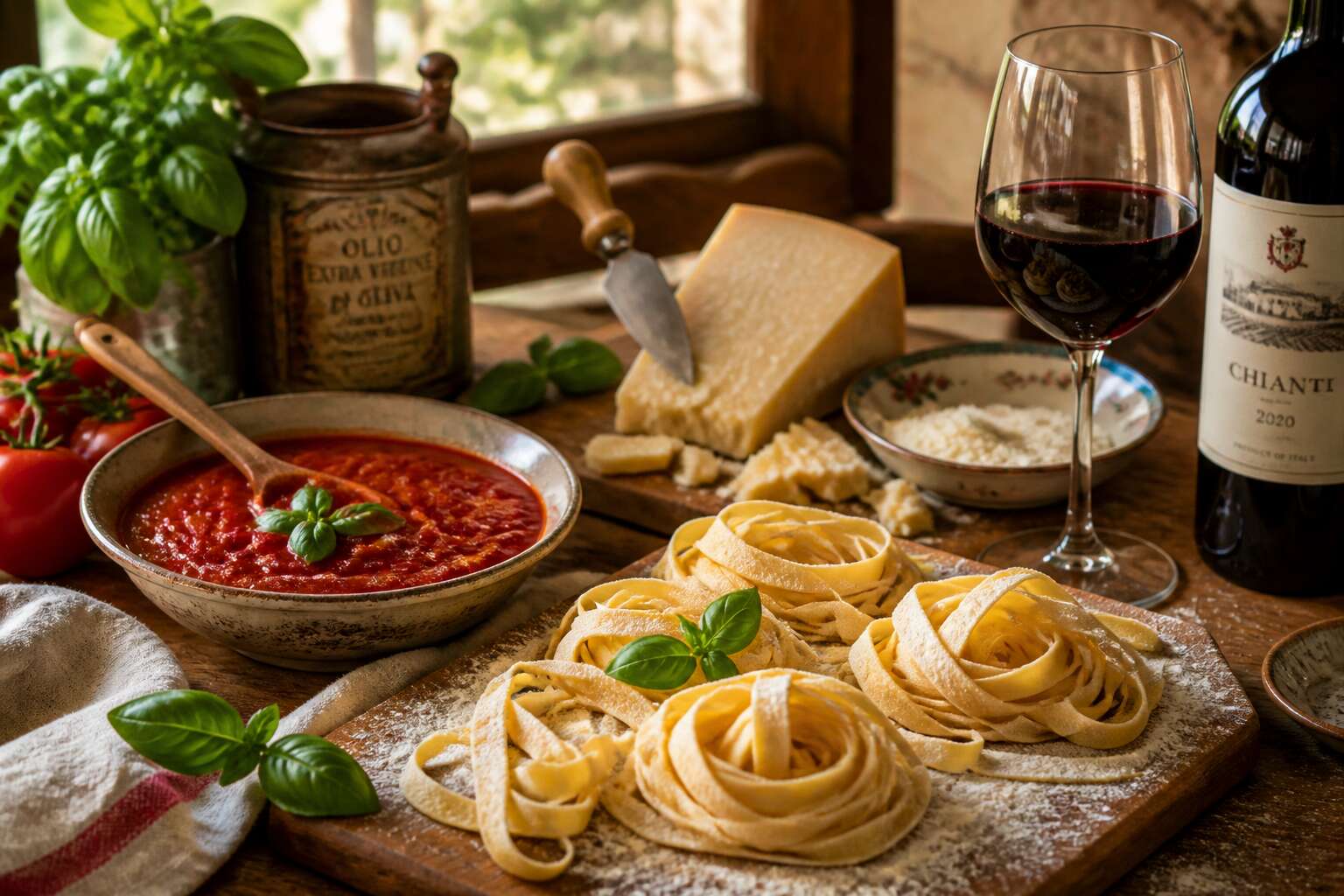
Regional Diversity of Italian Food
Northern Italy: Creamy Risottos and Polenta Traditions
Europe’s largest rice-growing region sits in Northern Italy. The Po Valley’s paddies stretch across Piedmont and Lombardy, yielding the Arborio and Carnaroli grains that define this region’s cooking. Here, risotto is not a side dish. It is the centrepiece!
Polenta took a similar path. This golden maize porridge was once dismissed as food for the poor, yet today it appears on fine dining menus across the Alps. The pairings vary by province:
- Venice serves it with cuttlefish
- Bergamo pairs it with game and cheese
- Friuli favours sausage and beans
That’s italian food in the north. Northern kitchens rely on butter, stock, and methodical stirring to release the rice’s natural starches. The result is a creamy texture without any cream. No shortcuts. No tomato dependence. Just rice, maize, and technique.
Central Italy: Hearty Pastas and Rustic Simplicity
Central Italy keeps its culinary mysteries close. In Rome’s older trattorias, cacio e pepe arrives with the quiet authority of a long kept secret. The pasta is not decorated. It is claimed by the cheese and the pepper!
I have watched Umbrian hands roll pici for decades. Flour dusts the air. Egg yolks glow amber in dim kitchen light. The sauce here is sparse, deliberate, almost severe. The regional codes are strict:
- Tuscany’s pici, hand rolled and chewy, tossed with garlic and breadcrumbs
- Rome’s carbonara, a whispered recipe of guanciale, egg, pecorino
- Lazio’s coda alla vaccinara, oxtail simmered in tomato and celery
That’s italian food in its most honest form. No cream in carbonara. No shortcuts in ragù. Just flour, fire, and patience!
Southern Italy: Sun-Drenched Tomatoes and Seafood
Campania alone produces over a million tonnes of San Marzano tomatoes every year. Southern Italy does not negotiate with cream or butter. It trusts tomatoes, olive oil, and whatever the fishing boats brought in this morning.
- Naples: pizza marinara, a flatbread with almost nothing on it
- Sicily: caponata, a sweet and sour aubergine stew
- Puglia: raw sea urchins spooned onto stale bread
The food here is direct. Cooks in Puglia boil octopus in its own water. Sicilians fry sardines and call it dinner. Nobody spends three hours reducing a sauce. The catch is fresh, the tomatoes are ripe, and the meal is done. That’s italian food at its most impatient, and honestly, it works.
The Islands: Sicilian and Sardinian Culinary Signatures
Standing in a Palermo market, the scent of wild fennel and cured tuna hangs in the air. Sicily pushes sweetness into everything, from raisins to capers, a legacy of Arab rule. Sardinia answers with stark simplicity: roasted suckling pig, pane carasau, and pecorino aged in caves. That’s italian food stripped to its bones.
Two islands, two philosophies. Consider these signatures:
- Sicilian pesto trapanese, ground almonds with garlic
- Sardinian culurgiones, hand-pinched pasta pillows
- Sicilian cannoli filled with sheep’s milk ricotta
- Sardinian bottarga, pressed grey mullet roe
Sardinian shepherds still smoke their cheese over juniper, while Sicilian cooks let orange zest brighten a simple octopus salad. Neither needs cream or elaborate reductions. The Mediterranean provides, and both islands respond with direct, honest plates. That’s italian food at its most island-bound, shaped by wind, salt, and ancient trade routes.
Essential Ingredients and Pantry Staples
Extra Virgin Olive Oil: Liquid Gold in Everyday Cooking
Over 80 percent of olive oil sold worldwide fails basic extra virgin standards, so finding a trusted bottle takes real effort. That’s italian food at its most honest. Oil pressed within hours of harvest and bottled with exacting care. Italian producers treat this pantry staple as a living product, and the best examples reward you with a peppery finish that signals high polyphenol content.
A good bottle arrives with a harvest date and a dark glass vessel. Cold extraction preserves volatile aromatics that cheap processing destroys. I rely on my senses to confirm quality before ever reaching for a pan, and the rewards are immediate!
- Sight. A cloudy, golden hue, not crystal clear
- Smell. Fresh grass and green tomato leaf
- Taste. A bitter kick followed by heat at the throat
Traditionally, Italians reserve the finest oil for finishing, drizzling it over cooked plates and raw salads. Heating it destroys the delicate compounds that make the oil worth buying.
Artisanal Cheeses: Parmigiano, Mozzarella, and Pecorino
Artisanal cheeses are essential to Italian cuisine. Parmigiano Reggiano, aged for 24 months or more, has a crystalline crunch and a nutty flavor. Mozzarella, pulled fresh the same day, offers a soft elasticity. Pecorino Romano, made from sheep milk, brings sharp saltiness.
Each cheese demands a distinct treatment.
- Parmigiano: grate over finished pasta, not into the pot.
- Mozzarella: serve at room temperature with olive oil and basil.
- Pecorino: pair with honey or ripe figs.
Their simple preparation honors the craft of each maker. That’s italian food in its best form.
Cured Meats: The Role of Prosciutto and Pancetta
Prosciutto and pancetta are not interchangeable. Prosciutto is dry cured and aged, sliced so thin that it nearly dissolves on the tongue. It is eaten raw, never cooked. Pancetta, by contrast, is cured with salt and spices but remains unsmoked. It demands heat to release its fat and flavor.
That single difference shapes every dish. Pancetta gets diced and rendered into soffritto, where it builds the base of a ragù. Prosciutto gets laid over warm bread or draped across a plate of melon, where its saltiness meets the fruit’s sweetness.
Here is the practical breakdown:
- Prosciutto: serve cold and raw
- Pancetta: cook it slowly
For many cooks, that’s italian food at its most honest. Two cuts of pork, two distinct roles, no confusion needed.
Grain and Flour: Pasta, Bread, and the Perfect Crust
There is a precise character in Italian flour. The same wheat that becomes pasta strands transforms into a bread loaf with a dark, crackling crust. This grain-based pantry holds the foundation of Italian cookery.
Durum wheat semolina gives pasta an amber hue and firm bite. Soft wheat flour, finely milled, creates the tender crumb of focaccia. The ’00’ grade has a powdery texture and rolls into thin sheets without tearing.
For bread, hydration determines the crumb. A wet dough creates holes in the crumb. A hot oven seals the crust. Use these basics:
- Choose semola for extruded pasta.
- Use ’00’ for fresh sheets.
- Pick strong flour for long ferments.
The perfect crust needs patience, not complication. That’s italian food at its most elemental level.
Fresh Herbs and Aromatics: Basil, Oregano, and Garlic
Fresh basil changes a dish the moment it hits a warm pan. The scent is immediate, green, and clean. Oregano works in reverse. It gains character when dried, turning earthy and pungent. Garlic sits at the centre. A single clove, sliced thin and gently fried, sets the base for beans, greens, or a simple tomato sauce.
- Add basil at the end of cooking to preserve its flavour.
- Use dried oregano for slow, bubbling pots.
- Cook garlic on low heat until it softens, never browns.
These aromatics do not need elaborate treatment. They need timing and a confident hand. That’s italian food, built on fresh, potent ingredients.
Tomatoes: From Labelled DOP Varieties to Home-Grown Classics
Italy cultivates hundreds of tomato varieties, yet South African kitchens rarely see beyond the standard salad tomato. DOP certification guards specific cultivars, such as San Marzano, which grow in volcanic soil near Naples. Those labelled fruits deliver a balanced sweetness and low seed count.
- San Marzano for slow sauces
- Piennolo for long storage
- Home-grown varieties for fresh eating
Home-grown classics, however, possess a perishable quality. Your own tomatoes ripen unevenly, burst with juice, and carry a bright acidity. They suit simple salads or toasted bread with olive oil. That’s italian food, which values freshness over perfection.
Classic Dishes and Their Origins
Neapolitan Pizza: From Street Food to UNESCO Heritage
In 2017, UNESCO crowned the pizzaiuoli of Naples for their craft, yet this flatbread’s journey began as a humble meal for 18th century street vendors. Workers needed cheap, portable sustenance, so they topped leavened dough with lard, garlic, and salt. Tomatoes arrived later, transforming the pie into the icon we recognize. that’s italian food born from necessity, not refinement.
The Margherita, named for Queen Margherita in 1889, solidified the classic tricolor. Its evolution follows a strict code:
- San Marzano tomatoes grown on volcanic soil
- Buffalo mozzarella from Campania
- Hand stretched dough with a puffy cornicione
Each element demands precision. The pizza must bake for 60 to 90 seconds in a wood fired oven at 485°C. I’ve watched Neapolitan pizzaioli spin dough with an ease that hides decades of practice. From street carts to global acclaim, that’s italian food preserving authenticity.
Pasta alla Carbonara: A Roman Recipe Wrapped in Legend
Few Italian dishes spark as much debate as carbonara. Its origins remain a delicious mystery. Some say the name comes from the carbonai, the charcoal burners of the Apennines. They cooked pasta over embers with eggs, cheese, and cured pork. Others insist American soldiers brought the recipe to Rome in 1944, combining rationed bacon and eggs with local pasta. That’s italian food born from scarcity and resourcefulness.
Whatever the true story, the Roman recipe is sacred. You need guanciale, pecorino romano, eggs, and black pepper. No cream. No garlic. The silky sauce comes from the heat of the pasta and the pasta water alone. That’s italian food where one mistake turns it into scrambled eggs.
The essential steps:
- Whisk eggs and cheese first.
- Temper with reserved pasta water.
- Toss hot pasta and guanciale off the heat.
- Finish with pepper and pecorino.
Risotto alla Milanese: Saffron, Broth, and Lombard Pride
The golden glow of risotto alla milanese is no accident. Saffron threads, steeped in warm broth, give the rice a colour as rich as the Lombard region itself. That’s italian food that relies on simple ingredients and careful technique. The dish rests on three pillars:
- High-quality saffron for the amber hue
- A well-flavoured broth, added in small batches
- Frequent stirring to release starch
Some versions include bone marrow for extra depth, a tradition from old Milanese kitchens. The broth, often beef or vegetable, is added gradually while stirring, allowing the rice to cook evenly. The result is creamy but not soupy, elegant but hearty. That’s italian food where a single ingredient, saffron, can define an entire plate. The discipline of slow cooking rewards you with a dish that tastes like Lombard pride in every spoonful.
Gelato and Tiramisu: The Secrets Behind Beloved Desserts
Gelato and tiramisu have roots in Italian home kitchens. Gelato uses less butterfat than ice cream, allowing flavours to register quickly on the palate. The churning process is slower, so less air gets whipped in. The result is dense and smooth. That’s italian food at its most inventive.
Tiramisu translates to “pick me up,” a nod to espresso and cocoa. Layers of savoiardi biscuits soak in coffee, then rest under mascarpone cream. The secret is timing. Dip the biscuits too long and they collapse. Too short and the cake tastes dry.
- Use fresh eggs for the zabaglione base
- Chill the mascarpone before folding
- Dust cocoa right before serving
Both desserts reflect regional habits. Gelato shops in Florence churn small batches daily. Venetian kitchens layer tiramisu in rectangular trays for easy slicing. That’s italian food shaped by local routines and patience with simple steps.
Regional Variation: Why Lasagne and Ragù Differ Across Borders
Lasagne and ragù are often mistaken for a single national recipe, yet each region defends its own version. In Emilia-Romagna, ragù alla Bolognese relies on minced beef, a little wine, and a hint of tomato. Slow braising and patience define the sauce.
Southern kitchens, especially around Naples, treat ragù as a Sunday ritual. They use pork and beef, simmering for hours until the sauce turns dark and dense. The lasagne follows the same logic: fresh egg pasta in the north, dried semolina sheets in the south.
- Emilia-Romagna: fine egg pasta, beef ragù, béchamel
- Naples: dried pasta, rich pork ragù, ricotta and mozzarella
That’s italian food at its most regional, where a single dish tells you which province you are in.
The Culture Eating and Family Style Dining
Antipasti, Primi, Secondi: Understanding the Italian Meal Structure
An Italian dinner can stretch for hours, yet no one glances at a clock. The rhythm is set by antipasti, then primi, then secondi. That structure is not a rule; it is a philosophy of savouring each plate.
Family style dining amplifies this. A large bowl of handmade tagliatelle lands in the middle, and hands reach out to serve neighbours before themselves. That’s italian food in its truest form.
- Antipasti: artichokes, prosciutto, olives
- Primi: tortellini in brodo or a rich ragù
- Secondi: ossobuco or a simple grilled sole
Sharing forces you to slow down. Plates pass, wine pours, and the meal becomes a conversation where everyone has a voice.
The Evening Passeggiata and Its Influence on Meal Times
Twilight in a small Italian town is not a transition between work and dinner. It is a set time for the passeggiata. People of all ages walk the main street, stop to talk, and slow the entire evening. By 20:30, families are only beginning to head home. I’ve seen it every summer!
The walk shapes meal times. Dinner waits for the last conversations to end. In the south, restaurants fill near 22:00. In the north, a little earlier. Whatever the clock says, dinner follows the street’s timing, and that’s italian food at its core.
Typical signs that dinner is close:
- The shutters close on the last shop.
- The square empties at a wandering pace.
- A bottle of wine appears on the table.
It is common for the evening meal to start after 21:00 and continue until the night feels finished. That’s italian food: unhurried, family style, and full of conversation.
Sunday Lunches: The Sacred Gathering Around the Table
My first invitation to a Sunday table in Puglia lasted four hours, and we had not yet reached the fruit. That’s italian food: a meal that refuses to follow the clock.
The ritual begins before anyone sits. The table is laid with care, and the kitchen hums with several generations moving in quiet coordination. There is no fixed menu and no strict order. Bowls travel in both directions, and everyone serves the person beside them. People talk with their mouths full and their forks in hand.
Certain elements mark this gathering as sacred:
- The same chairs are always filled by the same people.
- The first glass of wine is poured for someone who has not yet arrived.
- No one checks a phone.
The long lunch loosens the week. It restores a rhythm that workdays interrupt, and it carries the table into the late afternoon.
Coffee Etiquette: Why Cappuccino Ends at Breakfast
In Italy, a cappuccino after 11 a.m. marks you as a tourist. The rule is simple. Milk belongs to breakfast. Coffee owns the rest of the day. At a Roman bar, the ritual is fixed: cappuccino reserved for morning, espresso for after.
At the table, family style dining means bowls pass hand to hand. You serve your neighbour before yourself. I have seen visitors pour milk into an afternoon espresso. The barista winces, but says nothing.
Coffee rules follow the same logic:
- Cappuccino ends at breakfast, never after pasta.
- Espresso is the only acceptable after-dinner choice.
- Do not ask for milk with your evening coffee.
These customs feel rigid, yet they create order. That’s italian food: respect for tradition, even in a small cup. The espresso arrives hot, dark, and quick. You drink it standing, then return to the table.
Pairing Italian Food with Wine and Beverages
Chianti and Sangiovese: A Match for Tomato-Based Sauces
Chianti’s Sangiovese grape carries a bright acidity that mirrors the tang of crushed tomatoes. This alignment transforms a simple ragù into a conversation between glass and plate. Here are three classic pairings:
- Chianti Classico with spaghetti al pomodoro
- Riserva with a slow-cooked meat ragù
- Young Sangiovese with margherita pizza
Each sip strips away the heaviness of olive oil and garlic, leaving a clean, cherry-toned finish. For South African drinkers, the wine’s sun-baked character recalls our own coastal harvests. That’s italian food at its most harmonious. A fresh, unoaked style works best, because ageing erases the brisk energy needed to cut through tomato’s natural sweetness.
Mineral Whites like Vermentino and Pinot Grigio with Seafood
Along the Cape coast, I reach for a cold glass of Vermentino when the afternoon catch comes off the braai. This is not coincidence. The wine’s crushed stone and citrus notes mirror the sea’s own seasoning. Pinot Grigio, often dismissed as neutral, reveals its charm beside grilled prawns or linefish. Its restraint lets the protein speak.
For a simple spread, consider:
- Grilled calamari with a glass of Vermentino
- Snoek pâté on crostini with Pinot Grigio
- Mussels in white wine, using the same bottle for cooking and drinking
The minerality in both wines acts as a palate cleanser, cutting through the oil without dominating the dish. That’s italian food at its most elemental, where the sea and the vine share the same salt.
Sparkling Options: Prosecco as an Appetizer Staple
Few things signal the start of a meal like the pop of a Prosecco cork. Its gentle fizz and pear blossom notes prepare the palate without overwhelming it. That’s italian food at its most welcoming: a glass that invites you to linger over antipasti. Prosecco’s moderate alcohol and natural acidity make it the ideal companion for fried snacks, salty bites, and creamy starters. Try these classic pairings:
- Prosecco with arancini, the crisp rice balls that love bubbles
- Prosecco with marinated olives, where brine meets fruit
- Prosecco with soft polenta bites, a northern Italian comfort
In South Africa, we often reach for Méthode Cap Classique, but a chilled Prosecco is just as confident beside snoek samoosas or grilled calamari. Its bubbles cleanse the palate, readying you for the next bite. That’s italian food: bright, sociable, and unpretentious.
Red Wine Legality: When Regional Rules Dictate Pairings
Italian wine law does more than certify origin; it shapes what lands on the table. When a producer labels a bottle Barolo DOCG, the rules require Nebbiolo, three years of ageing, and a defined village. Those legal constraints create a tannic red that the region’s residents pair with slow-cooked beef. That’s italian food: the law preserves tradition, and tradition dictates the glass.
In the Veneto, Amarone’s DOCG status demands dried grapes, yielding a dense, raisined red. Locals insist it accompanies aged cheeses rather than pasta. Piedmont’s Gattinara, meanwhile, carries its own mandates. I see these rules echo on South African tables, where braaied meat meets them:
- Barolo with oxtail stew, where tannin cuts fat
- Amarone with mature pecorino, where sweetness meets salt
- Gattinara with roast lamb, where spice lingers
Each pairing emerges from a legal framework, not a passing food trend. That’s italian food: regulated, deliberate, and grounded in place.
Non-Alcoholic Replacements: Digestivi, Spritz, and San Pellegrino
The average Italian meal ends with a digestivo, a bitter herbal tonic meant to close the curtain on pasta. But when nobody wants a hangover, the table reaches for San Pellegrino instead. The ritual stays intact, just without the alcohol.
For the spritz crowd, a classic Aperol version relies on prosecco, yet a non-alcoholic bitter soda mimics the same orange glow. Digestivi like amaro also appear in alcohol-free forms, blending gentian and rhubarb with syrup.
- San Pellegrino with a lemon wheel for hydration
- Alcohol-free spritz with blood orange soda
- Amaro-style syrup over ice for a bitter finish
The point is not substitution. It is ceremony. A glass of sparkling water still signals the end of a meal. That’s italian food, where the gesture matters more than the proof.
Modern Twists on Traditional Italian Food
Farm-to-Table Movements Across the Boot
The rolling hills of Piedmont now host a quiet revolution. Young chefs are letting the land dictate the menu, swapping rigid recipes for seasonal intuition. This farm-to-table movement, spanning Tuscany to Puglia, does not discard tradition. It reinterprets it. That’s italian food in its most honest form, where a humble turnip carries the flavour of the soil.
Diners across the boot encounter weekly harvest boards, with classics like risotto or ragù adapting to whatever arrives fresh. Chefs partner with local growers to revive ancient grains and forgotten vegetables. The cuisine feels timeless yet startlingly new.
- Foraging wild herbs and mushrooms
- Using native legumes over imported staples
- Fermenting vegetables for added depth
These modern twists preserve the soul of Italian cooking while embracing sustainability.
Plant-Based Italian: Vegan Interpretations of Pasta and Polenta
Polenta and pasta are naturally flexible, which makes them perfect for vegan interpretations. Chefs across Italy now swap butter for olive oil, and Parmesan for nutritional yeast. The result feels lighter, but no less satisfying. I tried a bowl of polenta topped with wild mushrooms and a tangle of braised kale. It had the same earthy depth as the traditional version. That’s italian food in a modern key.
Legumes do the heavy lifting in plant-based ragùs. Lentils, chickpeas, and cannellini beans bring texture and protein.
- Cashew cream replaces dairy in sauces
- Aquafaba stands in for eggs in fresh pasta
- Smoked paprika mimics the depth of pancetta
These twists respect the original flavours while making room for a plant-based table.
Fusion Flavors: How Global Cuisines are Reshaping Italian Kitchens
In Turin, a Japanese pizzaiolo tops margherita with shaved bonito. Fusion is reshaping Italian kitchens without erasing their identity. Chefs borrow textures and spices from North Africa, Japan, and Peru. They treat pasta as a canvas.
Some pairings feel inevitable:
- Harissa-spiked ragù with pappardelle
- Miso butter folded into risotto
- Togarashi dusted over grilled polenta
These pairings work because they respect regional logic. A soy-based glaze mimics colatura di alici. Curry leaves replace basil in a Genoese pesto. That’s italian food, changing one plate at a time.
The Rise of Informal Trattorias in Fine-Dining Scenes
Fine dining once meant starched tablecloths and a waiter who could recite every vineyard in Piedmont. Now the hottest tables in Cape Town and Milan are unwaxed wood and full-throated chatter. Informal trattorias are rewriting the rules. They serve robust Roman pastas next to a natural orange wine, and nobody considers it a contradiction.
Modern twists appear on menus without apology. Orecchiette gets a whipped lardo finish. A Turin chef swaps beef cheek for smoked jackfruit in a slow-braising ritual. The tradition remains visible. The formality has vanished.
The new playbook includes:
- Course orders that ignore the old hierarchy
- Wine by the carafe, not the crystal decanter
- Staff who explain dishes with actual enthusiasm
That’s italian food, measured by taste rather than ritual.

0 Comments