Safety First – Kitchen Prep for Young Cooks
Setting Up a Kid-Friendly Workspace
The most important ingredient in any recipe for italian food kids can make is a workspace that allows focus. A cluttered counter increases the chance of accidents. I always begin by clearing the surface and washing hands together, making hygiene a shared ritual rather than a command.
Then I arrange the tools in a deliberate sequence. Place a sturdy step stool near the sink. Lay out a damp cloth for spills. Set out the mixing bowls and measuring cups within easy reach. These small preparations let a child move confidently!
- Keep knives with dull edges in a separate tray.
- Turn pot handles toward the back of the stove.
- Use a low table for mixing tasks.
When children help with italian food kids can make, the risk drops when they understand why each rule exists. I explain that a wet floor is a slipping hazard and a dangling utensil is a pulling hazard. That understanding turns safety into a shared trust between cook and helper.
Essential Kitchen Tools for Little Hands
Safety transforms the kitchen into a classroom when children prepare italian food kids can make. Before a single tomato is rinsed, I walk my young cooks through the terrain. We identify the hot zones: the stovetop, the oven door, the steam from a boiling pot. I show them exactly where to stand, and we practice the “safe stance” with feet planted and hands behind their backs when the stove is active. This is not a lecture, it becomes a game of awareness.
For small hands, the right tools make all the difference. I skip adult-sized gadgets entirely and reach for items that fit their grip.
- A sturdy wooden spoon for stirring risotto
- A plastic bench scraper for gathering chopped herbs
- Measuring spoons with long, narrow handles
- A kid-safe peeler for zucchini and carrots
These tools turn clumsy moments into confident wins. When children use equipment sized for their reach, they focus on the craft instead of fighting the hardware. That focus is the quiet heart of cooking italian food kids can make, where patience and practice meet a plate of something delicious.
Basic Knife Skills and Safe Chopping
Learning to handle a blade demands a quiet mind. In my kitchen, the knife becomes a tool of respect, not fear. When preparing italian food kids can make, the first lesson is the claw grip: tuck fingertips back and let knuckles guide the blade. This simple posture prevents most accidents.
I demonstrate chopping basil or mozzarella with slow, deliberate strokes. Children practice on soft vegetables like zucchini. The process involves:
- Place the flat side of the blade against your knuckles.
- Rock the knife from tip to heel while pressing down gently.
- Move fingers back only after each cut.
Each successful chop builds a quiet confidence. The skill transfers to every dish, from minestrone to caprese salads. Kids learn that precision matters, and their small victories become part of the meal’s story.
Handwashing and Food Hygiene Rules
Clean hands are the first step in every cooking lesson. Before any italian food kids can make reaches the table, I insist on a full twenty second scrub with soap and warm water. In South Africa’s warm climate, bacteria multiply quickly, so this is not optional.
Fingernails carry the most dirt. Show children how to wash their palms, the backs of hands, and between fingers. A quick rinse does nothing. Drying with a clean towel matters too, since wet hands transfer germs.
Stop the cooking and wash again after these moments:
– Touching raw meat or eggs
– Handling rubbish or dirty dishes
– Coughing or sneezing
– Touching hair, face, or phones
These rules apply to every caprese salad and pasta dish they attempt. Hygiene is the foundation of the meal.
No-Bake Italian Snacks and Appetizers
Caprese Skewers with Cherry Tomatoes and Mozzarella
No oven, no sweat. Caprese skewers are a straightforward way to prepare italian food kids can make, because the recipe relies on assembly, not heat. You thread a cherry tomato, a basil leaf, and a mozzarella ball onto a stick, then drizzle with olive oil and balsamic glaze.
- Cherry tomatoes, firm
- Fresh basil leaves, large
- Mozzarella balls, drained
The real challenge is the skewering. Kids tend to push too hard and flatten the tomato. Let them practice on a few extras. For a South African twist, look for local buffalo mozzarella, though the classic version works anywhere.
Bruschetta with Tomato and Basil
Bruschetta with tomato and basil offers another no-bake route through italian food kids can make. This time the base is toasted bread instead of a skewer. The bread gets a light rub of garlic, then a spoonful of chopped tomatoes, torn basil leaves, and a drizzle of olive oil.
South African bakeries provide plenty of sturdy options for the base. A sourdough or ciabatta loaf holds up better than flimsy sandwich bread. Let the tomato mixture rest for five minutes before serving. That short pause allows the juices to mingle with the basil.
A simple order keeps things tidy:
- Dice the tomatoes into small pieces
- Tear the basil leaves
- Stir in olive oil and a pinch of salt
- Spoon onto crisp toast
The topping goes on right before eating so the bread keeps its crunch. Kids can taste the mixture and adjust the salt. That is the charm of italian food kids can make.
Antipasto Roll-Ups with Prosciutto and Cheese
Antipasto roll-ups with prosciutto and cheese are a brilliant example of italian food kids can make without turning on the stove. The process feels like assembling a tiny treasure roll. Children spread a thin layer of cream cheese across each slice of prosciutto, then add a few strips of crisp cucumber or roasted red pepper.
South African supermarkets stock prosciutto in vacuum packs near the deli counter. For a lighter finish, ricotta cheese works just as well. The roll-ups taste best within an hour of assembly, so keep them chilled until serving.
A simple sequence keeps the task manageable:
- Lay the prosciutto flat on a cutting board
- Spread the cheese thinly across the surface
- Arrange the vegetable strips near one edge
- Roll tightly toward the opposite side
- Slice into bite-sized rounds
These bright spirals show how italian food kids can make feels both creative and satisfying. Salty ham meets mild cheese, and no heat is involved.
Garlic Bread Bites in the Air Fryer
The air fryer transforms simple ingredients into golden garlic bread bites, and italian food kids can make in under fifteen minutes. Small bread cubes absorb melted garlic butter, then crisp into crunchy pillows with soft centres. Children brush each cube with a mixture of butter, minced garlic, and dried oregano. A shower of grated mozzarella over the top creates a salty crust as the basket whirls.
South African supermarkets sell pre-sliced French loaves or rolls in the bakery section. For a sharper finish, add a pinch of chilli flakes before cooking. The process requires only light handling:
- Cut the bread into uniform cubes
- Brush with the garlic butter mixture
- Sprinkle with cheese and herbs
- Air fry at 180°C for eight minutes
The result smells like a trattoria, and the effort stays minimal.
Olive and Cheese Stuffed Celery Sticks
Celery often gets relegated to the crudité tray, but its trough shape is perfect for holding a savory filling. This recipe turns it into one of the most satisfying italian food kids can make without turning on a single appliance.
Firm, crisp stalks provide the crunch. A mixture of softened cream cheese or ricotta gets seasoned with a touch of garlic powder and dried basil. Children can spread this filling with a butter knife, then press chopped green olives and a sprinkle of parmesan into the surface.
- Cut celery into four-centimeter sticks
- Blend the cheese with herbs and a splash of olive brine
- Press the olives into the cheese bed
The salty, mineral taste of the olives offsets the mellow cheese. I love watching kids master this simple spread technique! It remains a practical example of italian food kids can make for lunchboxes or after-school cravings, bypassing the oven.
Simple Pasta Dishes Kids Can Master
Pasta with Butter and Parmesan
Cooks in Naples call it pasta al burro, and it is often the first dish children learn. The process asks for little more than cooked pasta, good butter, and finely grated Parmesan. Yet it teaches the core of italian food kids can make: restraint. A child measures butter with a spoon, stirs until it melts into the warm pasta, then adds cheese in three small showers. This sequence builds patience and observation.
The sauce comes together through temperature and timing. The cheese clumps if the pasta is too hot. The butter separates if it is too cold. I have watched children learn to watch the pan, wait for the right moment, and adjust their next attempt accordingly.
One-Pot Mac and Cheese with Italian Flair
One-pot mac and cheese offers a lesson in patience without the ceremony. The child adds pasta, water, and milk to a single pot, then stirs until the starch turns the liquid silky. This is italian food kids can make with a confidence that grows each time the sauce comes together. The pot does the heavy lifting; the child simply watches the heat and adjusts.
The Italian flair comes from sharp pecorino and a handful of chopped basil. Some cooks add a spoonful of tomato passata. Others whisper a bit of nutmeg. The result carries a Roman accent, but the method stays reliably humble. A child masters the timing, not the recipe. The bowl is licked clean.
Penne with Cherry Tomato Sauce
Penne with cherry tomato sauce teaches a child the art of restraint. The sauce needs only a drizzle of olive oil, a clove of garlic, and a pint of cherry tomatoes left to burst over medium heat. The child waits until the skins wrinkle and split, then presses each tomato with the back of a spoon.
This is italian food kids can make without a recipe card. The penne cooks in salted water while the sauce reduces. A splash of pasta water binds the two together. The result is bright, honest, and entirely their own. For a South African kitchen, fresh basil from the garden completes the dish.
Spaghetti with Meatballs (Using Pre-Made or Homemade)
Spaghetti with meatballs is a dish that rewards a child’s effort. The sauce simmers while the meatballs brown. Pre-made options work well, especially for afternoons when time runs short. Homemade meatballs, however, give kids ownership. Combine beef mince, grated Parmesan, and a handful of breadcrumbs. Roll them into small spheres. No need for precision, just uniform size.
A pot of salted water comes to a boil. Spaghetti cooks until al dente. Drain, then toss with the meatballs and sauce. A dusting of pecorino finishes the meal. This is italian food kids can make with confidence. In South African kitchens, fresh oregano or thyme from the garden adds a local touch.
Build-Your-Own Pizza Night
Choosing the Right Base: Dough, Pita, or Flatbread
The best pizza night starts with a debate about the base. For families exploring italian food kids can make, the choice between dough, pita, and flatbread shapes the entire experience. Dough requires patience and a warm oven. Pita offers instant satisfaction with a crispy bite. Flatbread balances chew and crunch.
Consider these three foundations:
- Traditional pizza dough: the classic path, demanding rising and kneading.
- Pita pockets: a quick alternative, ready in minutes under the grill.
- Flatbread: a sturdy option, accommodating generous layers of sauce and cheese.
Each base changes the cooking time and the level of involvement. Dough invites children to stretch and shape. Pita lets them focus on topping patterns. Flatbread encourages creative assembly. When the child chooses the base, they take ownership of the entire meal. That simple decision turns pizza night into a genuine cooking lesson.
Kid-Friendly Topping Stations
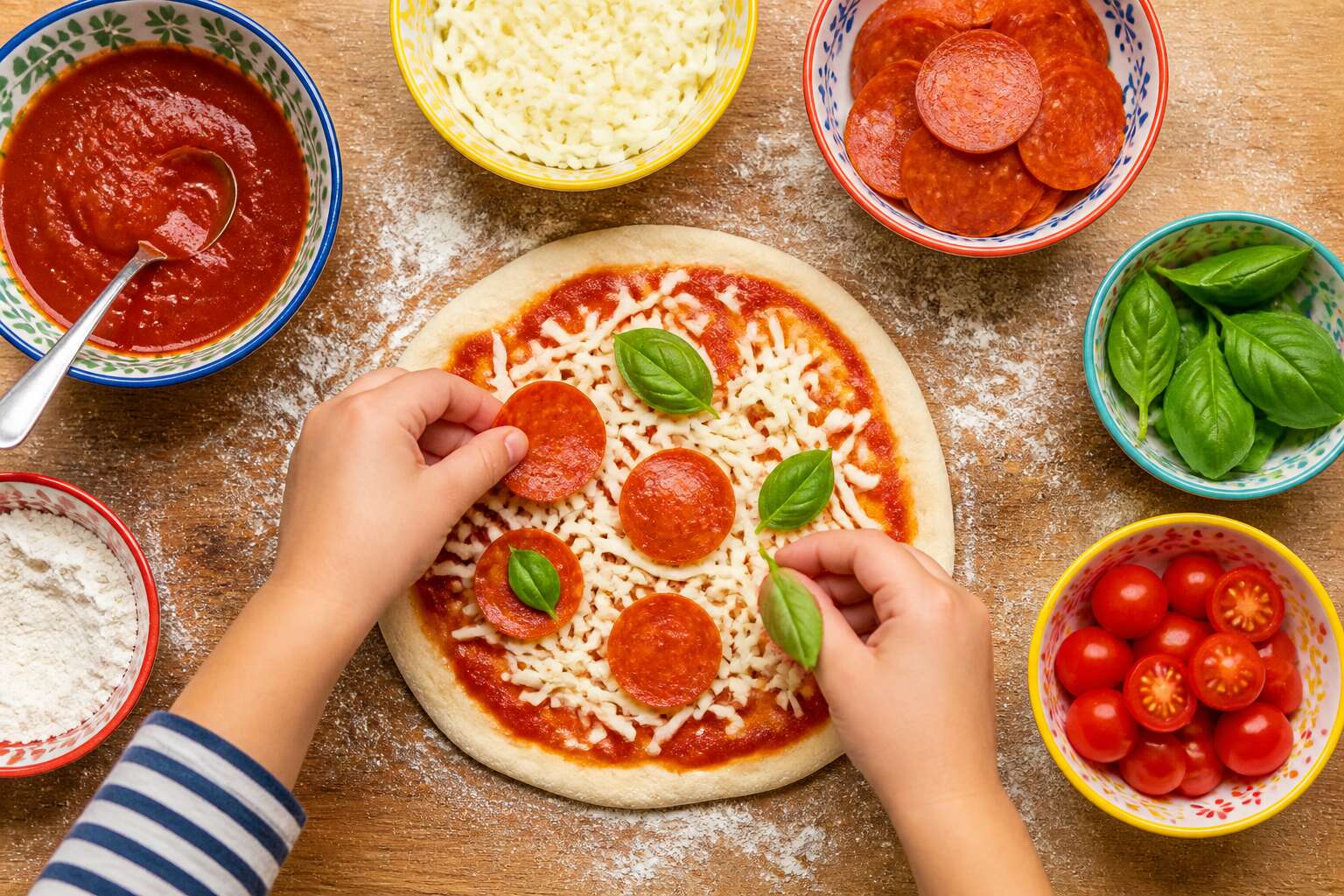
On a table, small bowls hold sliced peppers, shredded mozzarella, sweetcorn, pepperoni, and olives. Each bowl is a choice. A child can turn a plain base into their own creation. Presenting toppings in separate containers gives clear control. They decide how much sauce, which cheese, and what goes where. This builds confidence and taste.
A successful station includes a few categories:
- Sauce options: tomato, pesto, or olive oil.
- Cheese choices: mozzarella, cheddar, or feta.
- Proteins and vegetables: ham, mushrooms, pineapple, or cherry tomatoes.
When children choose their toppings, they engage with italian food kids can make in a direct way. The pizza may not look perfect. It will be eaten with pride.
Assembling and Baking Personal Pizzas
Every child becomes a pizzaiolo when the dough lands in their hands. Flatten it, stretch it, and accept that circles are optional. A personal pizza allows for experimentation at a pace that suits young cooks. Once the base is ready, spoon on a thin layer of sauce, scatter cheese, and arrange toppings into patterns or chaos. The oven does the rest of the work.
Baking personal pizzas teaches timing and observation. Place each pizza on a preheated tray or pizza stone. Watch for the cheese to bubble and the crust to turn golden. That visual cue matters more than a timer. Pull them out when the edges look right, then let them rest for two minutes before slicing.
For a smooth build-your-own pizza night, keep these steps in order:
- Roll the dough to the child’s preferred thickness.
- Add sauce with the back of a spoon.
- Top with cheese first, then other ingredients.
- Bake at 200°C until golden.
This sequence gives every pizza a fair chance. And when the finished pies come out of the oven, you have italian food kids can make with their own hands, fully edible and proudly theirs.
Easy Italian Desserts for Little Chefs
Tiramisu Cups with Mascarpone and Cocoa
Tiramisu sounds like a dessert that requires a culinary degree, but it is actually a no-bake miracle. For italian food kids can make, these mascarpone cups are a total win because there is zero heat involved. No oven, no stove, just whisking and layering. I love watching small hands tackle the process with serious intent.
Grab a bowl and let little chefs beat the mascarpone with a splash of sugar and vanilla. Then dip ladyfinger biscuits into strong coffee (cold coffee works best to avoid soggy chaos). The real fun is watching kids alternate layers with total concentration, creating edible towers.
- Whipped mascarpone mixture
- Coffee-dipped ladyfingers
- A generous dusting of cocoa on top
Once the cups are built, a fine dusting of cocoa finishes the job. No baking means no waiting around. Kids can assemble these in minutes and feel like pastry pros without breaking a sweat.
Chocolate Hazelnut Gelato Sundaes
Here is a dessert that makes the idea of a complicated recipe look silly. Chocolate Hazelnut Gelato Sundaes require no baking, no boiling, and no patience. For italian food kids can make, this one sits right at the top because the work is mostly scooping and stacking.
Hand the kids a tub of chocolate hazelnut gelato. Let them scoop, squish, and sculpt it into bowls while you warm a little cream and hazelnut spread into a glossy sauce. Then comes the assembly:
- Gelato scoops in a bowl
- Warm sauce drizzled on top
- Crushed amaretti biscuits or chopped hazelnuts for crunch
The finished sundae looks like a café creation, but the effort stays on the playful side. Kids feel like pastry chefs, and you get to enjoy the quiet crunch of a biscuit topping.
Cannoli Dip with Wafer Dippers
Cannoli dip turns a Sicilian classic into a hands on treat. For italian food kids can make, this one rewards a simple stir. Ricotta, mascarpone, icing sugar, vanilla, and a handful of mini chocolate chips. No heat required. No tempering chocolate. Just a bowl and a spoon.
The magic hides in the texture. Creamy, faintly grainy, with a citrus zest that wakes up the palate. Little chefs can fold the ingredients together without supervision. Then comes the fun part: dipping. Crisp wafer cookies stand in for the traditional shell.
- Scoop the dip into chilled bowls
- Arrange wafer dippers around the edge
- Dust with cinnamon or cocoa
The contrast between the cool filling and the snap of the wafer makes this a crowd pleaser. And the mess stays contained to one bowl.
Lemon Granita with Fresh Berries
Lemon granita is a frozen dessert with a coarse, icy texture. Unlike sorbet, it forms into tiny crystals that crunch between the teeth. For italian food kids can make, this recipe rewards a simple rhythm.
The mixture starts with lemon juice, water, and sugar. Kids stir until the sugar disappears, then pour the liquid into a shallow tray. Into the freezer it goes. Every half hour, a fork scrapes the surface. Those scrapes build the granita’s signature grain.
- Combine lemon juice, water, and sugar.
- Freeze for thirty minutes.
- Scrape with a fork.
- Repeat until fully icy.
Fresh berries add a bright contrast. Blueberries or raspberries sit on top, each spoonful a mix of tangy and sweet. A few mint leaves finish the bowl. This dessert needs no oven, no stove, and no fuss. Just time and a little arm work.

0 Comments