Key Ingredients for a Pork-Free Italian Pantry
Tomatoes: The Foundation of Many Sauces
Tomatoes carry the weight of Italian cooking. They transform into sugo, passata, and the slow-cooked ragu that defines a pork-free table. The best versions start with San Marzano plums, grown in volcanic soil near Naples. Their flesh is dense, sweet, and low in acid. A good passata needs only salt. Canned whole tomatoes work when you control the crush yourself.
For those exploring italian food without pork, the tomato becomes the anchor. It delivers the depth that prosciutto or pancetta usually contribute elsewhere. I keep three forms in my pantry: whole peeled, crushed, and a double-concentrated paste. Each serves a different purpose.
A simple ordering principle helps:
- whole peeled for long braises
- crushed for quick weeknight sauces
- paste for colour and body
Do not confuse tinned tomatoes with fresh. The tinned ones are picked at peak ripeness.
Cheeses That Safely Exclude Pork Products
The statistics are clear: Italy produces over 50 protected designation cheeses, yet many contain animal rennet derived from calf stomachs. For those exploring italian food without pork, cheese selection becomes a quiet obsession. The right cheese completes a dish without needing pancetta or guanciale.
Traditional Parmigiano Reggiano and Grana Padano use calf rennet, which excludes them from strictly pork free tables. The workaround is recognising that many mass produced versions now use microbial rennet. Look for the ingredient label specifically. When you find a grana with microbial rennet, you unlock the salty, crystalline finish that makes Italian food without pork feel complete. Pecorino Romano, made from sheep milk, also presents a similar challenge. Some producers stick to lamb rennet, others do not.
I keep three staples that are reliably safe:
– Provola, a stretched curd cheese that melts beautifully into ragus
– Fresh mozzarella, which needs no ageing and no animal rennet
– Ricotta, which uses leftover whey and offers a light, creamy layer
Learning to read those labels opens a broader selection. Many smaller Italian producers now offer vegetarian lines that use cardoon thistle or fig sap as coagulants. The cheeses developed from this process taste distinct, sometimes with a gentle herbal note. For South African readers, imported versions of these cheeses are becoming easier to find in speciality shops. Ask your local deli about their sourcing. A cheese that carries no hidden animal products transforms a simple pasta into a meal with depth. That is how italian food without pork keeps its bold character intact.
Selecting Pasta Without Hidden Animal Derivatives
In Italy, pasta is the soul of the table. For those committed to italian food without pork, the dried flour and water versions are often the safest harbour. Yet, hidden pitfalls lurk in fresh pasta. Many fresh varieties, particularly those from specialty stores, incorporate eggs to enrich the dough. More critically, some artisanal producers use pork fat to grease the rollers or add it to certain filled pastas like tortellini.
The selection process demands vigilance. Reading the label is the first defence, but understanding the manufacturing process is the deeper shield. An authentic, dry semolina pasta is typically free from animal derivatives, but the risk of cross contamination exists in facilities that also handle meat products. Seek out brands that clearly state “plant based” or “vegetarian” on their packaging.
– Dried spaghetti and penne made from 100% durum wheat semolina
– Fresh pasta from certified vegetarian producers using olive oil instead of fat
– Gluten free options that use corn and rice, often produced in dedicated facilities
For the South African pantry, major importers now stock pasta brands that openly declare their vegan status. These products offer the same toothsome bite without the dietary breach. The true challenge lies in the sauce, where pork often sneaks in. Always scrutinise the labels of pre made sauces and broths. A simple pasta dish with a pure tomato sauce and basil remains the most reliable foundation for italian food without pork.
Herbs and Spices for Authentic Italian Flavor
The aroma of a pork-free Italian kitchen rises from a shelf of dried herbs. Basil and oregano define southern cooking, while rosemary and thyme add a woody base to slow braises. Fennel seeds supply the sweet, licorice-like warmth that pork once gave to sauces and roasts. A pinch of chili flake introduces controlled heat, and a few bay leaves deepen any simmering pot. This aromatic foundation keeps italian food without pork robust and satisfying.
Consider these essentials for your pantry:
- Dried oregano from Sicily or Calabria
- Whole fennel seeds, toasted before use
- Rosemary sprigs for roasting vegetables
- Thyme and bay leaves for broths and beans
Many commercial spice blends contain lactose or animal extracts, so read the ingredient list carefully. Ground white pepper and nutmeg round out creamy dishes without hidden meat derivatives. For italian food without pork, a well curated herb shelf keeps every meal authentic and safe.
Navigating Traditional Antipasti and Sides
Bruschetta and Crostini Toppings
Have you ever watched a well meaning guest bypass the bruschetta pile to hoard the mortadella? The antipasti table can feel like a trap for those seeking italian food without pork. Bruschetta, the charred bread kissed with garlic and olive oil, usually needs no animal at all. But crostini, those slender toasts, are where toppings turn treacherous. For a pork free spread, consider these:
- White bean and rosemary purée with a lemon squirt.
- Grilled peppers with capers and a whisper of anchovy.
- Roasted figs with balsamic glaze and toasted pine nuts.
The trick is texture: a crisp base against a creamy or chunky top. My own dinner parties now feature all three, and the conversation stays on taste, not dietary policing.
Marinated Vegetables and Olives
The antipasti ritual requires negotiation. Marinated vegetables and olives form the dependable territory for italian food without pork, yet even this bastion holds surprises. Some kitchens stuff their olives with anchovy, which is fine, or cook them in pancetta, which is not. Ask before you point, and the waiter at your local Pretoria trattoria will appreciate the clarity.
Your safest companions tend to appear in glass jars or on white plates:
- Artichoke hearts in citrus brine.
- Roasted red peppers with garlic slivers.
- Giardiniera, the pickled vegetable medley with a vinegar bite.
These items offer a sharp contrast to pasta and cheese. Olives marinated with fennel and chilli provide a briny counterpoint without animal cameos. Read the menu carefully, because italian food without pork exists, but it often sits next to the prosciutto platter.
Caprese and Other Fresh Salads
The caprese salad arrives on the table with nothing to hide. Tomato, mozzarella, basil, olive oil. Four ingredients that need no pig whatsoever. When I ask for italian food without pork in a Pretoria trattoria, the waiter points here first.
Fresh salads carry the same honesty. Insalata mista with rocket and shaved parmesan. Arugula tossed with lemon and sea salt. These plates require no animal intervention, and that is their quiet power!
Consider the items that protect you:
- Caprese di bufala with buffalo mozzarella
- Insalata tricolore with radicchio and fennel
- Simple green salads with balsamic reduction
The danger stays hidden. Some kitchens scatter pancetta across a salad or slip lardo onto the breadboard. Your question changes the meal entirely.
Roasted Peppers and Artichoke Dishes
“Antipasti,” the menu whispers, and for a moment your heart sinks. But here, in this Pretoria eatery, the promise of italian food without pork begins with the humble pepper. Roasted peppers, blistered over an open flame until their skins char and slip away, reveal a sweetness that needs no accompaniment. They arrive glistening with olive oil, a clove of garlic, perhaps a whisper of anchovy. No pig required.
Artichoke dishes demand patience. The kitchen trims each globe to its tender heart, braising it in white wine and herbs until it yields to the touch. This is a ritual of trust. You, the diner, must also trust that the kitchen understands your request. A simple ask for italian food without pork transforms the entire meal, and these vegetable-forward plates become the quiet heroes of the table.
The side dishes themselves are a study in restraint:
– Eggplant caponata, a sweet and sour symphony of celery, pine nuts, and raisins
– Grilled zucchini ribbons, dressed with mint and lemon zest
– Wild mushrooms sautéed with butter and thyme, a decadent alternative to cured meats
These are not substitutions. They are the originals. Polenta, soft and buttery, or a crisp wedge of roasted potato, prove that a meal can be complete without a single slice of prosciutto. The antipasti platter, when ordered with confidence, becomes a landscape of color and texture, entirely devoid of pork. You simply ask, and the kitchen responds in kind.
Bread and Focaccia Variations
In Italy, the saying goes that bread is the king of the table. This royal status holds even when you order italian food without pork. Focaccia, dimpled and slick with olive oil, arrives warm from the oven. It asks for nothing but a sprinkle of sea salt. A good baker uses a high-hydration dough, allowing time to develop the flavour. I have yet to meet a focaccia I did not trust.
Consider these bread variations for the antipasti spread:
- Classic focaccia with rosemary and flaky salt
- Focaccia al rosmarino, blistered in a wood-fired oven
- Grissini, the thin crisp breadsticks from Turin
- Pane carasau, the Sardinian flatbread that snaps between your fingers
These breads pair beautifully with the table. They soak up the oil from marinated vegetables and carry soft cheese to your mouth. The absence of pork never registers when the bread itself delivers such satisfaction. A slice of warm focaccia, torn and shared, completes the meal.
Pork-Free Primi Piatti: Pasta, Risotto, and Soups
Classic Tomato-Based Pasta Sauces
The search for italian food without pork often begins with a tomato base. A classic marinara sauce, with garlic and olive oil, covers a plate of pasta. Risotto receives a golden warmth from a saffron tomato stock. Minestrone soup gains a rich, reddish colour from a spoonful of passata.
Classic tomato based pasta sauces include:
- Marinara, a quick tomato and garlic sauce.
- Arrabbiata, with a pinch of dried chilli heat.
- Pomodoro, a chunky version for heavier noodles.
These sauces rely on tinned tomatoes, olive oil and fine salt. They work well with vegetables and herbs. This makes satisfying, meatless plates possible.
Creamy Risotto with Seasonal Vegetables
Risotto forms the base of many pork-free primi piatti. A creamy arborio rice, stirred with warm broth, takes on the sweetness of roasted butternut and the pine scent of fresh thyme. For italian food without pork, this dish delivers a full and gentle satisfaction.
Seasonal vegetables determine the character. In South Africa, choose butternut in winter, asparagus in spring, or wild mushrooms in autumn. The slow addition of stock, one ladle at a time, creates a smooth, flowing texture. A splash of white wine and a handful of grated parmesan finish the plate.
- Butternut with sage
- Peas with mint
- Mushrooms with rosemary
Soups follow the same principle. A lentil and vegetable soup, thickened with barley, transforms simple ingredients into a warm bowl of nourishment. No pork needed, only patience and a well seasoned stock.
Seafood Pastas: From Clams to Shrimp
Along the Cape coast, the Atlantic and Indian oceans deliver a daily catch. For italian food without pork, seafood pastas are a natural fit. Clams need little more than garlic, white wine, and parsley. The brine carries the dish. Shrimp, or langoustines locally, take a quick turn in a hot pan with olive oil and chili flakes. Toss with linguine and a splash of pasta water. The result is a light, salty sauce that clings to every strand. A few common options:
– Spaghetti alle vongole with fresh clams
– Linguine with shrimp, garlic, and lemon zest
– Penne with calamari and a touch of tomato
These dishes rely on the ocean, not the butcher. That makes them a reliable choice for italian food without pork, even on busy weeknights.
Hearty Bean and Lentil Soups
Hearty bean and lentil soups offer another satisfying path for italian food without pork. Dried beans and lentils are inexpensive, filling, and full of texture. A simple soup with cannellini beans, celery, and rosemary needs no meat to feel complete. Brown lentils or the smaller green ones from the Mediterranean hold their shape and absorb broth well.
- Zuppa di cannellini with garlic and sage
- Lentil and tomato soup with a splash of olive oil
- Bean and farro soup with seasonal greens
These soups often start with soffritto, a gently cooked mix of onion, carrot, and celery. You can make a large pot and eat it for days. The key is to season patiently so the beans come forward naturally. That is the essence of italian food without pork: simple ingredients, slowly built.
Egg and Cheese Pastas Like Carbonara Alternatives
Carbonara without pork feels impossible until you work with the egg and cheese base. The creamy emulsion of pecorino, egg yolks, and reserved pasta water needs no guanciale to satisfy. I often fold in roasted mushrooms or blistered courgette instead, which bring their own savoury depth. Timing matters. Off the heat, toss the hot pasta with the egg mixture and stir fast to build that silky sauce.
- Mushroom carbonara with extra pecorino
- Courgette ribbons with cracked black pepper
- Pea and ricotta salata for a springtime plate
Each approach delivers the comfort of italian food without pork, keeping the focus on technique and quality ingredients.
Main Courses: Secondi Without Pork
Chicken and Poultry Dishes with Italian Herbs
I have often found that Italian food without pork transforms the humble chicken into a canvas for bold, fragrant expression. While many traditions lean heavily on the pig, the Italian pantry offers a wealth of alternatives that create memorable main courses. Poultry absorbs the sun-drenched flavors of oregano, rosemary, and thyme with a grace that feels almost theatrical.
Consider the classic dish of chicken saltimbocca. Traditionally wrapped with prosciutto, this Roman staple can be reimagined using paper-thin slices of beef or simply left to shine with fresh sage leaves. The key lies in the crisp, golden skin and the gentle white wine reduction that follows. Such a preparation proves that Italian food without pork never sacrifices depth of flavor or culinary drama.
Chicken cacciatore, the hunter’s stew, presents another robust path. This rustic meal combines bone-in chicken with bell peppers, black olives, and a generous splash of tomato passata. The slow simmer allows the herbs to penetrate every fiber of the meat. For a Sunday gathering, this dish offers a comforting presence that requires little attention yet yields spectacular results.
To build layers of flavor, consider these traditional herb pairings for your poultry:
– Rosemary pairs with garlic and lemon for roasted birds
– Oregano matches well with tomato and red wine sauces
– Sage complements butter and white wine preparations
– Thyme adds earthiness to braised leg quarters
A simple roast chicken, rubbed with olive oil and an abundance of these aromatic leaves, can serve as a centerpiece that honors the simplicity of Italian cooking. The aroma alone tends to draw people to the table before the first carve. Ultimately, these interpretations ensure that Italian food without pork remains vibrant, satisfying, and true to its regional roots.
Fresh Fish and Shellfish Preparations
Along the Italian coastline, the sea offers its own abundant pantry, one that requires no curing or preserving to achieve greatness. Sicilian fishing villages build their evening meals around a simple prayer: that the catch arrives gleaming and whole. This is where italian food without pork finds its most elemental expression, the ocean providing both substance and ceremony without a single nod to the charcuterie counter.
Consider the delicate perfection of a whole sea bass, or branzino, baked with slivers of garlic and a cascade of cherry tomatoes. The fish emerges from the oven with skin crackling like parchment, its flesh flaking into pearlescent petals. A final squeeze of lemon and a drizzle of peppery olive oil transforms this dish into a study in restraint. In Naples, this preparation often takes on the name acqua pazza, or crazy water, referring to the lively broth of white wine, capers, and tomatoes that bathes the fish as it roasts.
Shellfish commands its own devotion, particularly when treated with a light hand. Mussels and clams require little more than a hot pan, a splash of white wine, and a handful of flat-leaf parsley to yield their briny essence. The preparation feels almost alchemical, the shellfish opening like tiny treasure chests to release their liquor into the sauce. Italians often serve these over toasted bread or alongside steaming polenta, allowing nothing to go to waste.
For a dish with more theatrical presence, consider these popular seafood preparations:
– Swordfish involtini, rolled with breadcrumbs, pine nuts, and raisins
– Grilled sardines with fennel and orange segments
– Monkfish medallions wrapped in pancetta substitutes like smoked paprika
– Shrimp sautéed with white wine, garlic, and peperoncini
The southern regions, particularly Calabria and Puglia, favor robust flavors that stand up to the intensity of the sea. Octopus, tenderized through long simmering or aggressive pounding, becomes the base for salads dressed with celery, lemon, and red onion. Anchovies, either fresh or preserved in salt, lend their intense umami to everything from pasta sauces to stuffed peppers. A whole roasted fish surrounded by potatoes and cherry tomatoes, all bathed in white wine, serves as the purest illustration of Italian culinary philosophy: let the ingredient speak for itself.
The beauty of these preparations lies in their flexibility. Whether you source line-caught grouper from the Atlantic or farm-raised dorade from local markets, the principles remain unchanged. Heat, acid, and good olive oil do the heavy lifting. Fresh herbs contribute their fragrance without overpowering the delicate proteins. This approach ensures that italian food without pork never feels limited, for the sea offers an endless spectrum of flavors, textures, and cooking methods. From the simplest grilled prawns to complex seafood stews, the bounty of the ocean carries the meal with confidence and grace, proving that the truest Italian cooking often leaves the land far behind.
Vegetarian Eggplant and Mushroom Mains
In Italy, the secondi course often leans on vegetables that deliver weight and flavor. Eggplant, sliced and grilled until smoky, becomes the foundation for dishes that stand confidently on their own. A classic parmigiana, layered with basil and sharp provola, offers deep satisfaction. Mushrooms, particularly porcini, bring umami richness. Roasted with olive oil, thyme, and a pinch of chili, they transform simple polenta into a substantial meal.
These mains demonstrate that italian food without pork is anything but limited. For variety, cooks often turn to these preparations:
- Eggplant rollatini filled with ricotta and spinach
- Portobello caps baked with breadcrumbs and garlic
- Wild mushroom ragù served over soft mascarpone
Polenta and Grain-Based Entrées
Polenta holds a quiet power in Italian cooking. When simmered slowly with water and salt, maize transforms into something golden and comforting. It asks for little, yet delivers satisfaction in every spoonful. For those seeking italian food without pork, this ancient grain becomes a versatile canvas. Soft polenta, creamy and warm, pairs beautifully with wild mushrooms or a simple sage butter. Left to cool, it firms into slices that can be grilled, fried, or baked.
The magic lies in its adaptability. A bowl of warm polenta welcomes robust flavours like Gorgonzola or a drizzle of truffle oil.
– Polenta bianca, made from white corn, offers a delicate sweetness
– Taragna polenta, mixed with buckwheat, brings a rustic nuttiness
– Instant polenta, for those evenings when patience runs thin
Beyond polenta, other grains carry their own stories. Farro, with its chewy bite, anchors hearty soups and warm salads. Barley, often overlooked, provides a tender base for vegetable stews. These grains prove that italian food without pork relies on texture and depth rather than heavy meats.
A personal favourite involves toasted farro simmered in vegetable broth with cannellini beans and ribbons of Swiss chard. The grains absorb everything around them, creating a dish that feels both humble and luxurious. In the northern regions, cooks might fold soft cheese into buckwheat pasta or layer it with savoury fillings. Every region offers another interpretation, another reminder that the heart of Italian cuisine beats strongest in its simplest ingredients.
Regional Italian Specialties Naturally Free of Pork
Tuscan Seafood Stew and White Beans
Tuscany has a secret. While many associate this sunbaked region with hearty meat ragu and pork-laden charcuterie, its coastal kitchens tell a different story. The real hero here is a rustic Tuscan seafood stew, a creation that thrives without a single slice of pig. This is genuine italian food without pork, born from the sea and the earth. The magic lies in the simplicity, using a generous splash of white wine, whole tomatoes, and garlic to create a broth that sings. You do not need slow-cooked porchetta when you have a pot of this bubbling on the stove.
The true genius of this dish is the humble white bean. These creamy legumes absorb the saffron-tinged broth and the essence of the catch of the day. We are talking about a flexible meal that builds a stunning and satisfying weeknight dinner. Often, the beans are mashed slightly to thicken the sauce, giving it a velvety texture without relying on cream or cheese. It turns a simple piece of fish into a complete, soul-warming meal. To build your own perfect pot, you might start with:
– A base of onion, celery, and carrot finely chopped.
– A glass of crisp Vermentino wine to deglaze.
– A heap of fresh parsley and a pinch of chili flakes.
– The white beans, either canned for speed or dried for authenticity.
The shellfish clatter against the pot while the beans quietly soak up all the goodness a shore dinner should have. This regional classic proves that clinging to italian food without pork is not a limitation but rather a passport to some of the most exquisite coastal cooking in the world. Each spoonful is a taste of the Mediterranean Sea, uncomplicated and perfect on its own.
Ligurian Pesto and Herb Sauces
In Liguria, the basil grows with an intensity that borders on the obsessive. The region cultivates this herb with a singular devotion, and its most famous creation, pesto, embodies that passion. This is not a sauce that needs pork to make it memorable. It is a vibrant, green concoction that captures the essence of the Mediterranean sun, and it stands as a shining example of authentic italian food without pork.
The ritual of making pesto in a marble mortar is a sensory experience. The pine nuts release their oils, the garlic becomes a fragrant paste, and the basil leaves are crushed to a brilliant emulsion with a stream of good olive oil. The result is a sauce that clings to trofie or trenette, providing a rich, herbaceous flavor that needs no addition of cured meats. This sauce is a cornerstone of its regional cuisine, proving that italian food without pork can be the most memorable dish on the table.
Beyond the iconic basil, the region offers other herb-forward sauces. A simple blend of fresh oregano, marjoram, and olive oil can transform a simple grilled fish. Some dishes feature a salsa verde, a piquant mixture of parsley, capers, and anchovies that slices through rich flavors. These sauces are the heart of the Ligurian table:
– A base of fresh, high-quality extra virgin olive oil.
– A generous amount of fresh herbs.
– A punch of flavor from garlic or capers.
– A hint of salt and perhaps a squeeze of lemon.
These herb sauces are a testament to the cuisine’s core philosophy, that simplicity and fresh ingredients are the ultimate luxury. They offer a path to a satisfying meal that navigates away from pork entirely, celebrating the garden’s bounty. This is the taste of a kitchen that relies on its immediate surroundings to create something sublime, a true culinary inheritance.
Puglian Orecchiette with Vegetables
In Puglia, the heel of Italy’s boot, pasta is often rolled by hand into shapes that defy industrial production. Orecchiette, meaning little ears, are made from just durum wheat flour and water, a simple dough pressed with the thumb to create a rough, cupped disc. This pasta has no need for eggs or any animal product, making it a natural and authentic choice for those seeking italian food without pork.
The classic preparation pairs these little ears with cime di rapa, also known as turnip tops. This bitter green is a staple of the Puglian winter, and its sharp flavor is tamed by a quick blanch in salted water. The orecchiette are then cooked in the same water, absorbing a hint of the green’s character. A final toss with garlic, chili flakes, and a generous pour of olive oil creates a meal that is deeply satisfying and entirely free of meat.
A traditional plate here might follow this simple structure:
1. Boil the cime di rapa until tender.
2. Add the orecchiette to the same pot.
3. Sauté garlic and chili in oil.
4. Combine all with a splash of pasta water.
This dish is a testament to how a few humble ingredients can create a profound experience. The combination of chewy pasta and slightly bitter greens is a regional hallmark. It offers a clear example that italic cuisine holds countless options that are naturally pork free.
Sicilian Eggplant and Tomato Dishes
In Sicily, the eggplant is central to the kitchen. Sliced, salted, and fried until it loses its bitterness, it becomes the dark heart of caponata. Tomatoes serve as a counterpoint of acidity to the vegetable’s earthy weight, creating a dish that simmers slowly with celery, olives, and capers.
For those seeking italian food without pork, caponata offers a complete landscape of flavor. The tomato softens, the eggplant soaks, and each forkful carries the weight of the Mediterranean.
- soak the salted eggplant to draw out moisture
- fry in olive oil until tender
- stew with tomato, celery, and capers
Another classic, pasta alla norma, layers the same ingredients over a simple pasta. The eggplant’s depth replaces any need for cured meats. Sicilian tables show that italian food without pork is not a restriction but an invitation to taste the island’s gardens directly.
Sardinian Pane Carasau and Cheese
Pane carasau is the original crispbread, a Sardinian flatbread so thin it cracks at the lightest touch. It was baked for shepherds who needed food that survived long journeys without spoiling. That practicality still works today. For anyone seeking italian food without pork, this bread and a block of pecorino makes a meal that asks for nothing else.
The texture is the point. Crack the sheet, let the shards catch the cheese’s creamy salt. Some versions layer the bread with cheese and pass through the oven once more, a dish called pane guttiau. Either way, the combination is complete.
- Pair with aged pecorino for a sharp bite
- Drizzle with olive oil and watch it soften
- Warm it briefly for more fragrance
Neapolitan Pizza Without Pork Toppings
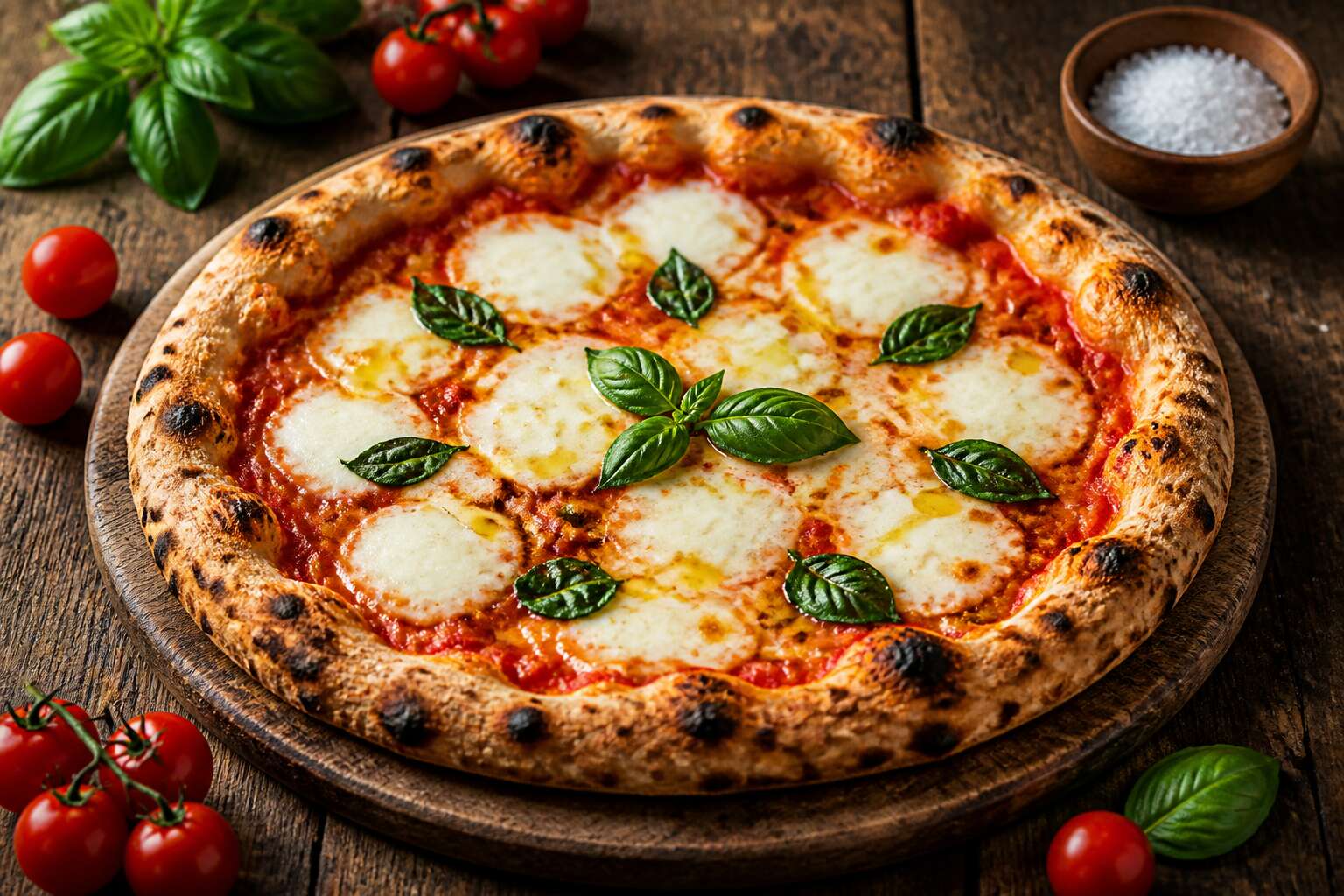
Some reports suggest that over a quarter of all pizzas consumed globally carry a pork-based topping. The Neapolitan classic, however, offers a profound alternative for anyone seeking italian food without pork. The Margherita, with its tricolore of tomatoes, mozzarella, and basil, needs no cured meat to achieve greatness. Its purity is a testament to the city’s culinary philosophy. The dough, a simple mix of flour, water, salt, and yeast, must blister in a blistering wood-fired oven to achieve that signature leopard-spotted crust. The cheese, ideally buffalo mozzarella, provides a creamy, tangy counterpoint to the sweet San Marzano tomato sauce.
Artisanal variations respect this foundation. The Marinara, traditionally without cheese, relies on garlic, oregano, and a drizzle of olive oil for its punch.
– Marinara with fresh oregano
– Pizza with roasted vegetables like zucchini and eggplant
– Pizza topped with arugula and shaved parmesan after baking
Modern pizzerias in South Africa now craft these pies with local, high-quality ingredients, proving that the most authentic experience is often the most restrained. This approach cements the pizza as a cornerstone of any discussion about italian food without pork.

0 Comments