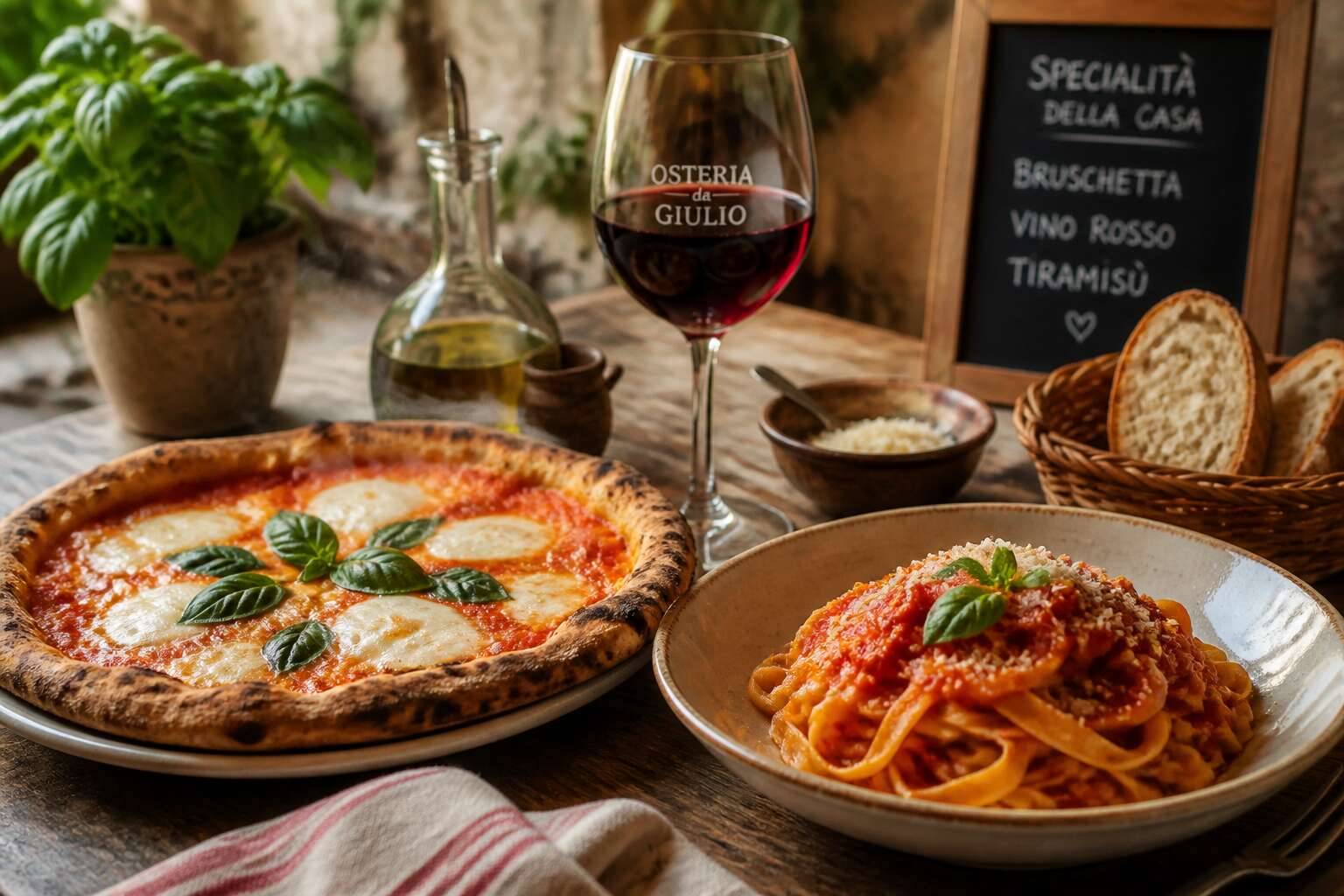
The Essence of Italian Cuisine in Photography
Rustic Ingredients That Photograph Beautifully
Nobody photographs a perfect supermarket carrot and calls it art. Italian cuisine in photography thrives on imperfection. A cracked terracotta bowl, a dusting of flour on a wooden board, a tomato with a crooked stem. These elements carry a history that sterile studio shots cannot replicate. The visual language of rustic ingredients is honest, and honesty translates remarkably well through a lens.
Consider the textures that define Italian food pictures: the craggy surface of hand-torn bread, the glistening beads of olive oil, the gritty soil clinging to freshly pulled carrots. Each flaw adds character. When I shoot these ingredients, I look for the evidence of human hands and natural growth.
- Heirloom tomatoes with misshapen ridges
- Parmesan rinds with rough edges
- Basil leaves with tiny holes from garden pests
Good Italian food pictures do not hide these flaws. They celebrate them!
Capturing the Vibrancy of Fresh Produce
Ninety percent of taste perception begins in the eye, and the same truth applies behind a camera. When you photograph a market haul, you are recording colour on surfaces. The red pepper carries its own energy. The green stem of a closed artichoke carries another. This layered intensity is what makes italian food pictures hold attention for that long, quiet moment.
Italian dishes do not disguise their produce. A sliced fig reveals wet seeds in a dark row. Basil leaves, still cold from the morning, trap the light. These are not decorations. I treat them with enough patience to let the camera carry the moment. The essence is the plain honesty of fresh elements.
The routine is simple:
1. Find the main contrast and place it in the frame first.
2. Notice how the other shapes press against that centre.
3. Wait for the sun to touch the top rim.
With that rhythm, italian food pictures gain a vibrant, everyday energy, the kind you find at a southern African market stall, not a choreographed studio.
The Role of Natural Textures and Colors
A plate of Italian food rarely announces itself with spectacle. It waits. The texture comes forward first: the rough ridges of a hand-rolled pici, the delicate bloom on a ripe peach, the dusty surface of an aged pecorino. These surfaces carry meaning without needing a styled prop.
Color behaves differently on natural foods. It pools in the creases of a burrata. It fades across the gradient of a San Marzano tomato. The camera reads these shifts as memory, not decoration. That honesty gives italian food pictures their grounded character.
The frame hinges on a few details:
- Rough surfaces catch light in unpredictable ways
- Dull colors gain depth beside darker shadows
- Time softens edges on every plate
The essence lives in the imperfect surface, not the polished plate.
Styling Techniques for Authentic Italian Dishes
Plating Styles: From Trattoria to Fine Dining
Some of the most memorable italian food pictures begin with the empty plate. In a trattoria, that plate is warm, slightly worn, and eager to hold a generous portion. In a fine dining room, it is cool porcelain, a surface for precise arrangement. The styling choices differ, yet both produce imagery that feels authentically Italian.
For casual plating, I resist the urge to perfect every element. Let the sauce spread where it lands. Allow herbs to scatter. For formal presentations, adopt a more deliberate hand. Use tweezers for microgreens, wipe the rim, and consider every droplet. These small choices carry real weight!
- Position the protein as the focal point, then build around it
- Vary the height of components to add depth
- Leave negative space to frame the dish naturally
These techniques transform simple ingredients into striking photographs. Clarity matters, whether it comes from rustic simplicity or refined structure.
Using Props to Evoke a Mediterranean Feel
The right prop matters before the dish arrives. A chipped ceramic jug, a weathered copper pot, or a linen napkin stained with oil can place a viewer in a Sicilian courtyard. For italian food pictures, props are not decoration. They are context.
Choose objects that bear the marks of real use. A wooden board with knife scars. A glass bottle with a faded label. These items anchor the food in a lived-in place. South African readers respond to this honesty. It recalls the Mediterranean table, not a set designer’s version.
- Place a lemon half with visible seeds nearby
- Drape a rough cotton cloth under the plate
- Set a tarnished fork at an angle
Each prop must serve the dish. If it competes with the food, remove it. The viewer should sense the sea air, not the staging. That is what separates memorable italian food pictures from ordinary plates.
Garnishing with Fresh Herbs and Olive Oil
The final garnish decides whether a dish reads as cooked or composed. In my experience, italian food pictures rise or fall on this moment. A basil leaf torn, not chopped, releases oils that catch the light. Drizzle olive oil from height so it beads on the surface. These small gestures create depth without props or styling aids.
The order matters:
1. A faint rub of garlic on the warm plate.
2. The herb leaf placed so its veins face the lens.
3. The oil poured in a thin stream that breaks into droplets.
The oil carries the green scent. The herb offers contrast. Together, they signal freshness. That is the authentic Italian approach! South African readers know this instinctively. Our tables already respect a good olive oil and a handful of garden herbs.
The Impact of Linens and Tableware
A plain white plate can kill a dish. Linen and ceramics set the stage before the first fork lands. In my work, italian food pictures succeed when the tableware gives the food somewhere to live. A chipped enamel bowl tells a story. A starched napkin adds ceremony. The texture of linen absorbs light, softening shadows. Ceramic glazes reflect it, creating contrast. Consider these choices: 1. Warm terracotta for earthy ragù. 2. Heavy stoneware for rustic pasta. 3. Delicate porcelain for seafood. Each surface alters the mood. The cloth’s fold lines guide the eye to the dish. The fork’s tarnish suggests history. These elements create an authentic atmosphere without excess. That restraint matters! For South African tables, with abundant light and natural texture, the right napkin can outshine any filter. The best italian food pictures feel inhabited, not staged.
Lighting and Camera Setup for Food Photography
Harnessing Natural Window Light
Window light costs nothing and remains the most forgiving source for italian food pictures. A north facing window at midday gives steady, diffused illumination. Tomatoes keep their red, pasta holds its warmth. No strobes, no modifiers. Just a white reflector card on the shadow side.
The setup takes thirty seconds. Rest the dish on a wooden board close to the glass, angle the camera at 45 degrees, and let the light sweep across the surface. Underexpose by half a stop to protect the highlights. That preserves the charred edges and the gleam of olive oil.
I rarely touch the ISO. Instead, I move the table closer to the window or wait for the right hour. Soft light improves the texture without embellishment. Direct sun casts harsh shadows that flatten the food, and that works against the rustic appeal of handmade pasta.
Using Artificial Light for Consistency
Artificial light removes the waiting game. When overcast weather dims a Cape Town afternoon, two strobes positioned at 45 degrees give me identical results every time. I set the key light to mimic that north facing window, softbox attached, power dialled to one eighth.
For italian food pictures, consistency matters more than drama. The camera stays on a tripod, aperture at f/5.6, shutter locked at 1/125. White balance fixed to daylight rather than auto.
My standard checklist:
– Key light at 45 degrees left
– Fill light at half power right
– Reflector beneath the dish
This arrangement keeps the olive oil glossy and the pasta surfaces uncluttered. No guesswork, no re-shoots. The same settings hold for a rustic ragù or a crisp bruschetta. That reliability lets me focus on composition while the light holds steady.
Aperture and Shutter Speed Essentials
That half-second of hesitation while you fumble with settings is the difference between a plate of tortellini that looks like a Renaissance painting and one that resembles a blurry medical specimen. Italian food pictures demand decisive action, not a lengthy debate with your camera menu.
Start with aperture. This controls the zone of sharpness, and for most dishes, you want either complete clarity or a soft, dreamy background. F/8 is the standard workhorse for a full spread, while f/2.8 isolates a single, glistening ravioli. Committing to a focal point prevents the viewer’s eye from wandering aimlessly across the frame.
Shutter speed is just as critical. A static bowl of minestrone sits still, but that wisp of steam rising from a risotto will not pause for your creative process. Use a faster speed to freeze that motion, or a slower one to let the frame feel calm. In the absence of a tripod, your arms are the only stabilizer.
The essential kit:
– A sturdy tripod to avoid micro-blur
– A 50mm lens for flattering perspective
– A remote release to prevent camera shake
Get these fundamentals right, and your audience will taste the basil, not the technical flaws. That is the true goal of any composition. Without solid exposure, even the most rustic Tuscan loaf looks like a lump of sad, grey dough. Sharpness and clarity are what separate a professional portfolio from a gallery of missed opportunities. These settings are your vocabulary. Use them to speak clearly about the food in front of you.
White Balance for Warm Tones
White balance is the first decision, not an afterthought. The wrong setting turns golden ragù into clinical beige. For italian food pictures, aim for warm tones that echo amber olive oil and ripe tomatoes. Set your camera to cloudy or shade, even on clear days! That single choice shifts the mood toward rustic comfort.
Camera setup matters too. Keep the sensor clean. I use a prime lens for more light. Shoot in RAW to fine-tune warmth later. A handheld grey card helps when the light feels ambiguous.
- Shoot in RAW
- Set Kelvin to 6000
- Check the histogram
Trust the histogram. Warm white balance preserves the mood of slow-cooked sauce.
Choosing the Right Lens for Close-Ups
Set the light before you touch the camera. A soft window sun will carve a long shadow through a caprese plate, flattening the cheese. Stretch a thin onion sheet over the glass, and the entire bench becomes a wide, gentle source. Move the plate to change the reflection. Moving the light means a full redo.
Then fix the lens.
- A 35mm lens captures the whole table with the load, a wine glass, and the oil jug.
- A 50mm f/1.8 locks a single plate circle without mangling the background.
- A 90mm macro f/2.8 reveals the crust of a pork cheek, the bubble of olive oil, and a single fleck of pepper.
For italian food pictures, the 90mm is the practical choice. It steps back, holds the dish clear and keeps the frame tidy. A tripod keeps the scene stable and gives you the time to notice the streaks. The lens decides the weight of every detail.
Telling a Story with Italian Food Images
Capturing the Cooking Process
The true soul of italian food pictures emerges when you step behind the burner and capture the alchemy of preparation. I find that a sequence of images, from a dusting of flour to the first bubble of a simmering ragù, creates a narrative arc that no single plated dish can match. Each frame builds tension and release, drawing the viewer into the kitchen’s rhythm.
Consider these fleeting moments:
- tossing fresh pasta in a pan of sizzling garlic
- a wooden spoon lifting slow, thick tomato sauce
- steam curling from a just-uncorked pot of broth
These shots offer a candid, human view of effort and patience. By following the process, your italian food pictures become a diary of transformation, inviting viewers to taste the story before they ever take a bite.
Creating a Sense of Gathering and Family
An Italian table holds more than food. It holds shared history. The most evocative italian food pictures capture this truth, showing hands reaching across a table, the comfortable chaos of a family meal.
I think of Sunday lunches at my grandmother’s house. The conversation never paused. Plates moved in constant circulation. A good photograph preserves that energy.
Consider the details that signal welcome:
– a bowl passed from hand to hand
– chairs pulled close, overlapping voices
– glasses at different levels, refilled at different times
These elements tell a story of belonging. italian food pictures that document such scenes become more than records. They become an open invitation to find your place at the table.
Incorporating Lifestyle Elements
The most private moments in Italian cuisine happen long before the camera arrives. A cappuccino at a marble counter, cicchetti on waxed paper, a half empty bottle of Valpolicella. These scenes carry a rhythm that studio shots cannot imitate. Lifestyle elements transform a plate into a record of daily existence.
Consider what surrounds the dish. The folded newspaper, the worn countertop, the hour of the day when sunlight crosses the floor. These markers anchor the meal in a specific place and time. They separate flat italian food pictures from images that feel inhabited.
Look for these signals in your own review of italian food pictures:
- a hand scarred from work resting beside a glass
- a chair pushed back from a table still set
- the second cup of coffee, already cooled
The detail that feels accidental is usually the one that tells the truth. The cooled coffee, the folded napkin, the crumbs between the bottles. These are the traces of a life being lived around the food.
Highlighting Handmade Pasta and Bread
The best italian food pictures are never silent. They carry the low hum of a kitchen where flour clouds hang in the afternoon air and a grandmother’s hands move with the memory of a thousand meals. When the subject is handmade pasta, the camera should linger on the imperfections. The slightly uneven edge of a pappardelle ribbon, the gentle press of a thumb on orecchiette, the dusting of semolina that clings to each shape like morning frost. These are not flaws. They are signatures.
Bread demands a different kind of patience. The cracked crust, the blistering from a scorching oven floor, the way steam escapes from a torn loaf. A good photograph of pane di Altamura or a simple ciabatta captures the tension between the crisp exterior and the soft, honeycombed interior. The viewer should almost feel the resistance of the crust before the give of the crumb.
In these images, time becomes visible. The proofing, the kneading, the waiting. The baker’s forearms dusted with flour, the scored slashes on a boule that tell of a confident hand. Here is what to look for when you review italian food pictures:
– The ragged edge of a torn piece of focaccia, not a clean cut
– The dark, blistered spots on a crust that signal proper heat
– The small heap of bench flour left behind, a trace of the process
These details do the work of a thousand words. They speak of a tradition that refuses to be rushed. The hand that shapes the pasta and the hand that tends the oven are the same hand, and the camera should honor that continuity. Italian food pictures that capture this union of effort and reward become more than documentation. They become a portrait of devotion itself.
Documenting the Wine Pairing Experience
Seventy percent of dining pleasure arrives through the eyes before the first sip. The pour itself is a performance. A cool stream of rosato falling into a stemmed glass, the tiny crown of bubbles, the way the liquid settles. These are the moments that make italian food pictures feel alive.
Wine pairing photography depends on proximity. The glass should sit close enough to the plate that the viewer understands the connection. A barolo beside a dish of braised beef, a crisp vermentino hovering near grilled sardines. The eye reads the colour temperature, the weight, the intention.
- The suspended pour, mid-stream, catching window light
- The tilted glass held above the plate, ready to taste
- The faint rim stain left after a slow, deliberate sip
Capture the hands that pour and the hands that lift. Those gestures carry the whole ritual forward and give italian food pictures their quiet urgency.
Post-Processing and Presentation Tips
Enhancing Colors Without Overdoing It
Most food photography fails in the editing room, not the kitchen. When you adjust colors for italian food pictures, the goal is to enhance what is already there, not invent a new reality. I have found that a 5% boost in saturation often beats a 20% one. For presentation, think about how the background affects the dish’s perceived freshness. A cluttered table distracts from the red of a tomato sauce or the green of basil.
- Adjust white balance first to correct any color cast.
- Fine-tune exposure with a gentle curve.
- Boost vibrance, not saturation, to protect skin tones.
- Sharpen selectively around the dish’s edges.
Each step should preserve the natural light and texture you captured. Overdoing it leads to plastic-looking food, which no one wants to eat, let alone click. Keep your edits honest and your audience will trust what they see.
Cropping and Composition Adjustments
After the colors are honest and the light feels right, the frame itself often needs a second look. Cropping is where italian food pictures find their tension. A slice of pizza angled diagonally holds more energy than the same slice centered and floating in empty space.
I prefer to crop in camera when possible, but post-processing gives room to correct a tilted horizon or a counter edge that slides into frame. The eye should travel to the dish without obstacle.
When assessing composition, I ask a few questions:
- Does the arrangement guide the eye toward the focal point?
- Is there breathing room around the steam or the crust?
- Do the lines of the tablecloth or cutlery lead somewhere useful?
These small adjustments matter because italian food pictures depend on a clear sense of place.
Using Consistent Filters for Branding
Color increases brand recognition by up to 80%, a fact that applies directly to italian food pictures. A consistent filter system turns random dishes into a visual identity. I rely on one preset for natural light and another for low light, then nudge exposure and contrast in small increments. This preserves pasta texture and olive oil gloss while giving every frame a recognizable tone.
The filter must not overpower the subject. I test each preset against red sauces, green herbs, and pale dough. When a filter alters the color of a basil leaf, it fails. A tomato sugo should stay warm, not turn orange.
- Warm highlights stay intact under the preset
- White tableware remains clean, not cream
- Sharpening stays even across the full set
Subtle consistency builds trust. Viewers may not name the filter, but they feel the rhythm. That rhythm separates random snapshots from a deliberate portfolio of italian food pictures.

0 Comments