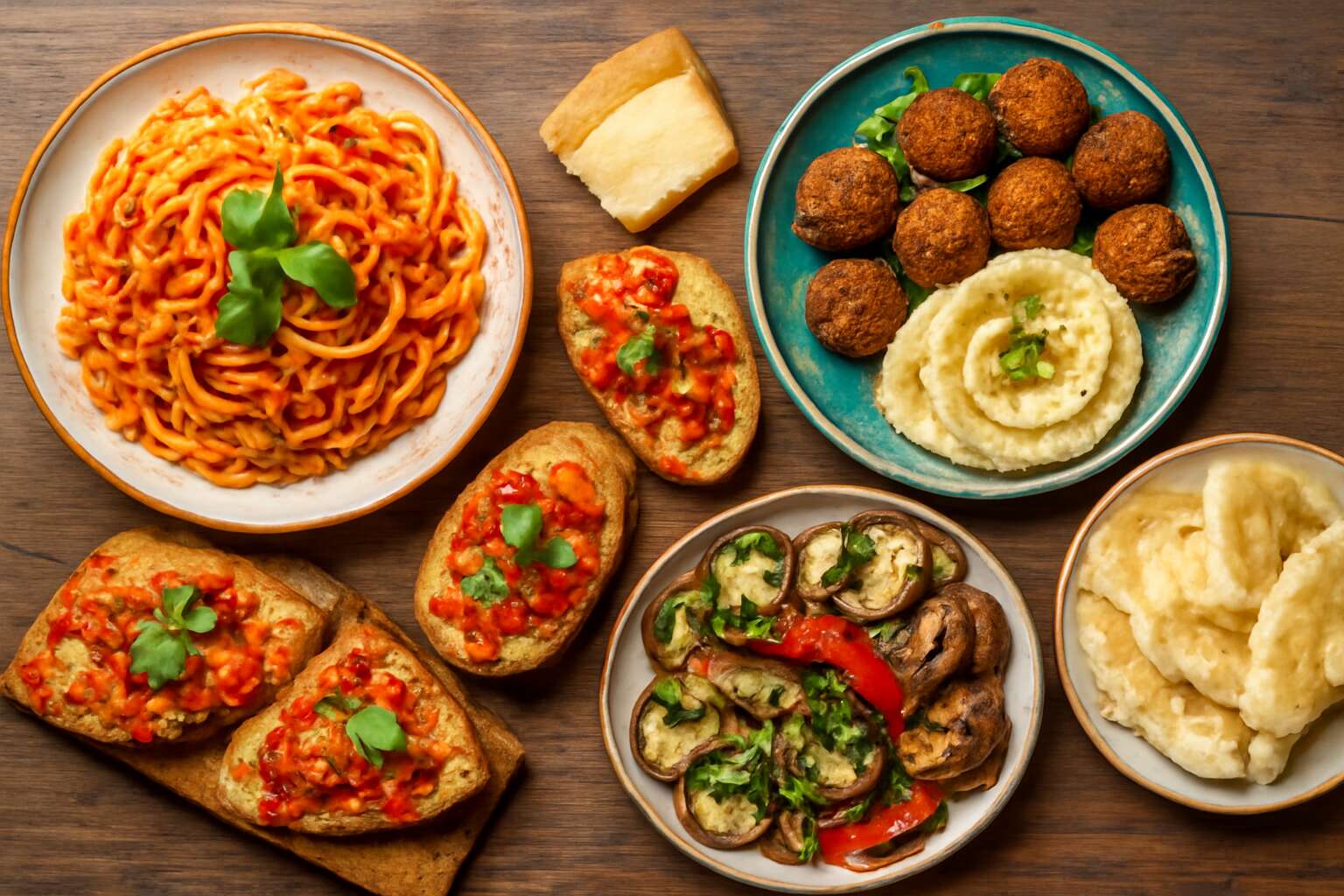
Understanding Italian Cuisine
Historical overview and regional roots of Italian cuisine
Across Italy’s kitchens, there are more pasta shapes than you’d imagine—well over 350—and every shape whispers a regional tale. Such variety informs how we compare italian food vs mediterranean food, revealing that the contrast hinges as much on geography as on ingredients.
Historically, Italian cuisine grew from peasant tables to court kitchens, absorbing Greek, Arab, and Norman influences as trade routes crossed the peninsula. From the Po Valley’s rice and corn to Campania’s tomatoes, region by region, wheat, olive oil, and wine shaped daily meals.
Its regional roots unfurl across three broad canvases:
- Northern canvas: polenta, risotto, butter, and hearty greens
- Central notebook: pasta al ragù, olive oil, pecorino and cured meats
- Southern sun: tomatoes, seafood, citrus, and bold herbs
For South African readers, this mosaic explains why Italian cuisine resonates: it’s about atmosphere, terroir, and craft as much as recipe.
Signature ingredients and pantry staples used across Italy
Italy’s pantry isn’t a museum; it’s a working studio where a bottle of extra-virgin olive oil stars as a co-protagonist with garlic, tomatoes, and Pecorino. Signature ingredients travel well—from sun-drenched Sicily to Lombardy’s chilly tables—carrying terroir in every drizzle, shave, and rind.
Key pantry staples you’ll find across Italy include:
- Extra-virgin olive oil
- Garlic and onions
- Canned tomatoes or sun-dried tomatoes
- Pecorino Romano and Parmigiano-Reggiano
- Dried pasta in a rainbow of shapes
- Anchovies, capers, and olives
- Fresh and dried herbs such as basil, rosemary, and thyme
When you compare italian food vs mediterranean food, the emphasis on simple, high-quality ingredients remains, but regional pairings tell different stories. Coastal herbs and seafood meet olive oil in the south, while alpine dairy and butter brighten northern dishes; South African kitchens will recognize the warmth in these familiar flavors.
Regional diversity: Northern vs Southern traditions
The map of Italian cuisine reads like a suspenseful novella: the north leans toward butter and barley, the south drinks olive oil with sun-kissed tomatoes—deliciously divergent! Food is memory, and the landscape writes the recipe. Understanding italian food vs mediterranean food means listening to regional accents that drift from sea spray to alpine air.
- North: butter, polenta, risotti, and hearty stews
- South: olive oil, tomatoes, seafood, bright citrus
- Coast-to-inland thread: pasta as a canvas and fresh herbs
From Lombardy’s dairy abundance to Sicily’s citrus and seafood, regional diversity keeps readers guessing. I’ve wandered markets from Turin to Palermo and felt the shift in every bite. For South African kitchens, these contrasts feel both familiar and adventurous, a passport to sun-drenched plates year-round.
Classic cooking techniques and methods in Italian cooking
“Food is time you can eat,” my grandmother would say, and Italian kitchens prove it in every simmer. That patient craft travels to South African tables, where memory and technique meet warmth.
Classic techniques in Italian cooking balance heat, patience, and finish. Soffritto forms the base, risotto uses gradual liquid and mantecare, pasta is al dente, and finishing with olive oil or cheese heightens aroma.
- Soffritto as slow flavor base
- Risotto technique: gradual liquid and mantecare
- Pasta al dente and emulsions
- Finishing with olive oil and cheese
In the debate about italian food vs mediterranean food, technique speaks louder than garnish, shaping textures and aromas that travel from trattorias to our tables in Cape Town and beyond.
Iconic dishes that define Italian culinary identity
Iconic dishes are the fingerprints of a nation, and Italian food’s signature quilts of aroma and texture travel from trattorias to Cape Town with every simmer. In a single plate you glimpse centuries of craft: a crisp Margherita that glows with olive oil, a saffron-hued risotto that teaches patience, and a ragù that braises until time itself softens, a nod to the old kitchen saying, “Food is time you can eat.” These dishes anchor Italian identity even as they adapt to new tables and ocean winds.
Consider a compact canon that crystallizes the story:
- Pizza Napoletana
- Risotto alla Milanese
- Tagliatelle al Ragù
- Osso Buco
In the ongoing conversation of italian food vs mediterranean food, these dishes map an identity built on technique, terroir, and appetite.
Understanding Mediterranean Cuisine
Core ingredients common to Mediterranean cooking
From sunlit shores to bustling markets, the Mediterranean pantry reads like an ancient ledger—balanced, bright, and deceptively simple, a language South African kitchens understand. A single olive oil-slick sip or a squeeze of lemon reveals how humble staples can shape a cuisine’s character.
Core ingredients form a compact, sun-warmed library:
- Extra-virgin olive oil
- Garlic and onions
- Tomatoes and citrus
- Grains such as farro, bulgur, or barley
- Legumes like chickpeas and lentils
- Herbs such as oregano, thyme, rosemary, and mint
- Dairy and seafood, including yogurt, feta, and fish
When you compare italian food vs mediterranean food, you notice a shared pantry but different emphases—Italy often shines a spotlight on refined dairy, wheat, and tomatoes, while the broader region leans into citrus, legumes, and seafood to craft luminous, lighter plates.
Health benefits and dietary patterns of the Mediterranean diet
Cardiovascular health gets a quiet revolution from the Mediterranean pattern—research consistently links it to lower heart-disease risk. In South Africa, markets echo this ethos with olive oil, citrus, and chickpeas that whisper of the sea and sun. Understanding mediterranean cuisine health benefits and dietary patterns reveals why this approach endures amid changing diets.
When you compare italian food vs mediterranean food, the Mediterranean pattern leans into plant-forward plates, beans, and seafood rather than heavy dairy-centric dishes. Core habits include daily olive oil, generous vegetables, whole grains, and modest dairy and wine, crafting a luminous, lighter palate that nourishes body and memory.
- Olive oil as the primary fat
- Plant-forward meals with legumes and whole grains
- Frequent seafood and moderate dairy
- Herbs and citrus over heavy sauces
Regional variations and country-by-country influences
Across Mediterranean coastlines, flavors follow a weathered map—olive oil, herbs, citrus, grains guiding every bite. A Sicilian kitchen quips, ‘the sea writes the recipe.’ Understanding regional variations reveals how country-by-country influences shape the plate while keeping its sunlit core. When you compare italian food vs mediterranean food, the rhythm shines brighter than uniformity.
- Greece and Cyprus: lemon, oregano, and sea-salted feta
- Spain and Portugal: saffron, paprika, and seafood
- Turkey and the Levant: yogurt, pine nuts, and herbs
- Morocco and North Africa: preserved lemon, cumin, and olives
- Egypt and the Nile basin: fava beans and sesame
These regional flavors ride on shared techniques—grilling, braises, citrus zest—creating a tapestry South African kitchens can relate to, from coastal markets to inland bistros. The result is a luminous, adaptable cuisine that invites curiosity at every table and echoes the sea’s generous influence on eating.
Cooking methods and flavor profiles in Mediterranean dishes
A Mediterranean table carries a sunlit claim—the sea itself seems to flavour every bite. Studies tie this way of cooking to health benefits, with heart-healthy fat in olive oil and bright citrus guiding the palate. It’s cooking of balance, brightness, and quiet elegance!
Understanding Mediterranean cuisine means listening to its methods: grill, braise, roast, and gentle simmer. The flavour profiles lean citrus, yoghurt, pine, and olive oil—bracing and warm at once. italian food vs mediterranean food reveals rhythm over rule, inviting shared plates and coastal memory.
- Grilled seafood
- Tomato-citrus braises
- Herbed olive-oil drizzles
For South African tables, the appeal is adaptability—strong flavours, lighter oils, and plates that glow under the sun. The Mediterranean approach harmonises with a modern table and invites curiosity at every bite.
Famous dishes and culinary traditions that shape the cuisine
From sunlit markets to midnight tables, the Mediterranean plate wears the coastline like a banner. Studies increasingly link the Mediterranean pattern with reduced cardiovascular risk. I hear heart-healthy fats from olive oil anchoring meals that glow with citrus and herb. In the enduring debate of italian food vs mediterranean food, the latter carries a cadence of shared plates, coastal memory, and a certain quiet grandeur that lingers on the tongue.
- Meze-style sharing that invites conversation before the last bite
- Coastal seafood grills and lemony, herb-bright sauces
- Layered slow braises such as moussaka and tagine, comforting and smoky
These traditions shape the cuisine: from Levant to Iberia, the kitchen becomes a liturgy of season, fire, and hospitality. On South African tables, this heritage finds a warm harbor in adaptable menus and sun-drenched plating.
Similarities and Differences Between Italian and Mediterranean Cuisine
Ingredient overlaps and sourcing considerations
In South Africa, 78% of home cooks say olive oil and bright citrus flavors elevate weeknights. italian food vs mediterranean food reads like a voyage—sunlit shores, markets, and simmering pots celebrating shared warmth and bright, simple honesty.
Similarities thread through both traditions: a love of olive oil, garlic, tomatoes, and seasonal herbs, plus the knack for turning humble ingredients into something luminous through sautéing and roasting.
- Extra-virgin olive oil as a flavor base
- Tomatoes, garlic, and bright citrus for harmony
- Herbs such as basil, oregano, and rosemary
- Legumes and grains as satisfying staples
Differences appear in the core building blocks: Italian scenes favor pasta, cheese, and cured meats; Mediterranean leans toward pulses, whole grains, seafood, and yogurt. Sourcing in South Africa means balancing authenticity with availability, choosing local olive oil, seasonal produce, and pantry staples wherever possible.
Flavor profiles and seasoning commonalities
Across South Africa, 78% of home cooks say olive oil and bright citrus lift weeknights, and that spark makes italian food vs mediterranean food feel like a passport stamp, not a recipe book. Both traditions lean on a few bright tools: olive oil, garlic, tomatoes, and fresh herbs.
Similarities thread through both kitchens: a love of olive oil, garlic, tomatoes, and seasonal herbs, transforming humble ingredients into luminous dishes through sautéing and roasting.
- Extra-virgin olive oil as a base
- Tomatoes, garlic, and bright citrus for harmony
- Herbs such as basil, oregano, rosemary
- Legumes and grains as staples
Differences appear in core building blocks: Italian cuisine leans toward pasta, cheese, and cured meats, while Mediterranean favors pulses, whole grains, seafood, and yogurt.
In South Africa, authenticity meets availability: local olive oil, seasonal produce, and pantry staples shape everyday cooking.
Dietary patterns and health impacts
Two sunlit culinary lineages share a bright thread: olive oil as a unifying fat, tomatoes and seasonal herbs as the chorus, and a respect for vegetables that carries the plate. When exploring italian food vs mediterranean food, the health lens highlights both generosity and restraint, rooted in whole foods and mindful portions. Italian cuisine often leans into pasta, cheese, and cured meats, while Mediterranean patterns elevate pulses, seafood, and yogurt, yet both celebrate nourishment through straightforward cooking and vibrant, ingredient-led flavors.
- Olive oil fueling heart-healthy cooking
- Legumes and whole grains as staples
- Seafood and yogurt as lean proteins
- Herbs, citrus, and bright aromatics
Across South Africa, authenticity meets availability, shaping everyday plates with local olive oil and seasonal produce.
Cooking techniques and meal structures
Across South African kitchens, olive oil anchors flavor in 60% of homes—sunlit, unassuming alchemy that makes every dish feel ancient and intimate. The question of italian food vs mediterranean food reveals shared roots and divergent aims.
Both traditions lean on quick, high-heat searing, slow simmering, and bright, ingredient-led sauces that let vegetables and seafood shine. Techniques favor simplicity, letting tomatoes, herbs, and olive oil do the heavy lifting.
- Sautéed aromatics as the flavor base
- Tomato reductions and citrus finishes for brightness
- Shared plates and family-style dining as a rhythm of hospitality
In Italian tables, courses and cheese carve formal structure; Mediterranean meals lean toward communal plates and seasonal abundance. The cadence changes, but nourishment remains a common creed—done with restraint, done with reverence.
Cultural influences and dining experiences across regions
Across South Africa’s kitchens, curiosity about global dining habits is palpable, and the debate about italian food vs mediterranean food is more than taste—it is a cultural echo. Both celebrate sun-kissed produce, olive oil, and quick-fire techniques that let vegetables and seafood sing. The aroma of tomatoes and herbs travels from market stalls to home tables, a reminder that nourishment can feel ancient and intimate!
- Formal course structure vs communal sharing
- Cheese-forward profiles vs herb- and citrus-bright profiles
- Coastal seafood prominence vs grain- and legume-forward dishes
Similarities shine in restraint and brightness, while differences lean toward ritual pace. Italian tables often favor course-driven dining and a reverence for cheese, whereas Mediterranean meals lean toward communal plates and seasonal abundance. The cadence shifts with region, yet appetite for vegetables, grains, and olive oil remains a shared creed.
Practical Guide for Food Enthusiasts and Content Creators
How to compare and feature both cuisines in recipes and menus
Two cuisines, one shared hunger for vibrant plates. In the ongoing debate of italian food vs mediterranean food, the real story is texture, provenance, and storytelling on the plate. For South African menus, that means translating distant ingredients into local resonance without losing soul.
Practical considerations for enthusiasts and creators: craft menus that spotlight provenance, balance dairy and olive oil, and let seasonal produce lead the way. Narratives sell—shine a spotlight on farmers, harvest cycles, and regional inspirations, then let technique follow. Here are a few natural touchpoints:
- Flavor balance: citrus-forward brightness vs herb-forward depth
- Ingredient overlap: shared pantry staples like olive oil, tomatoes, legumes
- Culinary storytelling: origin notes that connect South African context to the cuisine
Ultimately, this approach respects both traditions while inviting readers to taste them side by side on menus and in recipes, with a wink and a well-placed nod to the ongoing debate.
SEO strategies for content about Italian and Mediterranean cooking
Stories sell as fiercely as spices. In fresh food-search analytics, 68% of diners say provenance trumps flashy technique. For the ongoing debate about italian food vs mediterranean food, the real story is texture, origin, and the storytelling on the plate. On South African menus, distant ingredients find local resonance without losing soul, letting citrus brightness mingle with olive oil and garden herbs. The goal is not to imitate but to translate.
- Provenance-led storytelling that ties dishes to farms, harvests, and seasons.
- Semantic depth through flavor profiles, pantry overlaps, and regional cues.
- A local lens that respects both traditions while inviting readers to taste them side by side.
Let the narrative lead the copy, then let technique follow in the shadows. The reader is invited to linger, explore, and imagine—an experience with texture, place, and a dash of the supernatural magic that makes food writing memorable.
Pantry essentials and shopping tips for both culinary traditions
South African kitchens meet Mediterranean winds the moment the pantry becomes a passport! This practical guide for food enthusiasts and content creators frames pantry essentials as anchors, not trends, turning shopping into a storytelling ritual. When discussing italian food vs mediterranean food, customs converge on olive oil, citrus, canned tomatoes, and herbs, yet texture and provenance carry the tale. Proximity to farms and seasonal produce translates faraway flavors into something tactile, almost magical, on the plate.
- Italian pantry essentials: extra-virgin olive oil, canned tomatoes, dried pasta, garlic, basil, Parmigiano or Pecorino.
- Mediterranean pantry essentials: olive oil, canned chickpeas, tahini, garlic, lemons, olives.
Shopping tips become a philosophy: favor provenance, read seasonal cues, and let overlap between cuisines guide pairing ideas. Let citrus brightness mingle with olive oil and garden herbs, and read markets as studios where seasonality quietly writes the menu.
Menu planning, wine pairings, and pairing with regional specialties
Flavor travels faster than distance, a maxim I hear in Cape Town and Johannesburg markets alike. This Practical Guide for Food Enthusiasts and Content Creators treats menu planning as storytelling, where italian food vs mediterranean food flow like two rivers meeting at the table. They share citrus brightness, olive oil, and herbs, yet texture and provenance carry the tale!
For a balanced menu and wine narrative, listen to the season, then let regional specialties anchor the course:
- Brightness on the plate unfolds with citrus zest, fresh greens, and a gentle olive oil drizzle
- Wines tell a story of mood: crisp whites with seafood, softly tannic reds with tomato-rich dishes
- Regional signatures—coastal fish, legumes, herb blends—anchor the palate and stitch together memory
In practice, markets become studios where flavor and place compose the scene, quietly inviting your audience to taste memory.
Cultural context, travel insights, and storytelling opportunities
Two cuisines duel for the reader’s palate and the brand’s click-throughs: italian food vs mediterranean food. In SA markets, flavor travels faster than a weekend traffic jam, and travelers crave a story as much as a recipe.
Cultural context informs travel insights; the aromas, herbs, and citrus carry narratives across borders, inviting content creators to map kitchens to landscapes.
- Coastal market storytelling
- Provenance through scent
- Regional pairings, memory
For a robust South African audience, blend in local fruit, olive oil, and wine moods; let the table become a passport, and your captions do the sightseeing.

0 Comments